


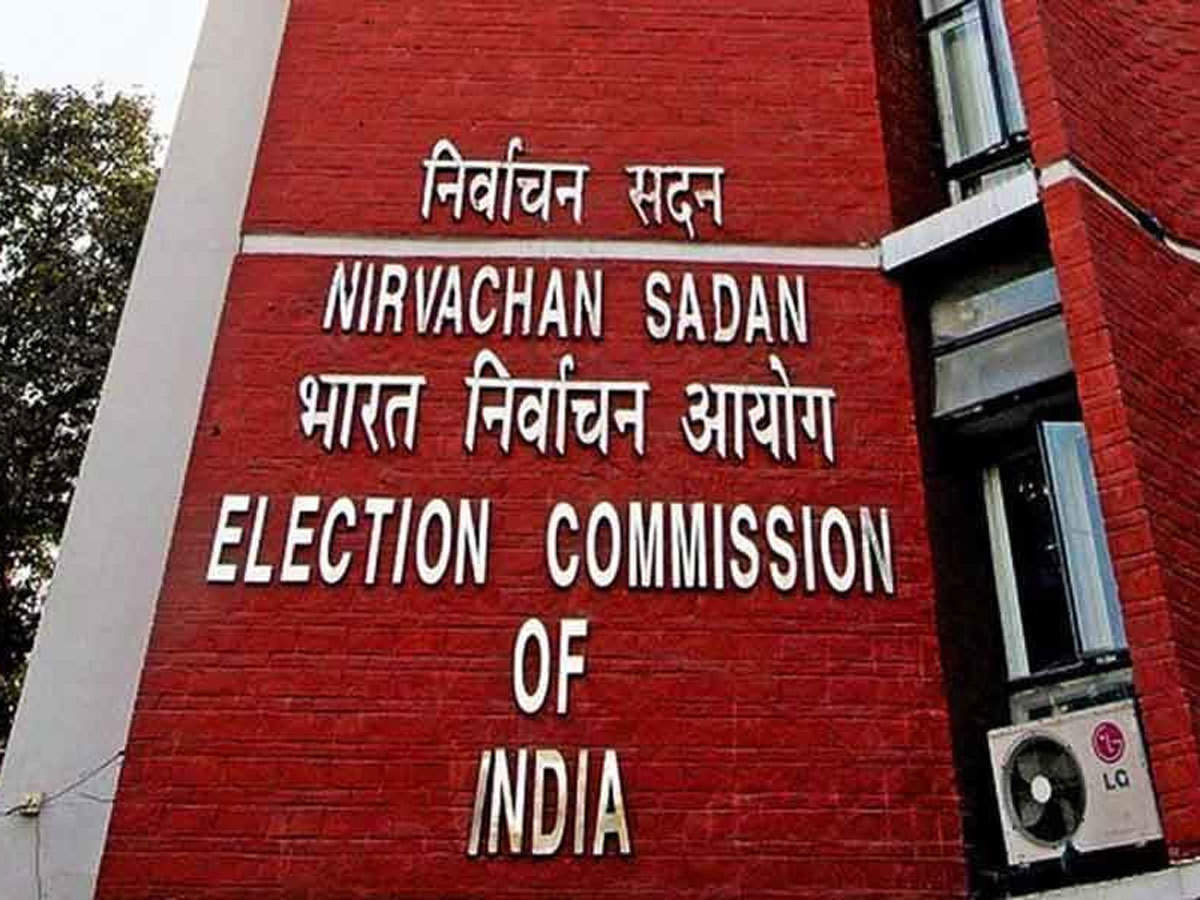
Election
Commission of India
Topics Discussed: -
·
Introduction
·
Constitutional Provisions
·
Composition
·
Independence of Commission
·
Powers and Functions
·
Introduction
1.
The
Election Commission of India is an autonomous constitutional authority
responsible for administering Union and State election processes in India.
2.
The
body administers elections to the Lok Sabha, Rajya Sabha, and State Legislative
Assemblies in India, and the offices of the President and Vice President in the
country.
3.
The
Election Commission was established in accordance with the Constitution on 25th
January 1950.

·
Constitutional
Provisions
|
Articles related to Elections |
|
|
324 |
Superintendence,
direction and control of elections to be vested in an Election Commission. |
|
325 |
No person to be
ineligible for inclusion in, or to claim to be included in a special,
electoral roll on grounds of religion, race, caste or sex. |
|
326 |
Elections to the
House of the People and to the Legislative Assemblies of States to be on the
basis of adult suffrage. |
|
327 |
Power of
Parliament to make provision with respect to elections to Legislatures. |
|
328 |
Power of
Legislature of a State to make provision with respect to elections to such
Legislature. |
|
329 |
Bar to
interference by courts in electoral matters. |
·
Composition

Since
its inception in 1950 and till 15 October 1989, the election commission was as
a one-member body with only the Chief Election Commissioner (CEC) as its sole
member.
1.
On
16 October 1989 the voting age was changed from 21 to 18 years. So, two more
election commissioners were appointed by the president in order to cope with
the increased work of the election commission.
2.
Since
then, the Election Commission was a multi-member body which consisted of 3
election commissioners.
3.
Later
on, the two posts of election commissioners were eliminated in January 1990 and
the Election Commission was reverted to the previous position.
4.
This
was repeated again later in October 1993 when the president appointed two more
election commissioners. Since then, the Election Commission functions as a
multi-member body comprising of 3 commissioners.
5.
The
chief and the two other election commissioners have the same powers and
emoluments including salaries, which are the same as a Supreme Court judge.
6.
In
case of difference of opinion amongst the Chief Election Commissioner and/or
two other election commissioners, the matter is decided by the Commission by a
majority.
7.
The
office is held by them for a term of 6 years or until they attain 65 years,
whichever happens first. They can also be removed or can resign at any time
before the expiry of their term.
· Independence of Commission

Article
324 of the Constitution mentions the provisions to safeguard and ensure
the independent and impartial functioning of the Election Commission which is
as follows.
1.
The
chief election commissioner is provided with security of tenure. He cannot be
removed from his office except in the same manner and on the same grounds as a
judge of the Supreme Court. In other words, he can be removed by the President
on the basis of a resolution passed to that effect by both the Houses of
Parliament with a special majority, either on the ground of proved misbehaviour
or incapacity.
2.
Thus,
he does not hold his office until the pleasure of the president, though he is
appointed by him.
3.
The
service conditions of the chief election commissioner cannot be varied to his
disadvantage after his appointment.
4.
Any
other election commissioner or a regional commissioner cannot be removed from
office except on the recommendation of the chief election commissioner.
5.
Though
the constitution has sought to safeguard and ensure the independence and
impartiality of the Election Commission, some flaws can be noted, i.e.:
Ø The Constitution has not prescribed the qualifications (legal,
educational, administrative or judicial) of the members of the Election
Commission.
Ø The Constitution has not specified the term of the members of the
Election Commission.
Ø The Constitution has not debarred the retiring election
commissioners from any further appointment by the government.
· Powers and Functions

Key functions of the
Election Commission of India are as under:
1.
The
Election Commission of India is considered the guardian of free and reasonable
elections.
2.
It issues
the Model Code of Conduct in every election for political parties and
candidates so that the decorum of democracy is maintained.
3.
It regulates
political parties and registers them for being eligible to contest elections.
4.
It
publishes the allowed limits of campaign expenditure per candidate to all the
political parties, and also monitors the same.
5.
The political
parties must submit their annual reports to the ECI for getting tax
benefit on contributions.
6.
It
guarantees that all the political parties regularly submit their audited
financial reports.
Other powers handled
by the Election Commission of India are as follows:
1.
The
Commission can repress the results of opinion polls if it deems such
an action fit for the cause of democracy.
2.
The
Commission can recommend for disqualification of members after the
elections if it thinks they have violated certain guidelines.
3.
In
case, a candidate is found guilty of dishonest practices during the elections,
the Supreme Court and High Courts consult the Commission.
4.
The
Commission can postpone candidates who fail to submit their election
expense accounts timely.
The main duties of the Election Commission are:
1.
To
supervise, direct, control and conduct all elections to Parliament and State
Legislatures as also to the office of the President and Vice- President of
India.
2.
To
set down general rules for election.
3.
To
determine constituencies and to prepare electoral rolls.
4.
To
give credit to political parties.
5.
To
allot election symbols to different political parties and individual contestants.
6. To appoint tribunals for the decision of doubts and disputes arising out of or in connection with election to parliament and State Legislatures.
|
Don’t Miss -Important resources for
your dream - IAS Exam preparation |
|
Click here to practice UPSC CSE Prelims exam
- Previous Year Question Papers |
|
Click here to practice UPSC CSE Mains exam
–Previous Year Question Papers |
|
Click here to practice Optional Paper - Public administration- Question Papers |
|
Stay updated by Studying Daily Current
Affairs |
|
Don’t
forget to access valuable notes on telegram-click here to Join telegram |
|
Having
doubts while preparing? – Simply ask on WhatsApp “9717724350” |


Comments on “Election Commission of India”