


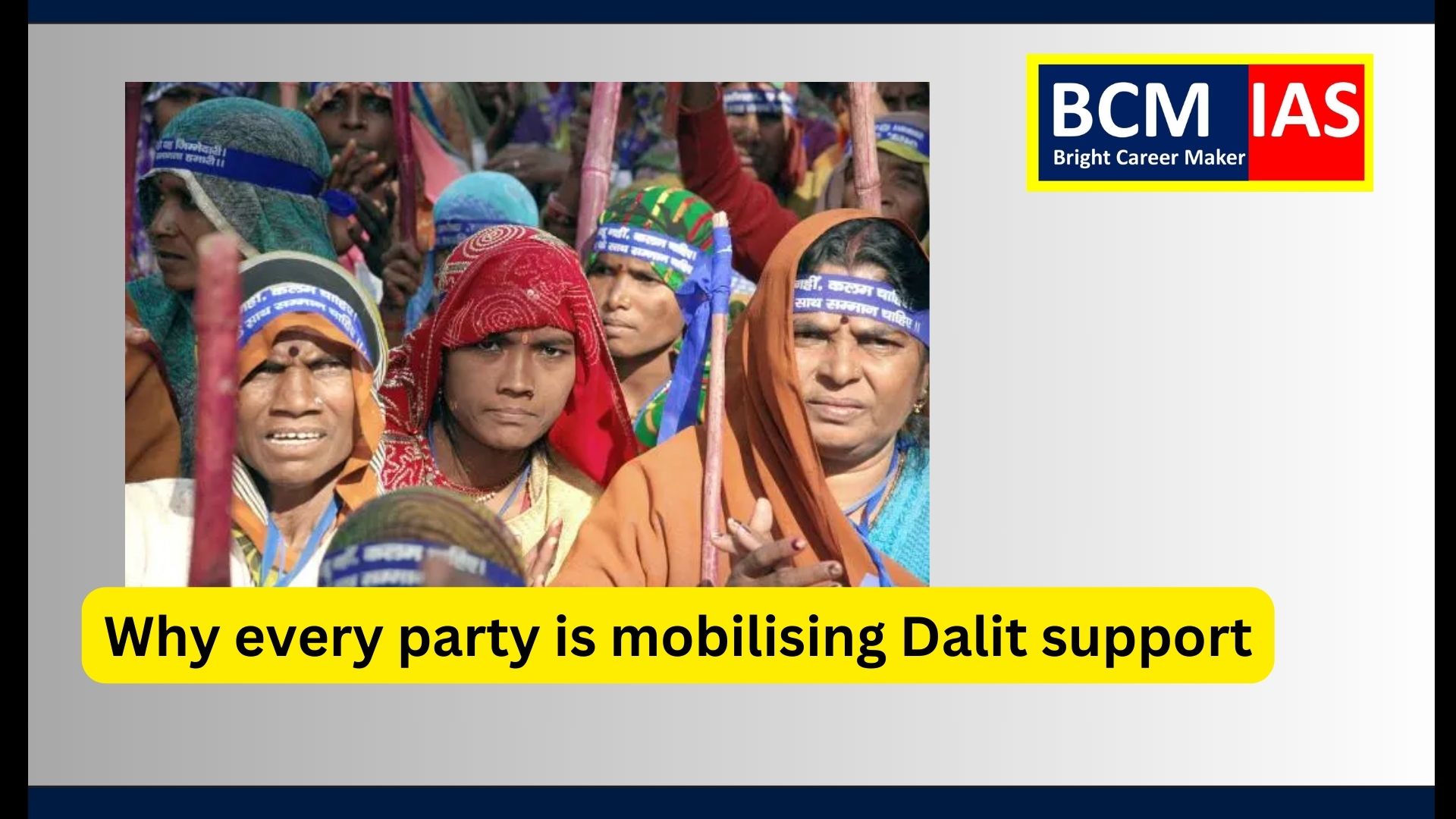
Why every party is mobilising
Dalit support
Introduction
The Haryana Assembly elections, scheduled for October 5,
2024, are marked by dynamic political realignments and strategies, particularly
concerning Dalit support. This analysis explores the various alliances formed
in the electoral landscape, the decline of regional parties like the Jannayak
Janta Party (JJP) and the Indian National Lok Dal (INLD), the significance of
social movements, and the influence of national parties such as the Bahujan
Samaj Party (BSP) and the Aam Aadmi Party (AAP).
1. Political Alliances in Haryana
Jannayak
Janta Party (JJP) and Azad Samaj Party (ASP)
The JJP, traditionally reliant on Jat votes, has allied with
Chandrashekhar Azad's Azad Samaj Party, which aims to attract Dalit voters.
This shift is a response to the JJP's declining support among Jats, prompting
them to seek alliances with parties that resonate with other communities.
- Impact of Chandrashekhar Azad: Azad's rising popularity,
especially among younger Dalit voters, reflects his strong oratory skills
and charisma. However, this support is not uniform across all Dalit
sections. While some are drawn to Azad, many marginalized Dalits remain
loyal to established parties like the Congress and the BJP.
BSP
and INLD Alliance
The BSP, in alliance with the INLD, traditionally enjoyed a
portion of Dalit votes in Haryana. However, the emergence of the ASP threatens
this base as Dalit support becomes fragmented.
- Impact of Jat-Dalit Coalition: Both JJP-ASP and INLD-BSP
alliances emphasize a Jat-Dalit coalition, contrasting with the Congress
and BJP's more singular focus on the Jat community. This coalition
strategy could reshape voter dynamics significantly.
2. Decline of Regional Players
Indian
National Lok Dal (INLD)
The INLD's decline can be attributed to various strategic
miscalculations and internal conflicts. Issues include:
- Coalition Mismanagement: Their inability to forge successful coalitions
has led to diminished political capital. The centralization of leadership
within a single family has resulted in internal conflicts, weakening the
party's organizational structure.
- Failure to Adapt: The INLD's rigid structure and inability to respond to
changing voter sentiments have further diminished its influence.
Jannayak
Janta Party (JJP)
The JJP, once a promising contender, has also witnessed a
decline due to:
- Loss of Jat Support: Their alliance with the BJP in the previous election
alienated many Jat voters, leading to feelings of betrayal among their
core supporters.
- Inactivity During Key Protests: The JJP's failure to actively
support the farmers' protests and wrestlers' protests contributed to a
perception of detachment from critical social issues, eroding its
credibility.
3.
Influence of Social Movements
Significant social movements, particularly the farmers'
protests and wrestlers' protests, have shaped voter perceptions of political
parties.
- Farmers’ Protests: The JJP's alliance with the BJP, which faced the brunt
of farmer discontent, hurt its standing among rural voters. The reluctance
to engage with the protests was seen as a betrayal of core voter values,
further undermining the party's support.
- Wrestlers’ Protests: Similar to the farmers’ protests, the wrestlers’
movement highlighted the need for political responsiveness. The JJP's
failure to align with the protests' sentiments led to increased
disillusionment among voters, demonstrating the electorate's expectation
for parties to address pressing social issues.
4.
Role of National Parties
Aam Aadmi Party (AAP)
The AAP's influence in Haryana is minimal, as it lacks a
robust organizational presence across most constituencies. However, individual
candidates with strong local followings could enhance AAP's visibility.
- Individual Candidate Impact: The success of candidates like
Anurag Dhanda and Adarsh Pal illustrates that AAP's effectiveness hinges
on personal voter bases rather than party strength. This trend underscores
the fragmented political landscape in Haryana, where individual charisma
may outweigh party loyalty.
Bahujan
Samaj Party (BSP)
While the BSP has historically garnered Dalit support, its
recent alignment with the INLD may not yield significant electoral gains. The
rise of Azad's ASP poses a challenge to the BSP's influence, as Dalit voters
increasingly gravitate towards emerging leaders.
Conclusion
The Haryana Assembly elections are characterized by evolving
political alliances, the decline of regional players, and the profound impact
of social movements on voter perceptions. As parties scramble to secure Dalit
support and navigate shifting voter dynamics, the electoral landscape remains
fluid. The ability of parties to address social issues, maintain internal
cohesion, and build diverse coalitions will be critical to their electoral
success. The outcome of these elections will likely reflect broader trends in
Indian democracy, highlighting the importance of responsiveness to the
electorate's needs and aspirations.


Comments on “Why every party is mobilising Dalit support”