


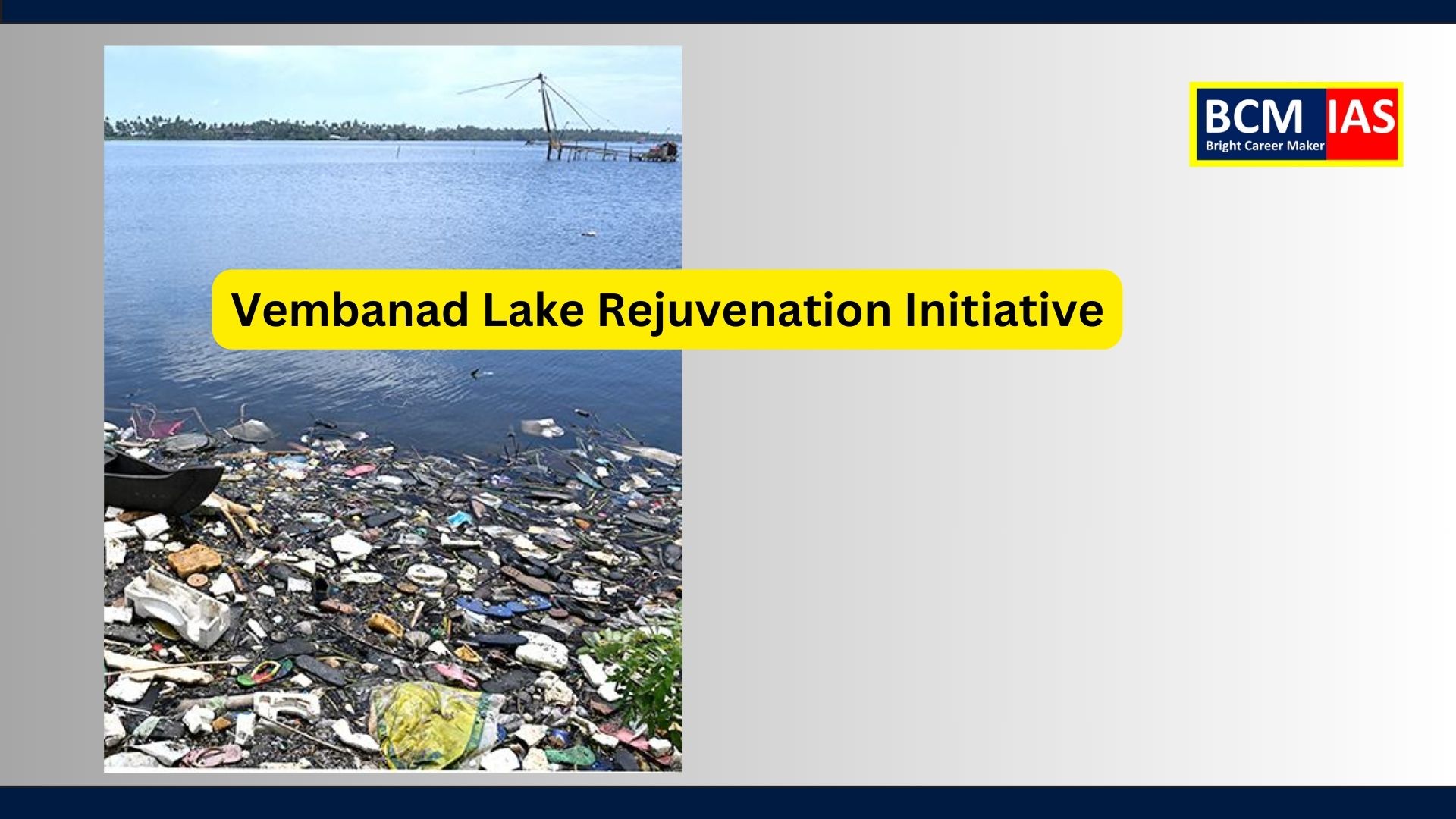
Vembanad
Lake Rejuvenation Initiative
Context and
Significance
Vembanad Lake, a Ramsar site and
the second-largest wetland system in India, is critical for Kerala’s ecology,
economy, and livelihood. However, the lake has suffered from severe degradation
due to pollution, reduced water retention capacity, and encroachment, directly
impacting the lives of around eight million people across four districts:
Alappuzha, Pathanamthitta, Kottayam, and Ernakulam.
Key Issues Identified
1. Environmental
Degradation:
o A 2023
study by Kerala University of Fisheries and Ocean Studies highlights a 85.3%
reduction in water retention capacity from 1990 to 2020, affecting
biodiversity and the wetland's functionality.
o Plastic
waste and aquatic weeds like water hyacinth have further degraded the lake.
2. Impact on
Livelihoods:
o Fisherfolk,
houseboat operators, and other communities reliant on the lake face diminishing
resources and opportunities due to the lake's deteriorated condition.
Proposed Measures and
Activities
The district administration’s
comprehensive rejuvenation project includes both cleanup operations and sustainable
development initiatives:
1. Mega
Plastic Cleaning Drive:
o Initial
Phase: Identification and cleanup of 10 plastic pollution
hotspots.
o Stakeholder
Participation: Involvement of grama panchayats, fisher communities, NGOs,
Haritha Keralam Mission, Kudumbashree, and students.
2. Sustainable
Projects:
o Value-Added
Products: Utilizing water hyacinth and other weeds for innovative
products, creating economic opportunities.
o Bio-Shield:
Establishing vegetation-based shields to improve ecological stability.
o Infrastructure
Development: Proposals include a Vembanad Lake Interpretation Centre,
yarn museum, and bottle booths.
3. Community
Engagement and Awareness:
o Conducting
awareness programs for fisherfolk, houseboat operators, and lakeshore residents
to emphasize conservation.
o Promoting
community tourism to enhance economic benefits while fostering environmental
responsibility.
4. Fish
Stocking:
o Stocking
fish seeds to restore aquatic biodiversity and support fisheries.
Challenges and
Considerations
1. Implementation
Hurdles:
o Ensuring
sustained participation of all stakeholders over the long term.
o Managing
financial and logistical demands of large-scale cleanup and rehabilitation
projects.
2. Monitoring
and Accountability:
o Setting
measurable goals and monitoring progress to ensure effective execution.
o Addressing
systemic issues like encroachments and unregulated tourism.
3. Sustainability:
o Ensuring
that cleanup efforts are not one-time events but lead to lasting environmental
improvements.
o Integrating
community-based initiatives to maintain the gains achieved through the
campaign.
Expected Outcomes
- Environmental Benefits:
Improved water quality, biodiversity, and ecological health of the lake.
- Economic Upliftment:
Enhanced livelihoods through sustainable tourism, value-added products, and
restored fisheries.
- Social Impact: Increased awareness
and participation in conserving a vital natural resource.
Conclusion
The rejuvenation initiative for
Vembanad Lake represents a vital step toward addressing decades of neglect and
degradation. With a multi-pronged strategy that combines cleanup, sustainable
development, and community involvement, the project aims to restore the lake’s
ecological balance while safeguarding the livelihoods of millions. However, its
success hinges on consistent efforts, adequate funding, and strong stakeholder
collaboration.
Mains Question
Q: The Vembanad Lake rejuvenation project in Kerala highlights the
challenges and strategies for wetland conservation in India. Discuss the
significance of wetlands, the issues faced in their conservation, and the
measures that can be taken to ensure their sustainable management.
Answer
Introduction
Wetlands
are among the most productive ecosystems, providing critical services such as
water filtration, biodiversity support, flood control, and livelihood
sustenance. Vembanad Lake, a Ramsar site in Kerala, exemplifies the importance
and challenges of wetland conservation in India. However, its severe
degradation due to pollution, encroachments, and reduced water retention
capacity reflects a broader crisis affecting wetlands nationwide.
Significance of Wetlands
1. Ecological Importance:
o Support rich biodiversity and act as
carbon sinks.
o Regulate hydrological cycles, prevent
flooding, and recharge groundwater.
2. Economic and Livelihood
Contributions:
o Fisheries, agriculture, and tourism
sectors depend heavily on wetlands.
o Support traditional occupations like
fishing and coir-making.
3. Cultural and Recreational Value:
o Many wetlands, including Vembanad
Lake, are culturally significant and attract tourists.
Issues in Wetland Conservation
1. Pollution:
o Plastic waste, sewage discharge, and
industrial effluents degrade water quality and harm biodiversity.
2. Encroachments and Land Reclamation:
o Urbanization and agricultural
expansion lead to loss of wetland area.
3. Invasive Species:
o Aquatic weeds like water hyacinth
disrupt native biodiversity.
4. Climate Change:
o Rising temperatures and changing
rainfall patterns exacerbate wetland degradation.
5. Lack of Awareness and Community
Participation:
o Limited public understanding of
wetland importance hampers conservation efforts.
6. Weak Policy Implementation:
o Ineffective enforcement of
environmental regulations and fragmented institutional frameworks.
Measures for Sustainable Wetland Management
1. Cleaning Drives and Waste
Management:
o Regular cleanup campaigns, such as the
Vembanad mega plastic drive, can mitigate pollution.
o Establish solid waste management
systems in wetland regions.
2. Community Participation:
o Involve local self-governments,
fisherfolk, and NGOs in conservation initiatives.
o Promote sustainable livelihoods
through eco-tourism and value-added products from invasive species.
3. Restoration Projects:
o Establish bio-shields to prevent soil
erosion and promote biodiversity.
o Reintroduce native species to restore
ecological balance.
4. Awareness and Capacity Building:
o Conduct programs for stakeholders like
fisherfolk, tourists, and residents on sustainable practices.
o Encourage educational institutions to
undertake research and outreach activities.
5. Policy and Governance:
o Strengthen wetland conservation laws,
such as the Wetlands (Conservation and Management) Rules, 2017.
o Implement Integrated Wetland
Management Plans (IWMP) with clear accountability mechanisms.
6. Technological Interventions:
o Use GIS mapping and remote sensing for
monitoring wetland health.
o Develop innovative projects like
converting aquatic weeds into bio-products.
Case Study: Vembanad Lake Rejuvenation
The
Vembanad Lake rejuvenation project demonstrates a multi-pronged approach to
wetland conservation:
- Stakeholder
Involvement: Participation of Kudumbashree, Haritha Karma Sena, and
environmentalists.
- Innovation: Creating
value-added products from aquatic weeds.
- Awareness
Drives: Engaging houseboat operators and fishers in conservation
efforts.
Conclusion
Wetlands
like Vembanad Lake are vital for ecological sustainability, economic
well-being, and climate resilience. A holistic approach, combining community
participation, scientific innovation, and robust governance, is essential for
conserving these critical ecosystems. Lessons from the Vembanad initiative can
guide the management of wetlands across India, ensuring their protection for
future generations.
MCQs
1. Which of the following is
the primary objective of the Vembanad Lake rejuvenation project?
a) Construction of tourism infrastructure
b) Conservation and sustainable management of the lake
c) Expansion of urban settlements around the lake
d) Increasing fish exports from Kerala
Answer: b) Conservation and sustainable management of the
lake
2. According to the 2023
study by Kerala University of Fisheries and Ocean Studies, what percentage
reduction in water retention capacity has Vembanad Lake experienced between
1990 and 2020?
a) 50%
b) 85.3%
c) 65.2%
d) 90%
Answer: b) 85.3%
3. What innovative measure
is being introduced as part of the Vembanad Lake rejuvenation project?
a) Establishment of a new industrial zone near the
lake
b) Creation of value-added products from water hyacinth and aquatic weeds
c) Use of chemical pesticides to remove aquatic weeds
d) Construction of a dam to increase water retention
Answer: b) Creation of value-added products from water
hyacinth and aquatic weeds
4. Which of the following
stakeholders is NOT involved in the Vembanad Lake rejuvenation initiative?
a) Kudumbashree members
b) Haritha Karma Sena
c) Environmentalists
d) Foreign NGOs
Answer: d) Foreign NGOs
5. What is a major
socio-economic impact of the degradation of Vembanad Lake?
a) Increase in industrial development around the lake
b) Decline in livelihoods of communities dependent on the lake
c) Reduction in urban land prices
d) Rise in tourism revenue due to wetland activities
Answer: b) Decline in livelihoods of communities dependent on
the lake


Comments on “Vembanad Lake Rejuvenation Initiative”