


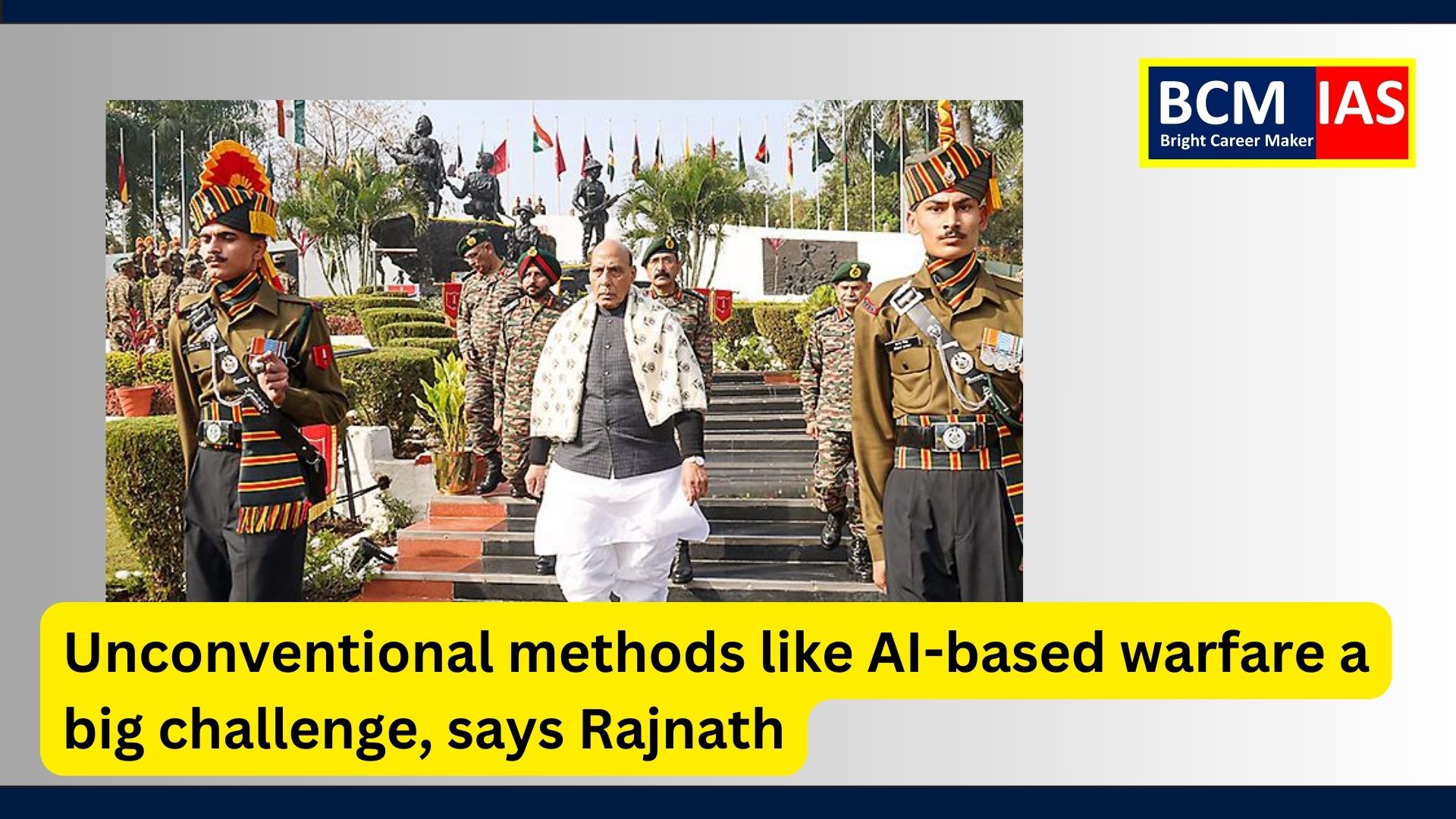
Unconventional
methods like AI-based warfare a big challenge, says Rajnath
Key Themes
1. Unconventional
Warfare Challenges:
o Defence
Minister Rajnath Singh highlighted the emergence of unconventional methods of
warfare such as:
§ AI-based
warfare: Use of artificial intelligence to
strategize and execute military operations.
§ Information
warfare: Manipulation of information to disrupt
enemy operations or influence public opinion.
§ Cyber
attacks: Targeting critical infrastructure and
defense systems through digital breaches.
§ Electromagnetic
warfare, space warfare, and proxy warfare:
Increasingly complex tactics that blur traditional military boundaries.
o These
advancements demand a proactive and adaptive military strategy.
2. Defence
Exports and ‘Made-in-India’ Initiative:
o India
has achieved a significant increase in defence exports:
§ From
₹2,000 crore a decade ago to a record ₹21,000 crore today.
§ A
target of ₹50,000 crore in exports by 2029 reflects India's ambition to become
a global defence supplier.
o Focus
on ‘Made-in-India’ defence equipment underlines self-reliance and technological
advancement in the defense sector.
3. Military
Training and Readiness:
o Singh
emphasized the importance of:
§ Modernized
Training: Adapting training curricula to include
frontier technologies like AI and communication systems.
§ Integrated
Training: Combining specialized skills, such as
weapons training, AI, and leadership development, across various institutions
like the Infantry School and the Military College of Telecommunication
Engineering (MCTE).
o These
efforts aim to prepare soldiers for future challenges posed by unconventional
warfare.
4. Global
Diplomacy and National Security:
o Singh
encouraged officers to promote India’s national interests globally as future
defense attachés.
o He
stressed the government's commitment to strengthening India’s position as a
leading economic and military power.
Key Achievements and
Initiatives
1. Defence
Modernization:
o Increased
defence exports signify India’s growing manufacturing capability and
international trust in its military equipment.
o Focus
on indigenous production aligns with the Atmanirbhar Bharat (self-reliant
India) vision.
2. Training
Infrastructure:
o Training
centres like the Infantry School and Army War College in Mhow are crucial for
adapting to evolving military challenges.
o The
emphasis on integrating emerging technologies like AI in training highlights
the proactive stance of the Indian military.
3. Tribute
to Armed Forces:
o Singh’s
homage to fallen soldiers at the Infantry Memorial reflects the respect and
recognition given to the sacrifices of the armed forces.
Challenges
1. Emerging
Threat Landscape:
o The
rapid development of AI and cyber warfare by adversaries requires constant
technological upgrades and preparedness.
o Balancing
technological advancement with the ethical and strategic implications of AI in
warfare is critical.
2. Export
Ambitions:
o Achieving
the target of ₹50,000 crore in defence exports will require robust
international partnerships, competitive pricing, and technological innovation.
3. Integration
in Training:
o Seamless
integration of diverse disciplines like AI, communication technology, and
leadership training demands continuous curriculum updates and resource
investment.
Implications for
National Security
1. Strategic
Preparedness:
o Focusing
on unconventional warfare ensures India is ready to face modern security
challenges, including cyber and space threats.
2. Global
Defence Presence:
o Enhanced
defence exports and globally deployed defence attachés will strengthen India’s
strategic influence and economic footprint.
3. Technological
Edge:
o Mastery
of frontier technologies ensures India’s armed forces remain competitive in a
rapidly evolving global security environment.
Conclusion
Rajnath Singh’s address underscores India’s
proactive stance in addressing unconventional warfare, modernizing military
training, and strengthening defence exports. The initiatives align with the
government’s vision of making India a global military and economic power.
However, achieving these goals will require sustained focus on technology,
infrastructure, and international collaboration to adapt to an increasingly
complex security landscape.


Comments on “Unconventional methods like AI-based warfare a big challenge, says Rajnath”