

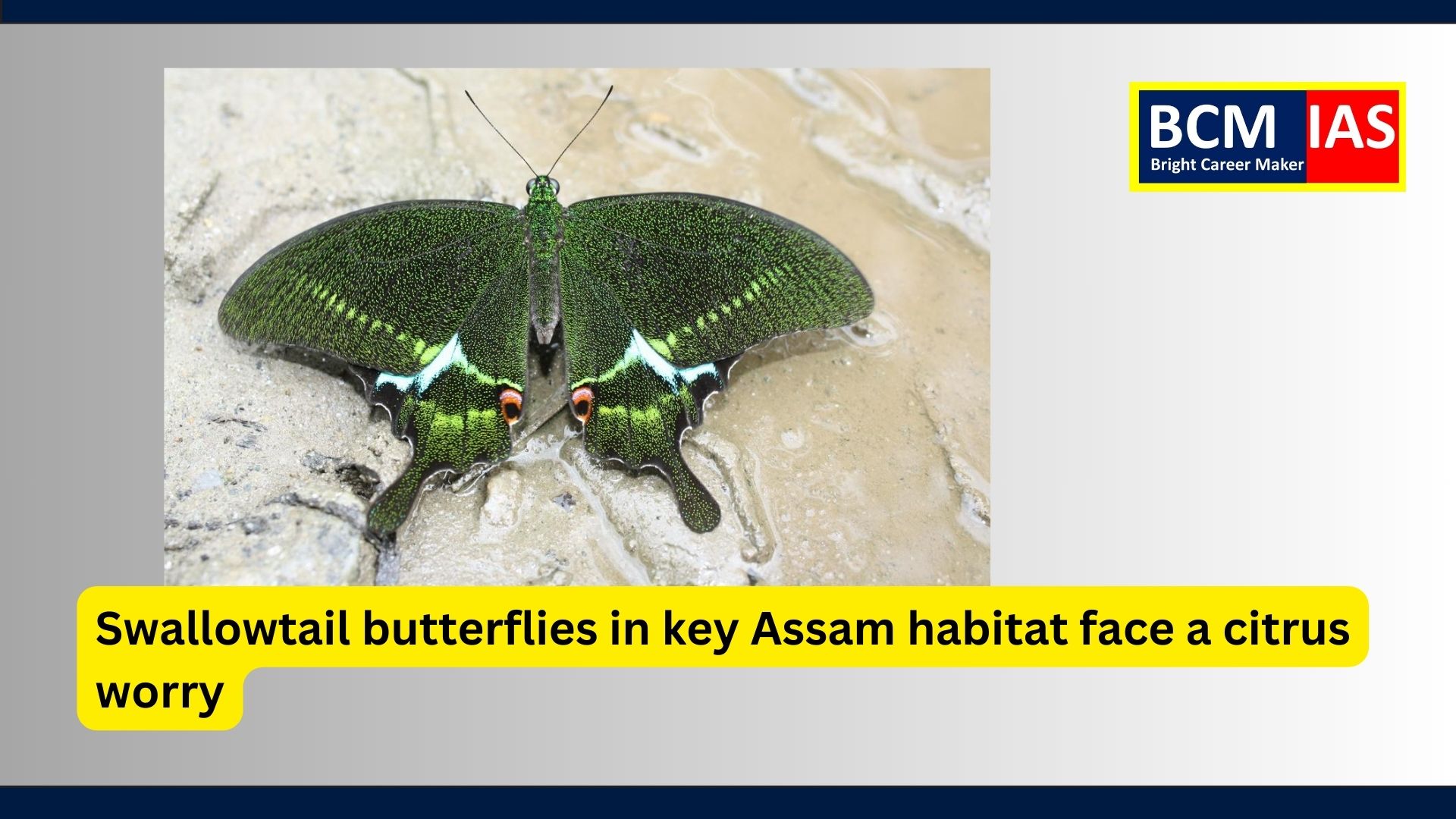
Swallowtail butterflies in key
Assam habitat face a citrus worry
Overview
Swallowtail butterflies, renowned for their vibrant colors
and unique patterns, are crucial components of biodiversity, acting as
indicators of environmental health. This report highlights the ongoing
challenges facing these butterflies in the Bodoland Territorial Region of
Assam, particularly within the context of their dependence on specific host
plants, many of which are under threat due to human activities.
Key Findings of the
Study
1. Diversity
and Distribution:
o India is home to
77 species of swallowtail butterflies out of a global total of 573
species.
o The northeastern
region of India, particularly Assam, has been designated as a "swallowtail-rich
zone" due to the presence of 69 species.
2. Threats
to Swallowtail Butterflies:
o Overexploitation
of Host Plants: The
study identifies that 25 species of host plants valued for their medicinal
properties are being excessively harvested, which directly threatens the
butterfly populations dependent on these plants.
o Illegal
Activities: Factors
such as illegal cattle farming, tea cultivation, illegal tree
felling, and the use of pesticides have been cited as significant
contributors to the decline of swallowtail butterfly populations.
o Environmental
Changes: The
encroachment of agricultural practices into natural habitats and the reduction
of forest areas have exacerbated the decline of essential host plants for these
butterflies.
3. Specific
Findings on Host Plants:
o The Bodoland
region supports 52 varieties of 17 citrus species, essential for
the larvae of swallowtail butterflies.
o The decline of
wild citrus populations is linked to the diminishing swallowtail butterfly
population, as these butterflies depend on citrus plants during their larval
stage.
o The study noted
a concerning absence of two rare swallowtail species, Bhutan glory and Kaiser-i-Hind,
indicating a significant impact of habitat loss and plant overexploitation.
4. Ecological
Importance of Swallowtail Butterflies:
o Butterflies
serve as indicators of environmental health, meaning their presence
reflects the overall state of their habitat. A decline in their population
signals potential ecological issues that may affect other species, including
plants and other insects.
o The lack of host
plants undermines the butterflies' reproductive success and sustenance,
potentially leading to a cascade of ecological consequences.
Importance of
Conservation Efforts
1.
Biodiversity Preservation: Protecting swallowtail butterflies
contributes to the preservation of biodiversity within the ecosystem. Their
presence indicates a healthy environment, which supports a variety of other
species.
2.
Ecological Balance: As part of the food chain,
butterflies play a crucial role in pollination and nutrient cycling. Their
decline could disrupt ecological balances.
3.
Cultural and Economic Value: Butterflies are not only important
ecologically but also hold cultural significance in many regions. They attract
ecotourism, which can provide economic benefits to local communities.
4.
Focus on Sustainable Practices: Emphasizing sustainable
agricultural and forestry practices can help mitigate the impacts of
overexploitation and habitat destruction. Encouraging local communities to
protect and manage natural resources sustainably can lead to a healthier
ecosystem.
Conclusion
The study underscores the urgent need for conservation
initiatives aimed at protecting swallowtail butterflies and their habitats in
Assam. This includes enforcing legal protections for host plants, promoting
sustainable agricultural practices, and increasing awareness about the
ecological roles of these butterflies. The integration of conservation efforts
with local community engagement will be vital to ensuring the long-term
survival of these beautiful and ecologically significant species.
MCQs
1.
Which of the following statements about swallowtail
butterflies in India is correct?
o A) India is home
to 573 species of swallowtail butterflies.
o B) The
northeastern region of India is designated as a "swallowtail-rich
zone."
o C) Swallowtail
butterflies are only found in the Bodoland Territorial Region.
o D) The
population of swallowtail butterflies has increased significantly in the last
two decades.
Answer: B) The northeastern region of India is designated as a
"swallowtail-rich zone."
2.
What is the primary threat to swallowtail butterflies
in the Bodoland Territorial Region as identified in the study?
o A) Climate
change
o B) Habitat
destruction due to urbanization
o C)
Overexploitation of host plants valued for medicinal properties
o D) Predation by
other species
Answer: C) Overexploitation of host plants valued for medicinal properties
3.
Which of the following plants is mentioned as a
crucial food source for swallowtail butterfly larvae in the study?
o A) Ligustrum cordatum
o B) Tulsi (Holy
Basil)
o C) Mint
o D) Ginger
Answer: A) Ligustrum cordatum
4.
According to the article, why are certain citrus
species declining in the wild?
o A) They are
becoming invasive species.
o B) They are
primarily cultivated in home gardens and backyard settings.
o C) They are not
suitable for the local climate.
o D) They have
been replaced by other crops.
Answer: B) They are primarily cultivated in home gardens and backyard settings.
5.
What role do butterflies play in their ecosystems as
indicated in the study?
o A) They
primarily serve as food for birds.
o B) They are
indicators of environmental health.
o C) They are the
main pollinators of all flowering plants.
o D) They
contribute to soil fertility through their droppings.
Answer: B) They are indicators of environmental health.


Comments on “Swallowtail butterflies in key Assam habitat face a citrus worry”