


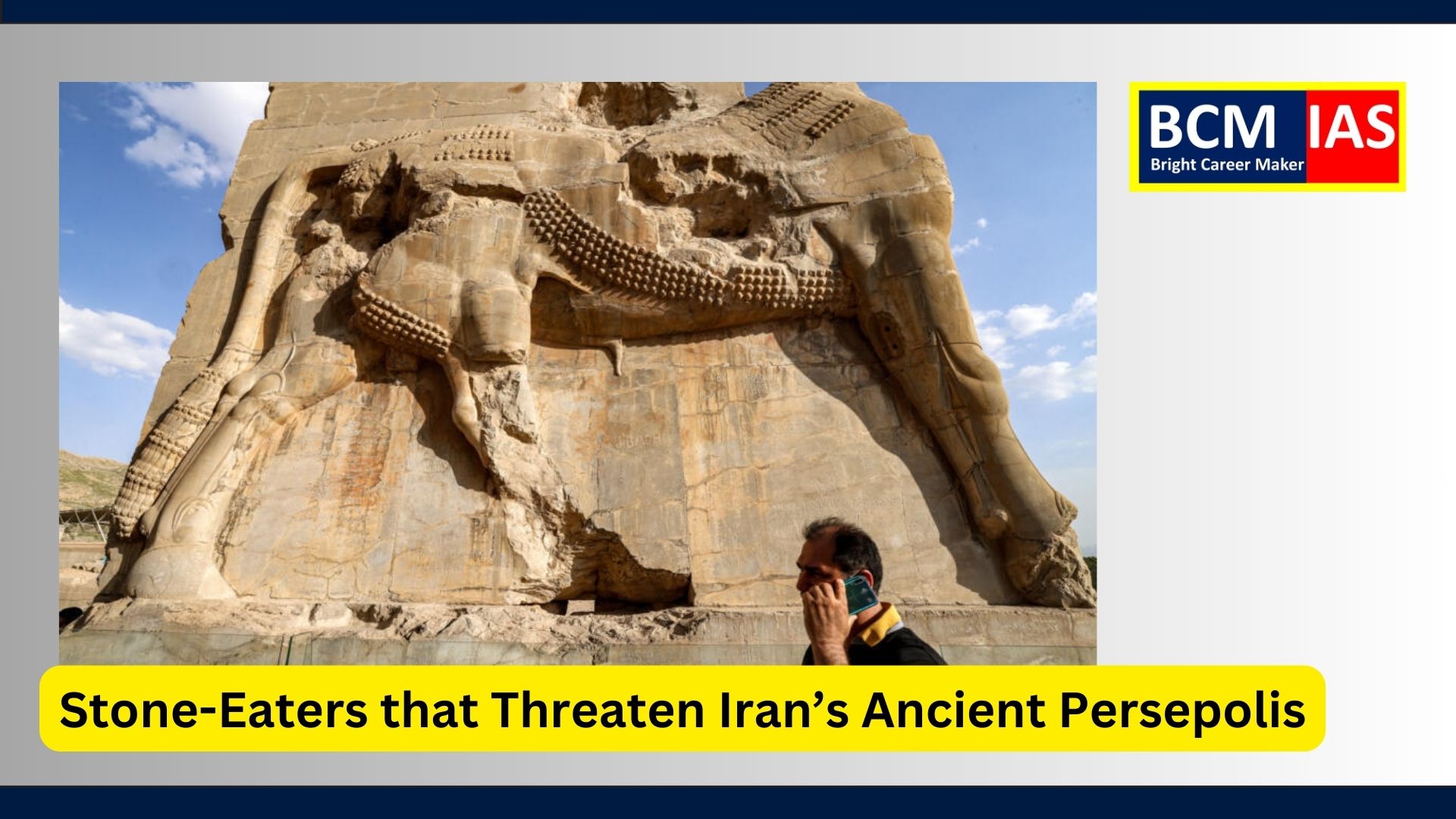
Stone-Eaters that Threaten
Iran’s Ancient Persepolis
News Analysis
Introduction
Persepolis, one of
Iran’s most iconic ancient sites, is facing an unexpected threat from
lichens—tiny but persistent organisms. These organisms are eroding the stone structures
and intricate carvings of the ancient ruins, posing a significant challenge for
conservationists.
Background on Persepolis
- Historical
Significance:
Persepolis was built in the 6th century BC by Darius I as the ceremonial capital of the Persian Empire. - World
Heritage Site:
It was designated as a UNESCO World Heritage Site in 1979.
- Structural
Highlights:
The site features colossal sculptures and detailed stone reliefs
depicting Persian kings, nobles, and deities.
- Challenges
Over Time:
The site has withstood numerous challenges over the millennia, including destruction, looting, earthquakes, fires, and harsh environmental conditions.
Threat from Lichens
- What
are Lichens?
Lichens are organisms that grow on stone and other surfaces. They consist of a symbiotic relationship between fungi and algae. Over time, lichens dissolve minerals and penetrate stone surfaces, causing erosion. - Impact
on Persepolis:
- The
lichens, especially the red varieties, are etching into many of
Persepolis’ stone relics.
- Long-term
Damage: If
left unchecked, lichens could reduce the ancient monuments and intricate
carvings to dust within 50 to 100 years.
- Industrialization
and Climate Factors: The spread of lichens is exacerbated by industrialization, acid
rain, and the harsh desert climate of the region.
- Scientific
Viewpoint:
Lichenologist Mohammad Sohrabi notes that Iran is home to over 3,000 species of lichens, with 500 to 700 varieties growing on historical monuments. Some of these lichens at Persepolis are over 1,700 years old, and they have already caused the loss of many intricate motifs.
Conservation Efforts
- Current
Efforts:
Conservationists at Persepolis are working to mitigate the damage caused by lichens. - Shahram
Rahbar's Statement: According to Rahbar, if no intervention is made, the relentless
activity of the lichens could completely destroy these relics in the near
future.
- Preservation
Timeline:
The preservation battle is urgent, with experts estimating that critical damage could occur within a few decades if the situation is not addressed.
Conclusion
The ongoing battle to save Persepolis from stone-eating lichens highlights the
delicate balance between preserving cultural heritage and combating natural
environmental forces. Without swift conservation measures, the world may lose
significant portions of this ancient site within a century.
Mains Practice Question
Discuss the threats faced by ancient monuments
due to environmental factors, taking the example of Persepolis in Iran. Suggest
conservation measures to mitigate these threats.
Answer
Introduction
Ancient monuments across the world face threats from natural environmental
factors, industrial activities, and climate change. One such iconic site is
Persepolis in Iran, which, despite its resilience against millennia of
destruction and natural calamities, is now under threat from microscopic
organisms known as lichens. The case of Persepolis presents a valuable example
of the challenges posed by environmental factors and the efforts needed to
protect heritage sites.
Body
Persepolis: A Historical
Overview
- Location and Significance:
Persepolis was built in the 6th century BC by Darius I as a ceremonial capital of the Achaemenid Empire. It features sculptures, intricate stone reliefs, and motifs representing Persian kings and gods. - World Heritage Site:
Recognized by UNESCO in 1979, Persepolis holds immense historical and cultural significance.
Environmental Threats Faced
by Persepolis
1. Lichen Growth:
Lichens, symbiotic organisms consisting of fungi and algae, have been slowly
eroding the stone structures. These organisms dissolve minerals and penetrate
the stone, causing significant damage over time.
o
Impact on Relics:
The stone carvings, especially intricate motifs, have been damaged by the
growth of lichens. Many designs have been lost, and experts warn that without
action, the structures could be reduced to dust in 50 to 100 years.
2. Industrialization and Climate Factors:
o
Acid Rain:
Industrial pollution has accelerated the growth of lichens through acid rain,
which weakens the stone surface and makes it more susceptible to lichen
colonization.
o
Desert Climate:
The harsh desert climate of Persepolis, with its extreme temperatures and
moisture variations, further contributes to the degradation of the ancient
structures.
3. Other Natural Forces:
o
Earthquakes, past
fires, and exposure to the elements over millennia have left their mark on
Persepolis. However, the persistent erosion caused by biological agents like
lichens is a more immediate and pressing threat.
Conservation Challenges and
Efforts
- Conservation Efforts at Persepolis:
Conservationists at the site have been battling the spread of lichens for years. According to experts like Shahram Rahbar and Mohammad Sohrabi, timely action is critical to protect the site from further deterioration. - Scientific Research and Expertise:
- Research into the species of lichens growing on
Persepolis indicates that some are over 1,700 years old. Scientific
interventions and specialized cleaning methods are necessary to stop the
growth of these organisms while preserving the integrity of the stone.
Suggested Conservation
Measures
1. Bio-cleaning Methods:
o
Use of
environmentally friendly bio-cleaning agents to remove lichens without damaging
the stone surface. This requires advanced techniques that preserve the
structure while eradicating harmful organisms.
2. Monitoring and Documentation:
o
Implementing
continuous monitoring systems to document changes in the stone surface and
identify new threats early. Digital documentation of carvings and motifs can
help track progress and preserve historical data.
3. Environmental Protection:
o
Reducing industrial
pollution near heritage sites through stricter regulations on industries
contributing to acid rain. A balance between economic development and heritage
conservation must be maintained.
4. Public Awareness and Policy Support:
o
Increasing public
awareness about the importance of protecting heritage sites like Persepolis.
Governments and international organizations should collaborate to create
policies aimed at preserving ancient monuments from environmental degradation.
Conclusion
Ancient monuments like
Persepolis are irreplaceable treasures that offer insight into the cultural and
historical legacy of human civilization. While environmental factors like
lichens, acid rain, and climate pose serious threats, timely and
well-coordinated conservation efforts can prevent further damage. Protecting
such sites requires not only scientific intervention but also strong policy
measures, public awareness, and global cooperation to ensure these legacies
endure for future generations.
MCQs
MCQ 1:
Which of the following factors is primarily responsible for
the deterioration of stone carvings at Persepolis?
A. Earthquakes and fires
B. Industrial pollution alone
C. Growth of lichens
D. Harsh desert climate alone
Answer:
C. Growth of lichens
Explanation:
Lichens, which dissolve minerals and penetrate stone surfaces, are identified
as the primary threat to the stone carvings at Persepolis, although industrial
pollution and climate factors exacerbate the problem.
MCQ 2:
Lichens, which threaten the structures at Persepolis, consist of which two
types of organisms in a symbiotic relationship?
A. Fungi and algae
B. Bacteria and fungi
C. Algae and moss
D. Mold and bacteria
Answer:
A. Fungi and algae
Explanation:
Lichens are a symbiotic association between fungi and algae. These organisms
grow on surfaces like stone and contribute to the erosion of structures over
time.
MCQ 3:
Why are conservationists particularly concerned about lichens growing on the
ancient carvings at Persepolis?
A. Lichens grow quickly and are difficult to remove
B. Lichens dissolve minerals and cause long-term erosion
C. Lichens attract pests that damage the stone
D. Lichens change the color of the stone permanently
Answer:
B. Lichens dissolve minerals and cause long-term erosion
Explanation:
Lichens erode the stone by dissolving minerals and penetrating its surface,
which could potentially reduce the relics at Persepolis to dust over the next
few decades.
MCQ 4:
Which of the following environmental factors contribute to the accelerated
growth of lichens on historical monuments like Persepolis?
A. Desertification
B. Acid rain and industrialization
C. Lack of sunlight and moisture
D. Rising temperatures due to global warming
Answer:
B. Acid rain and industrialization
Explanation:
Industrialization has led to acid rain, which weakens the stone and accelerates
the growth of lichens on historical monuments like Persepolis.
MCQ 5:
What is the major consequence of ignoring the growth of lichens on
Persepolis according to conservationists?
A. The ruins will become a breeding ground for insects
B. The structures could collapse within a decade
C. The relics could be reduced to dust within 50 to 100 years
D. The stone carvings will be permanently stained by red lichen marks
Answer:
C. The relics could be reduced to dust within 50 to 100 years
Explanation:
According to conservationists, without intervention, the growth of lichens
could lead to the complete erosion of Persepolis's relics within 50 to 100
years.


Comments on “Stone-Eaters that Threaten Iran’s Ancient Persepolis”