


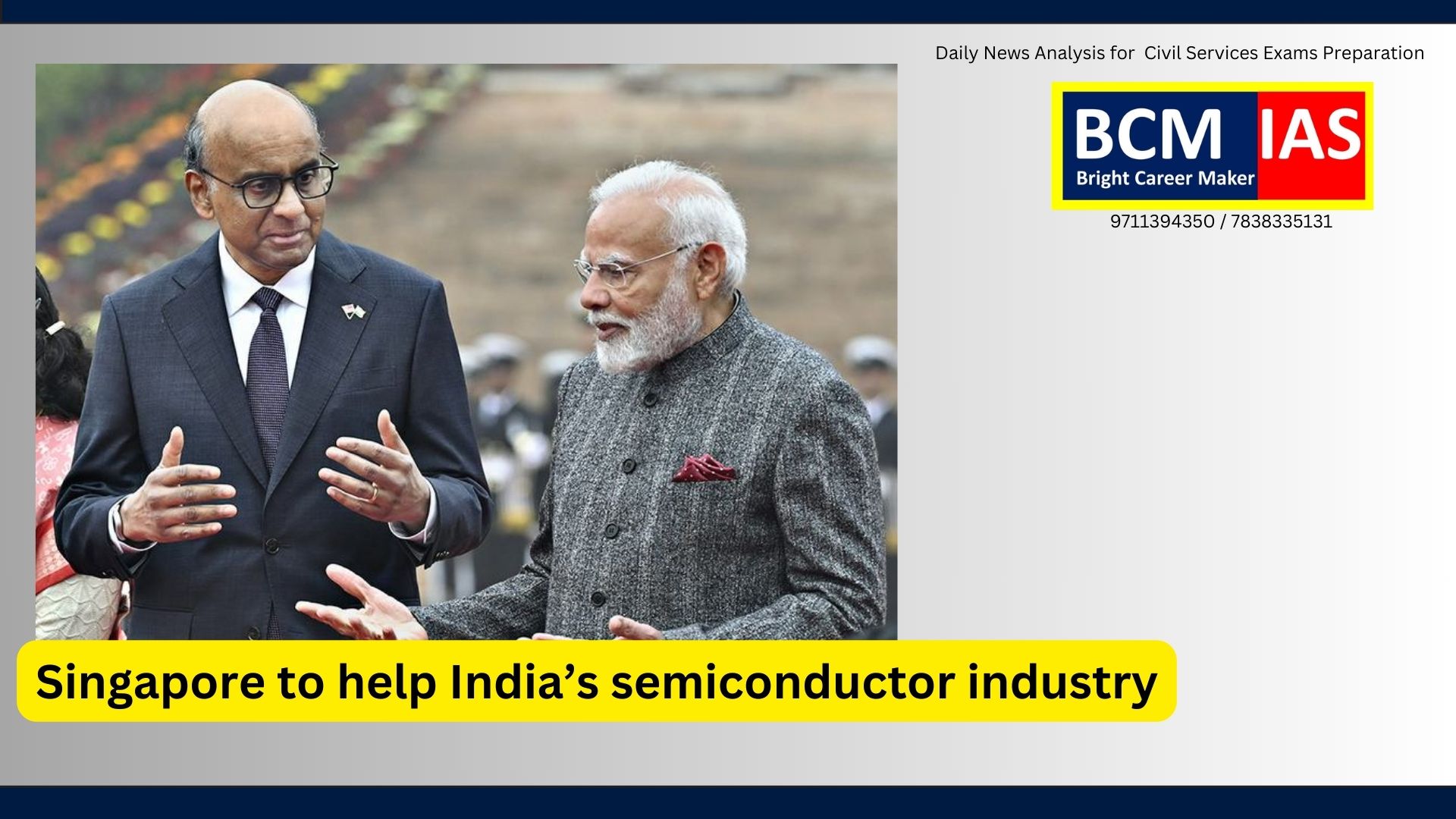
Singapore to help India’s semiconductor industry
Overview
Singapore's President Tharman Shanmugaratnam,
during his visit to India, highlighted initiatives to strengthen bilateral
ties, particularly in the semiconductor and technology sectors. This
collaboration comes as part of the 60th anniversary of India-Singapore
diplomatic relations, marking a significant milestone in the
partnership.
Key Highlights of the
Collaboration
1. Semiconductor
Manufacturing and Ecosystem Development:
o Singapore
is exploring opportunities to help India establish semiconductor manufacturing
facilities.
o Focus
is on building a semiconductor
ecosystem, which includes infrastructure, research, and skilled
workforce development.
o This
initiative aligns with India's push for technological self-reliance under
programs like Make in
India and Digital
India.
2. Comprehensive
Strategic Partnership:
o The
bilateral relationship was upgraded during Prime Minister Modi's visit to
Singapore in 2023.
o Areas
of cooperation include advanced
manufacturing, renewable energy, logistics, connectivity, and digital technology.
3. Data
Corridor Between Gift City and Singapore:
o A
proposed data corridor will facilitate secure
and trusted data exchange between financial institutions in
India and Singapore.
o This
enhances financial integration and supports the growing fintech sector in both
countries.
4. Focus
on Eastern Indian States:
o Singapore
recognizes the economic potential of eastern states like Odisha and Assam,
given their natural resources and strategic location.
o Areas
of interest include renewable
energy, logistics, connectivity, and petrochemicals.
5. Commemorating
60 Years of Diplomatic Relations:
o The
launch of a joint logo
by President Shanmugaratnam and President Droupadi Murmu symbolizes this
historic milestone.
o The
year will witness multiple exchanges, events, and visits to celebrate the
strong bilateral relationship.
Significance of the
Collaboration
1. Boost
to India’s Semiconductor Industry:
o Semiconductor
manufacturing is critical for India's goal of becoming a global hub for
electronics and technology.
o Collaboration
with Singapore brings technical expertise, investment, and a well-established
ecosystem.
2. Economic
and Strategic Advantages:
o Strengthened
ties with Singapore, a global financial and technology leader, enhances India's
position in global value chains.
o Reduces
dependence on semiconductor imports, ensuring better supply chain resilience.
3. Strengthened
Digital and Financial Connectivity:
o The
proposed data corridor
aligns with India’s vision of becoming a global financial hub through Gift City.
o Facilitates
cross-border fintech innovation and secure financial transactions.
4. Development
of Eastern India:
o Singapore’s
investments in eastern states can accelerate regional development by leveraging
natural resources and strategic geographical advantages.
o Enhances
job creation and industrial growth in underdeveloped regions.
5. Diplomatic
and Cultural Strengthening:
o Commemorating
60 years of ties highlights the historical and cultural foundation of
India-Singapore relations.
o Enhances
mutual trust and opens doors for broader collaboration in the future.
Challenges
1. Infrastructure
and Ecosystem Development:
o Building
a robust semiconductor ecosystem requires significant investments,
infrastructure, and technical expertise.
o Bridging
India’s skill gap in semiconductor design and manufacturing is essential.
2. Geopolitical
and Supply Chain Issues:
o The
semiconductor industry is highly dependent on global supply chains, which may
face disruptions due to geopolitical tensions.
3. Regulatory
and Policy Framework:
o Ensuring
smooth cross-border data exchange and collaboration requires clear and secure
regulatory frameworks.
Conclusion
The collaboration between India and Singapore
in semiconductor manufacturing and other technological sectors reflects a
deepening of strategic and economic ties. This partnership not only boosts
India's ambitions for technological self-reliance but also aligns with global
trends in digital and industrial innovation. The focus on eastern Indian states
adds a regional development dimension, further strengthening the bilateral
relationship. The celebration of 60 years of diplomatic relations provides a
platform to build on this robust partnership for mutual growth and prosperity.
Mains Question
Q: Discuss the
significance of India-Singapore collaboration in semiconductor manufacturing
and technological advancements, especially in the context of the 60th
anniversary of their diplomatic relations. Highlight the opportunities and
challenges in this partnership.
Answer
Introduction
India and Singapore are celebrating 60 years
of diplomatic relations, a partnership marked by mutual trust and cooperation
across various sectors. A key area of collaboration is the establishment of a
semiconductor manufacturing ecosystem in India, which is crucial for
technological self-reliance and economic growth.
Significance of the
Collaboration
1. Technological
Advancement:
o Singapore's
expertise in semiconductors can accelerate India’s goal of establishing a
domestic semiconductor
ecosystem.
o Supports
India's initiatives like Make
in India and Digital
India by reducing reliance on imports.
2. Economic
Growth:
o Semiconductor
manufacturing drives industrialization, creates jobs, and boosts exports.
o Collaboration
with Singapore attracts investment and improves India’s position in the global
technology supply chain.
3. Strategic
Value:
o Reduces
India's vulnerability to global semiconductor supply chain disruptions.
o Enhances
India’s capacity to support emerging technologies like AI, IoT, and 5G.
4. Digital
and Financial Connectivity:
o The
proposed data corridor
between Gift City and Singapore fosters secure financial data exchange,
strengthening fintech collaboration.
5. Regional
Development:
o Focus
on eastern states like Odisha and Assam utilizes natural resources and fosters
industrial growth in underdeveloped regions.
o Encourages
regional economic inclusion and employment generation.
Opportunities
1. Global
Semiconductor Supply Chain Integration:
o Position
India as a reliable manufacturing hub for semiconductors and advanced
electronics.
o Strengthen
India’s role in the global technology ecosystem.
2. Capacity
Building:
o Transfer
of technical expertise and training from Singapore helps build a skilled
workforce in India.
o Establish
research and development centers to innovate in chip design and manufacturing.
3. Economic
Diversification:
o Broadens
India’s industrial base, reducing dependence on traditional sectors like
agriculture and textiles.
4. Bilateral
Strengthening:
o Deepens
economic and strategic ties with Singapore, a trusted partner and significant
investor in India.
Challenges
1. High
Capital Requirement:
o Semiconductor
manufacturing requires significant financial investments and advanced
infrastructure.
o India
must allocate resources effectively to ensure project success.
2. Skill
Gap:
o A
shortage of skilled professionals in semiconductor design and manufacturing may
hinder progress.
3. Global
Competition:
o India
faces competition from established semiconductor hubs like Taiwan, South Korea,
and the USA.
4. Supply
Chain Dependencies:
o Semiconductor
production is heavily reliant on raw materials and global supply chains, which
are vulnerable to geopolitical tensions.
5. Policy
and Regulatory Issues:
o Ensuring
a clear and supportive regulatory framework is essential for attracting
investment and fostering innovation.
Way Forward
1. Infrastructure
Development:
o Establish
advanced manufacturing facilities with the latest technology to attract global
investments.
2. Policy
Support:
o Introduce
incentives like subsidies, tax breaks, and a favorable regulatory environment
for the semiconductor industry.
3. Collaboration
in R&D:
o Joint
research initiatives between India and Singapore to innovate in chip design and
advanced manufacturing techniques.
4. Skill
Development:
o Create
specialized training programs in collaboration with Singapore to build a
skilled workforce.
5. Diversified
Partnerships:
o Expand
partnerships with other countries to strengthen India's position in the global
semiconductor supply chain.
Conclusion
The India-Singapore collaboration in
semiconductor manufacturing is a landmark initiative that aligns with India's
vision of technological self-reliance and economic growth. While challenges
exist, the opportunities to enhance India’s industrial base, foster regional
development, and secure its place in the global technology landscape are
immense. By leveraging this partnership, India can achieve significant strides
in becoming a global hub for semiconductors and advanced technology.
MCQs
1. What is the primary focus of the India-Singapore collaboration in the
semiconductor industry?
A. Establishing a semiconductor import-export agreement
B. Building a semiconductor manufacturing ecosystem in India
C. Exporting raw materials for semiconductor production to Singapore
D. Developing a joint venture for renewable energy projects
Answer: B. Building a semiconductor manufacturing
ecosystem in India
2. What is the proposed "data corridor" between Gift City and
Singapore intended to achieve?
A. Facilitate cross-border financial data exchange securely
B. Enable the sharing of semiconductor designs
C. Strengthen bilateral trade in physical goods
D. Develop a digital payment gateway for Indian banks
Answer: A. Facilitate cross-border financial data exchange
securely
3. Which of the following regions in India are being prioritized for
development as part of the India-Singapore partnership?
1. Assam
2. Odisha
3. Gujarat
4. Maharashtra
Select the correct answer:
A. 1 and 2 only
B. 1, 2, and 3 only
C. 2 and 3 only
D. 1, 2, 3, and 4
Answer: A. 1 and 2 only
4. Why is semiconductor manufacturing critical for India's technological
aspirations?
1. Reduces
dependence on imports.
2. Supports
emerging technologies like AI and 5G.
3. Enhances
India’s role in global technology supply chains.
4. Ensures
India’s dominance in agricultural exports.
Select the correct answer:
A. 1 and 2 only
B. 1, 2, and 3 only
C. 1, 3, and 4 only
D. 2, 3, and 4 only
Answer: B. 1, 2, and 3 only
5. What is a major challenge in establishing a semiconductor
manufacturing ecosystem in India?
A. Lack of global demand for semiconductors
B. High financial investment and advanced infrastructure requirements
C. Excessive availability of skilled professionals in chip manufacturing
D. Lack of renewable energy sources for manufacturing plants
Answer: B. High financial investment and advanced
infrastructure requirements


Comments on “Singapore to help India’s semiconductor industry”