


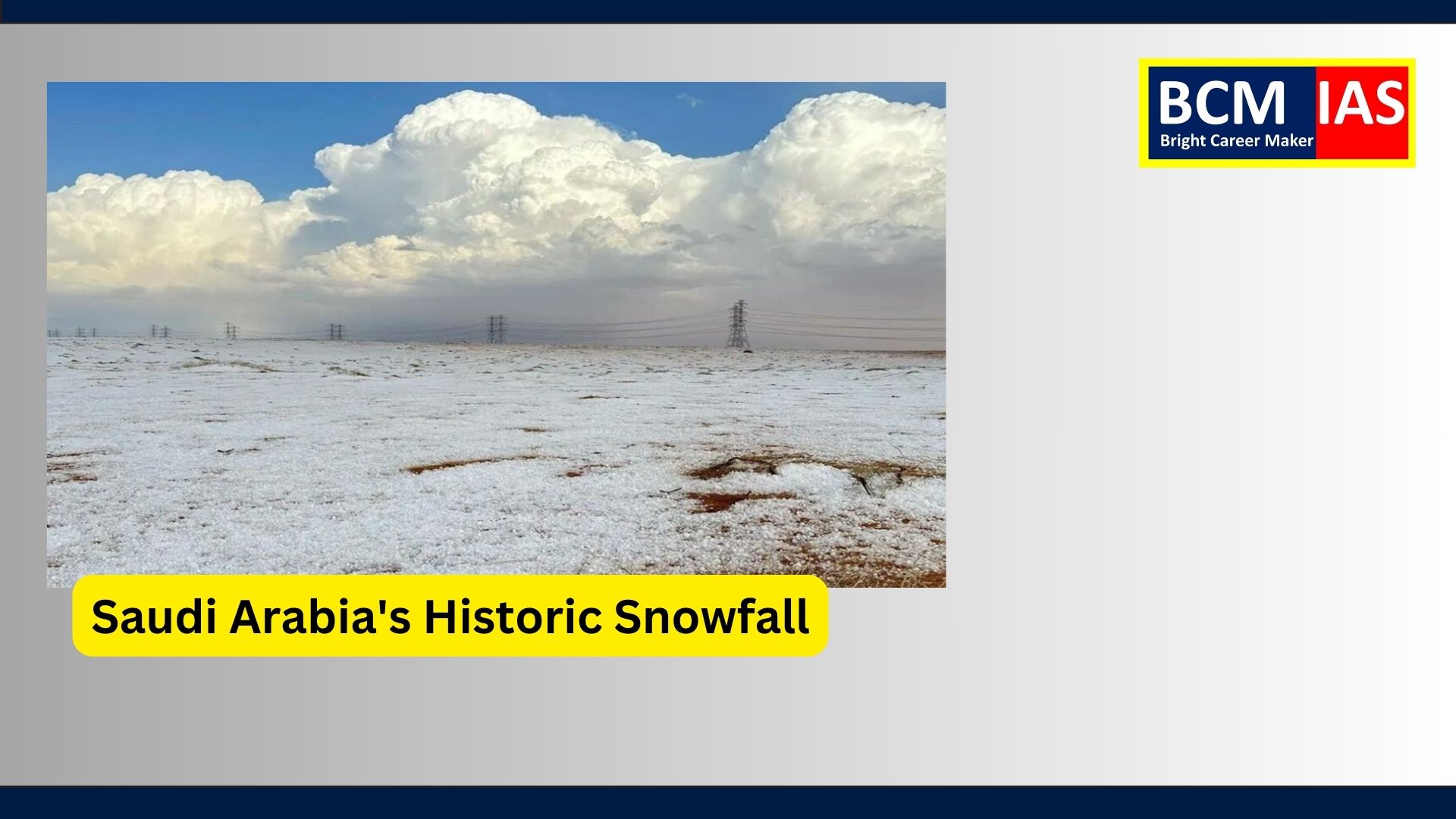
Saudi Arabia's Historic Snowfall
1. Context of the Event
For the first time in recorded
history, the Al-Jawf region of Saudi Arabia experienced snowfall, transforming
its arid desert landscape into a rare winter scene. This unprecedented weather
event follows intense rains and hail, showcasing significant climatic
variations in a region typically characterized by its hot, dry conditions.
2. Key Features of the Snowfall
Event
- Transformation of Landscape:
- Snow blanketed mountains and valleys, creating a
picturesque winter wonderland.
- The typically dry valleys saw waterfalls, and
the area is expected to see a vibrant spring with seasonal flowers and
aromatic plants.
- Severe Weather Conditions:
- The snowfall was part of a broader weather
pattern including heavy rains, hail, and thunderstorms.
- The region witnessed unusual atmospheric
activity, attributed to low-pressure systems originating from the Arabian
Sea.
- Impact on Residents:
- Local authorities issued warnings for continued
severe weather, advising precautions due to potential visibility issues
and travel disruptions.
3. Broader Climate Implications in
the Middle East
- Regional Patterns:
- Similar weather anomalies were reported in
neighboring UAE, with rainfall, hail, and thunderstorms affecting
multiple areas.
- These events signal a deviation from the typical
climate patterns in the region, driven by low-pressure systems.
- Global Climate Variability:
- Such unusual weather patterns are indicative of
shifting climatic dynamics, potentially linked to global climate change
and its effects on atmospheric systems.
4. Implications of the Snowfall
- Environmental Impact:
- The unexpected precipitation may lead to a lush
and vibrant spring season, enhancing biodiversity in the region.
- Waterfalls and replenished valleys could boost
the ecosystem in an otherwise arid environment.
- Tourism and Local Enthusiasm:
- The rare winter scene has captivated residents
and visitors, offering unique opportunities for tourism and cultural
experiences.
- Climate Awareness:
- The event underscores the need to study and
adapt to changing climate patterns in traditionally arid regions.
5. Conclusion
The snowfall in Saudi Arabia's
Al-Jawf region marks a historic weather event, reshaping perceptions of the
Middle East’s desert climate. While it brings immediate benefits such as a
revitalized ecosystem and unique tourism opportunities, it also highlights the
importance of understanding and addressing broader climatic shifts affecting
the region. As the Middle East witnesses more frequent and intense weather
anomalies, events like these serve as reminders of the global impact of climate
change.
MCQs for Practice
1. What was the primary cause of
the recent unusual snowfall in Saudi Arabia's Al-Jawf region?
(a) High-pressure systems from Europe
(b) Low-pressure systems originating in the Arabian Sea
(c) Increased volcanic activity nearby
(d) Temperature drops due to seasonal desert winds
Answer: (b)
Low-pressure systems originating in the Arabian Sea
2. What are the expected
environmental outcomes of the snowfall in the Al-Jawf region?
1. Seasonal
flowers and aromatic plants blooming in spring
2. Desertification
of the region increasing
3. Waterfalls
replenishing the typically dry valleys
4. Permanent
snow-capped mountains
Select the correct answer using the
codes given below:
(a) 1 and 3 only
(b) 2 and 4 only
(c) 1, 2, and 3 only
(d) 1, 3, and 4 only
Answer: (a) 1 and
3 only
3. Which neighboring country also
experienced similar weather conditions, including rainfall and hailstorms?
(a) Qatar
(b) United Arab Emirates (UAE)
(c) Bahrain
(d) Oman
Answer: (b)
United Arab Emirates (UAE)
4. How is the snowfall in Saudi
Arabia’s Al-Jawf region significant in the context of the country’s climate
history?
(a) It marks the first-ever recorded snowfall in the region.
(b) It indicates a complete shift in Saudi Arabia’s climate.
(c) It is a common winter occurrence in Saudi deserts.
(d) It suggests permanent snow formations in the region.
Answer: (a) It
marks the first-ever recorded snowfall in the region.
5. What are the broader climate
implications of the recent snowfall and rainfall in the Middle East?
(a) Indication of reduced monsoon activity in South Asia
(b) Shifting weather patterns potentially linked to global climate change
(c) Permanent shift in Middle Eastern ecosystems to tropical forests
(d) Reduced temperatures across the Middle East throughout the year
Answer: (b) Shifting
weather patterns potentially linked to global climate change
Mains
Question
The recent snowfall in
Saudi Arabia’s Al-Jawf region highlights the changing climatic patterns in
traditionally arid regions. Analyze the environmental, social, and global
implications of such unprecedented weather events. (250 words)
Answer
Introduction
The Al-Jawf region in Saudi Arabia recently experienced its first-ever recorded
snowfall, transforming the arid desert into a winter landscape. This
unprecedented weather event, accompanied by heavy rains and hail, signifies a
deviation from the region’s typical hot and dry climate.
Environmental Implications
1. Short-term
Benefits:
o The
snowfall and rainfall have replenished dry valleys and created waterfalls,
enhancing the region’s biodiversity.
o The event
is likely to result in a vibrant spring with blooming seasonal flowers and
aromatic plants.
2. Long-term
Concerns:
o Such
anomalies may disrupt local ecosystems unaccustomed to colder temperatures.
o They may
also signal increasing climate variability in arid zones.
Social Implications
1. Tourism and
Local Economy:
o The rare
snowfall has drawn attention, creating opportunities for tourism and community
engagement.
2. Preparedness
Challenges:
o Residents
face risks from severe weather, such as reduced visibility, travel disruptions,
and infrastructure stress.
Global Climate Implications
1. Indicator
of Climate Change:
o The event
highlights shifting climatic patterns potentially linked to global warming,
which has intensified low-pressure systems in the Arabian Sea.
2. Regional
Impact:
o Neighboring
countries like the UAE are also experiencing similar anomalies, emphasizing the
interconnected nature of global weather systems.
Conclusion
The snowfall in Saudi Arabia is both a fascinating anomaly and a reminder of
the need to study and adapt to changing climatic conditions. While it offers
immediate ecological and economic benefits, it underscores the urgency of
global climate action to address such unpredictable weather phenomena.


Comments on “Saudi Arabia's Historic Snowfall”