


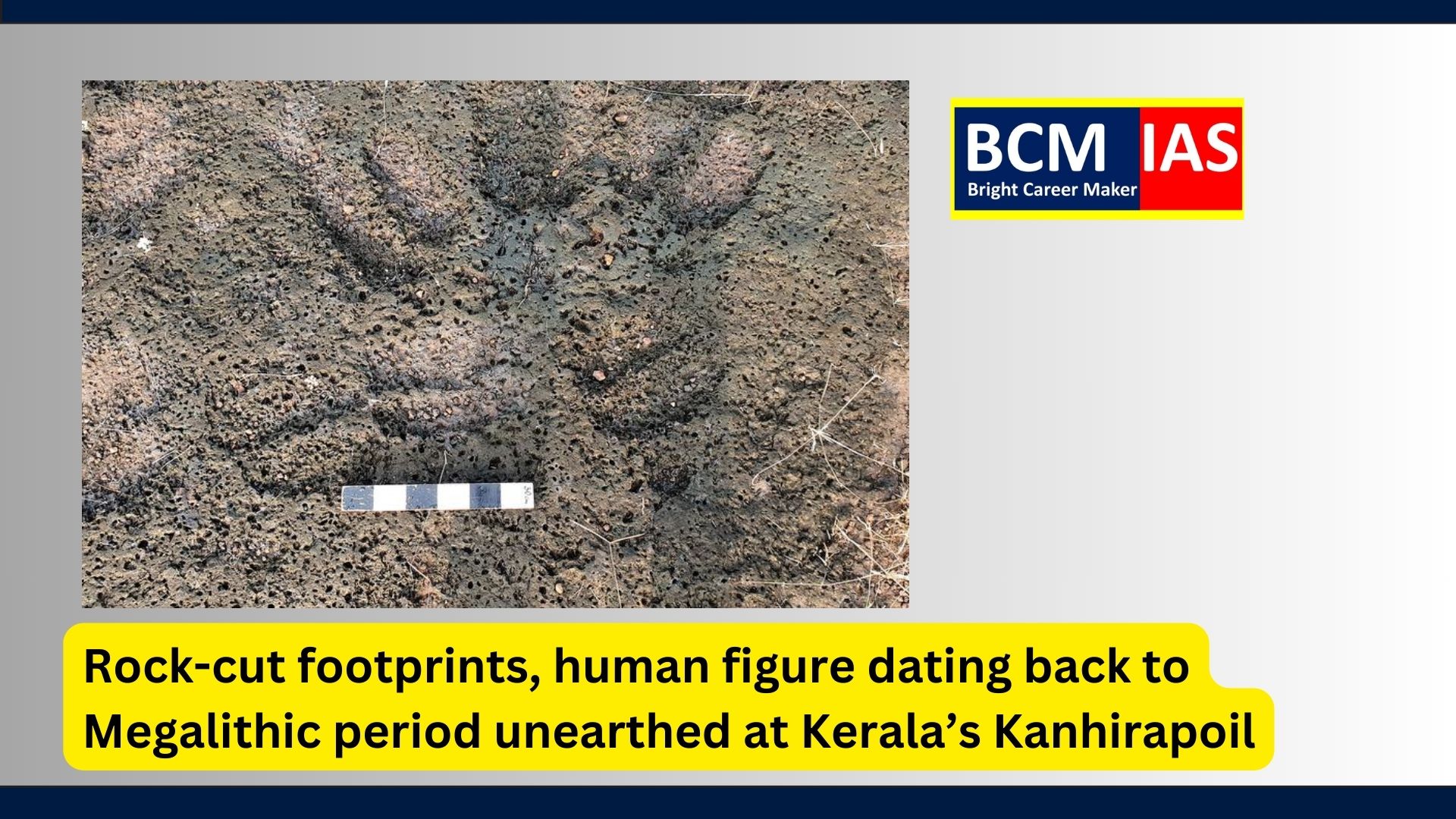
Rock-cut footprints, human figure dating back to Megalithic period unearthed at Kerala’s Kanhirapoil
The recent archaeological
discovery at Kanhirapoil in Kasaragod, Kerala, is significant for understanding
the Megalithic period (approximately 1500 BCE–500 CE) in the region. The
site features 24 pairs of rock-cut footprints and a human figure,
believed to represent ancient ritualistic and cultural practices. This finding
provides a valuable lens to examine the social, artistic, and spiritual life of
prehistoric communities in Kerala.
1. Description of the
Discovery
- Location:
Private property in Kanhirapoil, Madikkai grama panchayat, Kasaragod,
Kerala.
- Elements Found:
- Footprints:
24 pairs of rock-cut footprints, ranging from 6 to 10 inches,
suggesting the involvement of both children and adults.
- Human Figure:
Intricately etched at the end of the footprints.
- Circular Pits:
Four circular pits surround the human figure.
- Directionality:
All footprints point toward the west, symbolically significant in
many ancient cultures as the direction of the setting sun and often
associated with the afterlife.
2. Archaeological
Significance
- Megalithic Period Context:
- The Megalithic period is known for
stone structures (dolmens, cairns, and menhirs) and rock carvings often
associated with burial practices and ancestor worship.
- The carvings at Kanhirapoil align with
the cultural and spiritual themes of the time, as suggested by the
footprints possibly representing souls of the deceased.
- Cultural Interpretation:
- The footprints might signify ancestral
homage, marking their journey or presence.
- Local beliefs attribute the footprints
to a goddess, reflecting the integration of prehistoric practices
into local folklore.
- Comparison with Other Sites:
- The carvings bear similarities to rock
art in Avalakki Pera (Udupi district, Karnataka) and other sites
in north Kerala:
- Edakkal Caves, Wayanad:
Famous for human and animal figures, depicting social and cultural
activities of prehistoric communities.
- Cheemeni Ariyittapara:
Human figures.
- Ettukudukka, Kannur:
Bull figures.
- Erikulam Valiyapara and
Neeleswaram, Kasaragod: Temple decorations
and a running tiger.
- These shared artistic and thematic
elements suggest a connected cultural heritage across north Kerala
and adjoining Karnataka.
3. Tools and Techniques
- Craftsmanship:
- The carvings were made with iron
tools, indicating advanced metallurgical skills during the Megalithic
period.
- The intricate design of the human
figure and the circular pits showcases the artistic abilities and
meticulous planning of the people.
4. Historical and Cultural
Context
- Symbolism and Beliefs:
- The carvings are likely tied to ritualistic
practices, such as ancestor worship or commemorating the dead.
- The westward orientation of the
footprints aligns with ancient beliefs about the afterlife and the
direction of the dead's journey.
- Societal Insights:
- The variation in footprint sizes hints
at the participation of an entire community, including children
and adults, in these rituals.
- This suggests a collective social
structure with shared spiritual and cultural traditions.
5. Broader Archaeological
and Cultural Implications
- Historical Significance:
- The discovery contributes to
understanding the daily lives, rituals, and artistic expressions
of Kerala's prehistoric communities.
- It reaffirms the cultural richness of
the Megalithic period in south India.
- Shared Cultural Heritage:
- The findings, along with other rock art
sites in Kerala and Karnataka, indicate a regional interconnectedness
during the prehistoric era.
- Future Research:
- The discovery invites further
exploration to uncover more such sites and understand their linkages.
- Detailed studies of the tools and
materials used for carving can offer insights into technological advancements
of the time.
6. Challenges and
Preservation
- Threats:
- The site is located on private
property, posing risks of neglect, vandalism, or unauthorized
alterations.
- Natural erosion and human activity
could further damage the carvings.
- Need for Preservation:
- Proper documentation and conservation
efforts are necessary to protect the site.
- Government and local bodies must
collaborate to raise awareness and declare the site a protected
monument.
7. Conclusion
The discovery of rock-cut
footprints and human figures at Kanhirapoil enriches our understanding of
Kerala's Megalithic culture, providing a rare glimpse into the artistic
and spiritual practices of prehistoric communities. Its connection with other
rock art sites highlights a shared cultural legacy across the region.
This finding underscores the importance of preserving and studying such
sites to uncover the rich tapestry of India’s ancient past and its enduring
influence on present cultural traditions.
Mains Question
Q. The recent discovery of Megalithic
rock-cut footprints in Kerala’s Kasaragod highlights the cultural and
archaeological significance of the region. Discuss the relevance of such
discoveries in understanding India’s prehistoric heritage and outline the challenges
in preserving them. (250 words)
Answer (Hint)
The discovery of Megalithic
rock-cut footprints and a human figure at Kanhirapoil, Kasaragod, Kerala,
offers a fascinating glimpse into the cultural, spiritual, and artistic
practices of prehistoric communities. These carvings, made with iron tools,
likely date back 2,000 years and symbolize ancestor worship or ritualistic
practices. The westward orientation of the footprints aligns with ancient
beliefs about the afterlife. The involvement of both children and adults, as
indicated by varying footprint sizes, suggests communal participation in
rituals.
This discovery is part of a
broader cultural narrative that includes Edakkal Caves in Wayanad and
similar rock art sites in Karnataka and north Kerala, reflecting a shared prehistoric
cultural heritage in southern India. These findings provide valuable
insights into social structures, metallurgical skills, and artistic expressions
of the time.
However, the preservation of
such sites poses significant challenges:
1. Threats
from Development: The site is on private property, risking
neglect or destruction due to construction or human interference.
2. Lack
of Awareness: Local communities and authorities may
undervalue these discoveries, leading to inadequate preservation efforts.
3. Natural
Degradation: Exposure to weather conditions can erode
these carvings over time.
To address these challenges,
the government should collaborate with local stakeholders to ensure the site is
documented and protected as a heritage monument. Raising public
awareness about the cultural significance of such sites and implementing strict
preservation policies are vital for safeguarding India’s prehistoric heritage
for future generations.
MCQs
Q1. The recently discovered
Megalithic rock-cut footprints at Kanhirapoil in Kerala are believed to
represent:
1. Ritualistic
dances of ancient communities.
2. Souls
of deceased individuals, as part of ancestor worship.
3. Marks
of deities worshipped during the Megalithic period.
4. Migration
paths of prehistoric humans.
Answer:
- Correct Option:
2. Souls of deceased individuals, as part of ancestor worship.
Q2. What is the direction of
the rock-cut footprints discovered at Kanhirapoil, and why is it significant?
1. North;
represents seasonal changes.
2. East;
symbolizes the rise of civilization.
3. West;
associated with the afterlife in ancient beliefs.
4. South;
signifies the direction of worship.
Answer:
- Correct Option:
3. West; associated with the afterlife in ancient beliefs.
Q3. The carvings at
Kanhirapoil were made using which material?
1. Stone
tools.
2. Iron
tools.
3. Bronze
chisels.
4. Wooden
instruments.
Answer:
- Correct Option:
2. Iron tools.
Q4. Which of the following
sites in Kerala is also known for significant Megalithic rock art?
1. Ajanta
Caves, Maharashtra.
2. Edakkal
Caves, Wayanad.
3. Bhimbetka
Rock Shelters, Madhya Pradesh.
4. Hampi,
Karnataka.
Answer:
- Correct Option:
2. Edakkal Caves, Wayanad.
Q5. What are some challenges
in preserving archaeological sites like the Kanhirapoil rock-cut footprints?
1. Erosion
due to natural weathering.
2. Lack
of awareness and documentation.
3. Threats
from private ownership and development.
4. All
of the above.
Answer:
- Correct Option:
4. All of the above.


Comments on “Rock-cut footprints, human figure dating back to Megalithic period unearthed at Kerala’s Kanhirapoil”