

Revival of the Gharial
Population in the Brahmaputra: A Conservation Milestone
Analysis
·
The sighting of a lone female gharial in the Kaziranga
National Park and Tiger Reserve has ignited hope for the revival of this
critically endangered species in the Brahmaputra river system.
·
The gharial
(Gavialis gangeticus), known for its distinctive elongated snout, was thought
to have been extinct in this region since the 1950s.
·
The discovery of this female gharial, along with
subsequent efforts to reintroduce the species, marks a significant step in
conservation efforts.
Rediscovery and Current Habitat
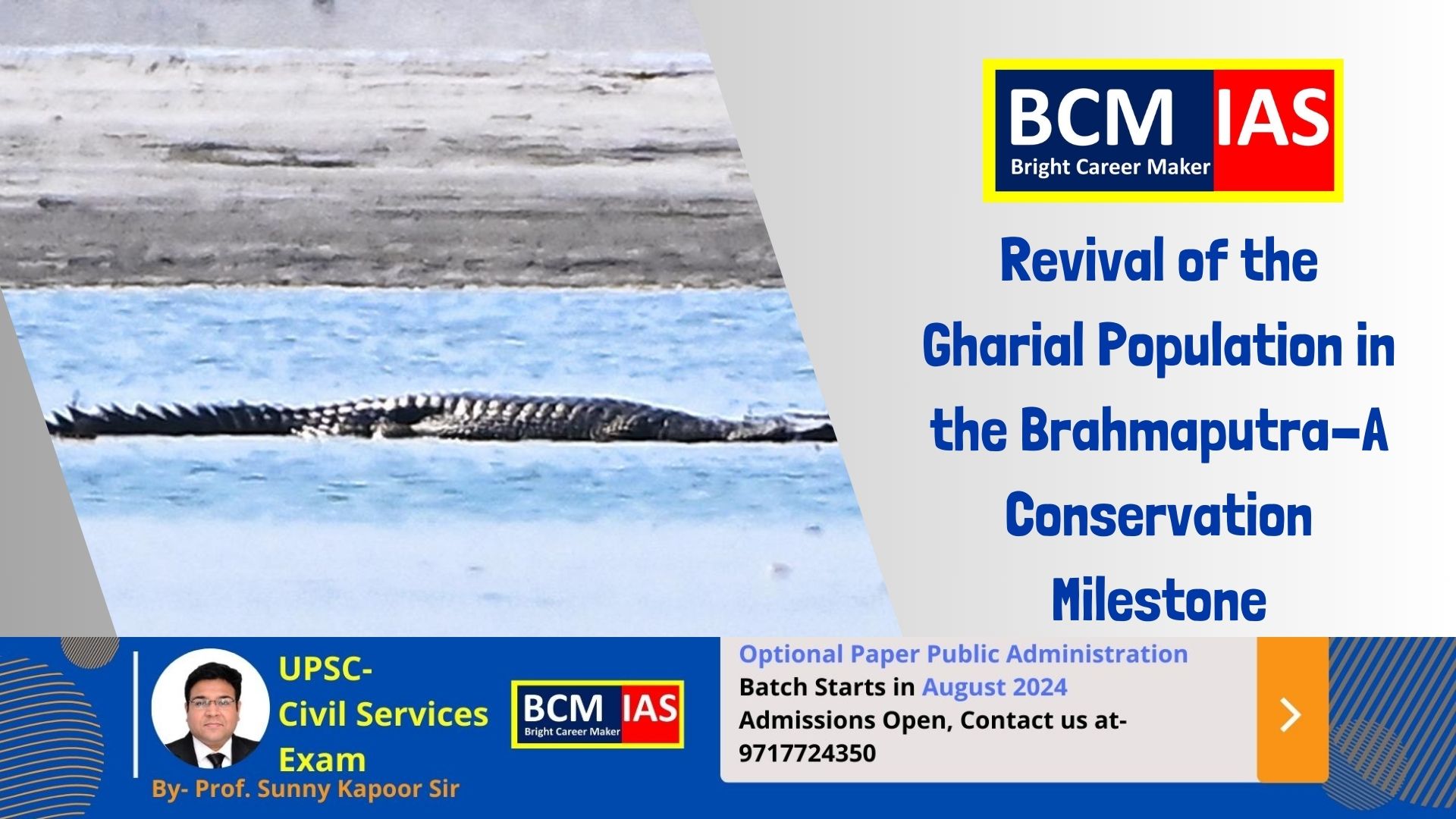
The lone female gharial, now measuring 2.55 meters, was first
spotted in 2021 within the Biswanath Wildlife Division of Kaziranga. The
reptile has been observed moving between a sandy shoreline and a sandbar with a
water depth of 4.5 meters, indicating suitable habitat conditions within the
Brahmaputra river system. This rediscovery has highlighted the potential for
repopulating the river with gharials.
Historical Context
Gharials were believed to have been wiped out from the
Brahmaputra river system during the 1950s, with only sporadic and unconfirmed
sightings reported in the 1990s. The current sighting of a female gharial after
such a long gap is significant as it offers a rare opportunity to reintroduce
and establish a breeding population in the region.
Conservation Efforts and Survey
The Turtle Survival Alliance Foundation India (TSAFI) and the
Assam Forest Department conducted a comprehensive survey along a 160-km stretch
of the Brahmaputra. This survey aimed to identify potential habitats and
understand the current status of aquatic reptiles in the river. The survey
team's findings underscore the importance of focused conservation efforts to
support the gharial population.
Recommendations and Future Plans
One of the key recommendations from the survey report is the
high-priority reintroduction of gharials in the Brahmaputra. The Kaziranga
National Park and Tiger Reserve, with its favorable conditions, has been
identified as a suitable site for a gharial breeding program. If approved,
gharials will likely be brought from the Kukrail gharial breeding center near
Lucknow to initiate this program.
Importance of Reintroduction
Reintroducing gharials to the Brahmaputra is crucial for
several reasons:
- Biodiversity: It will enhance the
biodiversity of the river ecosystem, contributing to the ecological
balance.
- Conservation: It serves as a critical step in
conserving a species listed as critically endangered by the International
Union for Conservation of Nature (IUCN).
- Research
and Education:
It provides opportunities for research and education about gharial
conservation and the importance of preserving endangered species.
Conclusion
The discovery of a lone female gharial in the Brahmaputra
river system represents a beacon of hope for the revival of this endangered
species in the region. The proposed reintroduction and breeding program, if
implemented, could significantly contribute to the conservation of gharials.
This effort underscores the importance of sustained conservation initiatives
and inter-agency collaboration to restore and protect the biodiversity of
India's river ecosystems.
Multiple Choice Questions
Question 1
What is the significance of the lone female gharial sighted
in Kaziranga National Park?
A. It represents the first sighting of any gharial in India.
B. It indicates the possibility of repopulating the Brahmaputra with gharials.
C. It is a new species of crocodile discovered in the Brahmaputra.
D. It marks the end of gharial conservation efforts in India.
Answer: B. It indicates the possibility of repopulating the Brahmaputra with
gharials.
Question 2
When was the lone female gharial first spotted in the
Brahmaputra river system?
A. 2019
B. 2020
C. 2021
D. 2022
Answer: C. 2021
Question 3
What organization collaborated with the Assam Forest
Department to survey aquatic reptiles along the Brahmaputra?
A. Wildlife Conservation Society
B. World Wildlife Fund
C. Turtle Survival Alliance Foundation India (TSAFI)
D. International Union for Conservation of Nature (IUCN)
Answer: C. Turtle Survival Alliance Foundation India (TSAFI)
Question 4
From where are the gharials likely to be brought for the
reintroduction program in Kaziranga?
A. Sundarbans National Park
B. Gir National Park
C. Kukrail gharial breeding center near Lucknow
D. Jim Corbett National Park
Answer: C. Kukrail gharial breeding center near Lucknow
Question 5
What distinguishes the gharial (Gavialis gangeticus) from
other crocodilians?
A. Its ability to climb trees
B. Its elongated snout
C. Its bright green color
D. Its size, being the smallest of the crocodilians
Answer: B. Its elongated snout


Comments on “Revival of the Gharial Population in the Brahmaputra: A Conservation Milestone”