


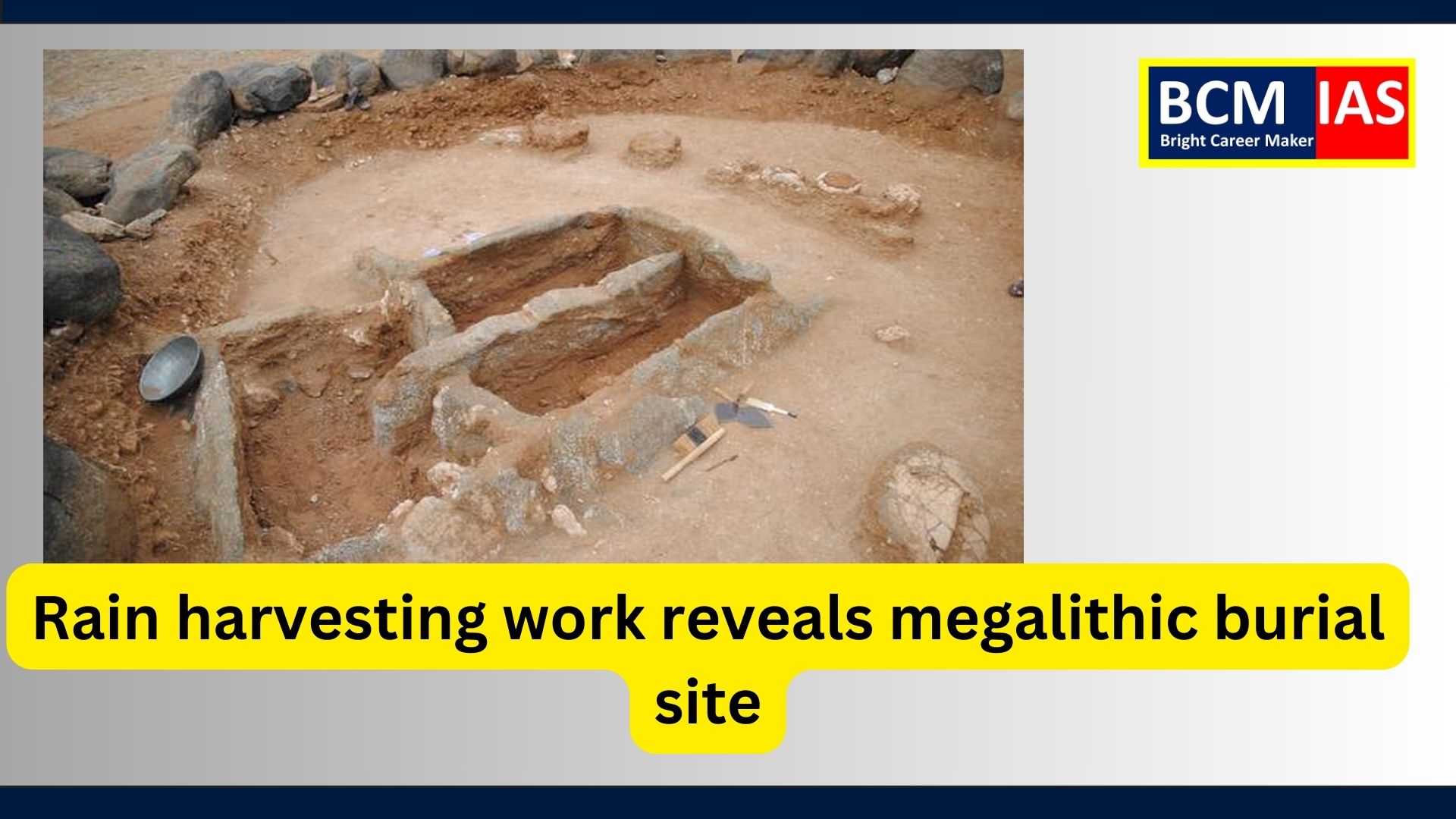
Rain harvesting work reveals megalithic burial site
News Analysis
The recent discovery of a megalithic burial
site in Kundlikkad, Palakkad district, Kerala, has captured the attention of
archaeologists, providing a unique opportunity to uncover insights into ancient
civilizations in the region. This analysis will focus on the significance of
the find, the insights into the cultural and historical context, and the need
for deeper research.
Introduction
The rainwater harvesting project initiated by the Koduvayur
grama panchayat inadvertently led to the discovery of an extensive
megalithic urn burial site on the Kundlikkad hill in the Nenmara
forest division. While rainwater pits were being dug by laborers, more than
60 urn burials, some with intact capstones, were uncovered. These findings have
drawn the interest of archaeologists like Dr. K. Rajan, who believes the
site could hold key insights into the transition from the Mesolithic to Iron
Age periods in Kerala.
Features
of the Burial Site
1. Unusually Large Number of Urn Burials
- Urn Burials: The site is notable for having an unusually large number
of urn burials concentrated on a hilltop. This is uncommon, as
hilltop sites generally have other types of megalithic burials, such as cairn
heaps with cists, stone circles, and dolmens.
- Classic Urn Burials: Unlike other burial sites, the ones at Kundlikkad
featured classic urn burials, where large pottery urns were used to
hold the remains of the dead. Some of these urns had capstones, indicating
a careful burial process.
2. Archaeological Findings
- Microliths: Several microliths (small stone tools used during the
Mesolithic period) were found at the site, adding to the belief that there
could be a connection between the Mesolithic and Iron Age periods.
- Pottery: The site also yielded various types of pottery, including black
ware, red ware, and black and red ware. These types of pottery are
commonly associated with megalithic cultures in South India. Additionally,
one urn displayed fingertip impressions, while smaller pot
fragments bore cord-impressed designs.
- Capstones and Boulder Stones: The presence of capstones
covering some urns and the circling boulder stones indicates the
use of chisels to prepare these stones. The chisel marks found on
the rock suggest the use of tools in the burial process, showing the
technological abilities of the people from that period.
Significance
of the Discovery
1. Cultural and Historical Insight
- Connection Between Mesolithic and Iron Age: The presence of both microliths
and urn burials points to a potential continuity or overlap between
Mesolithic and Iron Age cultures in Kerala. This site may help
archaeologists better understand how these two periods interacted,
particularly in terms of burial practices, social structures, and
technological advancements.
- Unique Hilltop Burials: Most megalithic burial sites are not found on
hilltops, which makes the Kundlikkad discovery even more significant. The elevation
of the site may indicate the social importance of the burials,
suggesting the presence of a hierarchical society or special status
attributed to the individuals buried there.
2. Technological and Artistic Skills
- The
use of chisels to craft capstones and boulder stones shows that the
megalithic builders possessed considerable technological skills. The pottery
designs, including cord-impressed patterns and fingertip impressions,
also highlight the artistic and cultural aspects of the people of
this period.
Challenges
Faced and Need for Further Study
- Damage to Artifacts: Unfortunately, several urns were broken during the
rainwater harvesting project due to the laborers’ lack of awareness
regarding the archaeological significance of the area. This underscores
the need for cultural awareness programs and protective measures
to preserve such important heritage sites.
- Excavation and Dating: Without proper excavation, the site’s
precise date cannot be confirmed. Dr. Rajan estimates the burials to be
over 2,500 years old, but this remains speculative until more
detailed archaeological studies, including carbon dating, are
conducted.
- Further Research on Megalithic Cultures: This site has the potential to
add substantial information to our understanding of the megalithic
period in Kerala, particularly in terms of burial practices, social
structures, and interactions with other periods like the Mesolithic. A comprehensive
excavation could provide more evidence about the people who lived
during this time, their societal norms, and their technological
advancements.
Conclusion
The discovery of the Kundlikkad burial site offers a
rare glimpse into the megalithic culture of Kerala and possibly bridges
a gap in understanding between the Mesolithic and Iron Age periods. The
large number of urn burials, the presence of microliths, and the
discovery of pottery with intricate designs all point to a complex and
advanced society that existed more than 2,500 years ago. To fully understand
the historical importance of this site, extensive archaeological excavations
and further research are essential. This discovery not only enriches the
cultural heritage of Kerala but also opens up new avenues for the study of
ancient civilizations in India.
Mains Practice Question
Discuss the significance of the megalithic burial site recently
discovered on Kundlikkad hill in Kerala. What does this discovery reveal about
the link between Mesolithic and Iron Age periods in the region? Highlight the
importance of such findings for understanding ancient Indian civilizations.
Introduction:
The discovery of a megalithic burial site on Kundlikkad
hill, Palakkad district in Kerala, during a rainwater harvesting project
has brought significant attention to India's ancient past. The site, with an
unusually large number of urn burials, offers potential insight into the transition
between the Mesolithic and Iron Age periods in the region. Such discoveries
contribute to understanding the social, cultural, and technological
developments of ancient Indian civilizations.
Body:
1. Significance of the Discovery:
The megalithic burial site at Kundlikkad stands out for the
following reasons:
- Unusual
Hilltop Urn Burials: It is rare to find urn burials on hilltops in southern
India. Most megalithic sites in the region have cairn heaps, stone
circles, and dolmens. This discovery of urn burials in large numbers
provides an uncommon insight into burial practices.
- Age
of the Burials:
Though not yet definitively dated, the burials are estimated to be over 2,500
years old, possibly belonging to the Iron Age period. This provides a
new understanding of megalithic culture in Kerala.
2. Insights into Cultural and Technological
Aspects:
- Link
Between Mesolithic and Iron Age: The site offers a rare chance to explore the cultural
transition from Mesolithic to Iron Age. The presence of microliths
(small stone tools from the Mesolithic period) suggests continuity or
overlap between these periods in the region.
- Technological
Abilities: The use
of chisels for cutting stones to create capstones and circling
boulders demonstrates the technological skills of the people. The pottery
types discovered (black ware, red ware, black and red ware) reflect
the artisanship and technological advancements during this period.
3. Cultural and Social Practices:
- Burial
Customs: The
presence of large urns with capstones and fingertip-impressed
pottery suggests that these were ritualistic burials, indicating
respect for the dead and the development of religious or spiritual
beliefs during the megalithic period.
- Hierarchical
Society: The
urn burials and the effort put into their construction, especially on a
hilltop, hint at the possibility of a hierarchical society, where
the elite or important individuals were given special burial treatment.
4. Challenges Faced:
- Damage
to Artifacts:
Several urns were damaged during the initial digging as the workers were
unaware of the site’s archaeological significance. This underlines
the importance of preservation and awareness programs to protect
heritage sites.
- Need
for Excavation and Dating: The precise dating of the site can only be confirmed
after systematic excavation and scientific analysis (such as carbon
dating). Without this, the timeline and significance of the site
remain speculative.
5. Importance of the Discovery for
Understanding Ancient Indian Civilizations:
- Archaeological
and Historical Value: This site could significantly enrich our knowledge of Iron Age
megalithic culture in South India, particularly Kerala. It may also
help in understanding the interaction between Mesolithic and Iron Age
cultures, providing evidence of societal evolution, technological
advancements, and the development of rituals and religious practices.
- Contributions
to Indian Heritage: Discoveries like Kundlikkad enhance India’s archaeological
heritage and underscore the importance of interdisciplinary
research involving archaeology, history, and anthropology for
understanding India's ancient past.
Conclusion:
The Kundlikkad megalithic burial site is a major
archaeological discovery that holds immense potential for understanding ancient
Indian civilizations, particularly the transition from Mesolithic to Iron
Age cultures. The urn burials, pottery, and microliths reveal much
about the social, technological, and religious practices of the people who
lived over 2,500 years ago. Proper excavation, preservation, and study
of the site are essential for unlocking its full historical significance and
preserving India’s rich cultural heritage.
MCQs for Practice
1. Which of the following accurately describes a megalithic
burial?
A) Burial marked by stone structures such as cairns and
dolmens.
B) Burial in the riverbeds covered with pebbles.
C) Burial using large wooden coffins placed in underground pits.
D) Burial performed in a cave with pottery and animal remains.
Answer: A
Explanation: Megalithic burials are characterized by the use of large
stones (megaliths) to mark burial sites. These include stone structures like
cairns, dolmens, cists, and urn burials, which are indicative of ancient
megalithic cultures.
2. What makes the recent megalithic burial discovery on
Kundlikkad hill in Kerala unique?
A) The burial site was located underwater.
B) The site had an unusually large number of urn burials on a hilltop.
C) The site exclusively contained animal remains and pottery.
D) The discovery consisted mainly of ancient manuscripts buried with the urns.
Answer: B
Explanation: The discovery of a large number of urn burials on a
hilltop is unique because most megalithic burials in South India are found
in plains or low-altitude areas, and consist mainly of cairn circles or
dolmens.
3. The Kundlikkad burial site is significant for its
potential to reveal links between which two historical periods?
A) Harappan and Vedic
B) Mesolithic and Iron Age
C) Neolithic and Bronze Age
D) Chalcolithic and Harappan
Answer: B
Explanation: The Kundlikkad burial site could reveal insights into the
link between the Mesolithic and Iron Age periods due to the presence of
microliths and megalithic burial practices.
4. Which of the following types of pottery were discovered at
the Kundlikkad burial site?
A) Grey ware, white ware, and blue ware
B) Black ware, red ware, and black-and-red ware
C) Painted grey ware, ochre-colored ware
D) Lustrous red ware, buff ware
Answer: B
Explanation: The pottery discovered at the site includes black ware,
red ware, and black-and-red ware, which are typical of megalithic cultures
and often associated with burial practices.
5. What technological evidence from the Kundlikkad site
indicates the use of advanced tools by the people of the megalithic period?
A) The presence of ancient metal coins found in the urns
B) Chisel marks found on capstones and boulder stones
C) Iron weapons buried alongside the urns
D) Stone inscriptions detailing the life of the deceased
Answer: B
Explanation: Chisel marks on capstones and boulder stones
indicate the use of advanced stone-cutting tools, reflecting the technological
skills of the people who buried the urns.


Comments on “Rain harvesting work reveals megalithic burial site”