


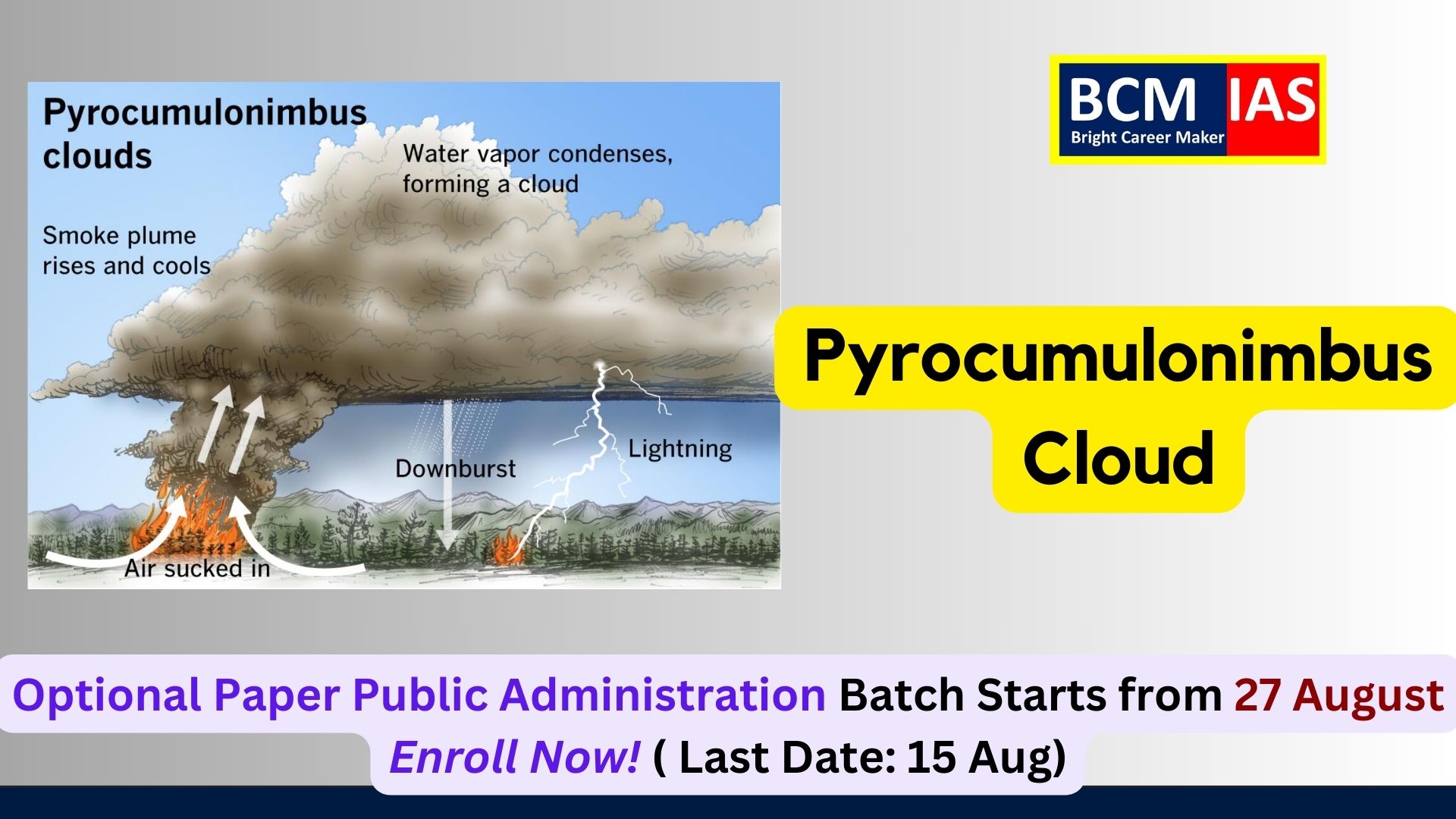
Pyrocumulonimbus Cloud
News Analysis
Introduction
The recent wildfires in the United States and Canada have led
to the formation of pyrocumulonimbus clouds, a phenomenon that is becoming
increasingly common due to the intensifying effects of climate change. These
clouds, which can generate thunderstorms and further exacerbate wildfires,
highlight the complex interplay between natural disasters and atmospheric
conditions.
What Are Pyrocumulonimbus Clouds?
Pyrocumulonimbus clouds are a type of thundercloud formed by
the intense heat generated from the Earth's surface, particularly from
wildfires or volcanic eruptions. These clouds are not an everyday occurrence
and are usually associated with extreme conditions.
- Formation
Process:
- The
intense heat from a wildfire or volcanic activity warms the surrounding
air, causing it to rise rapidly into the atmosphere.
- As
this hot, buoyant air ascends, it carries with it water vapor, smoke, and
ash. Upon cooling at higher altitudes, the water vapor condenses around
ash particles, forming a grey or brown cloud known as a pyrocumulus
cloud.
- If
the conditions are right, particularly if there is sufficient moisture
and continued heat, the pyrocumulus cloud can evolve into a
pyrocumulonimbus cloud. These clouds can reach altitudes of up to 50,000
feet, creating their own weather systems, including thunderstorms.
- Impacts:
- Pyrocumulonimbus
clouds can produce lightning without much rainfall, which can ignite new
wildfires far from the original fire.
- The
strong winds generated by these clouds can also cause wildfires to spread
more rapidly and unpredictably.
Why Are Pyrocumulonimbus Clouds Becoming More
Frequent?
The frequency of pyrocumulonimbus clouds has increased in
recent years, a trend that many scientists attribute to climate change.
- Rising
Occurrence:
- Historically,
around 102 pyrocumulonimbus events were recorded globally each year, with
Canada accounting for about half of these. However, during 2023, Canada
alone recorded 140 such events, highlighting a significant increase.
- Impact
of Climate Change:
- Climate
change is leading to higher global temperatures, which in turn are making
wildfires more frequent and intense. These more extreme fires provide the
necessary heat to form pyrocumulonimbus clouds more often.
- While
the exact mechanisms linking climate change to the increased formation of
these clouds are still being studied, the correlation between rising
temperatures and the frequency of pyrocumulonimbus events is becoming
increasingly clear.
Conclusion
Pyrocumulonimbus clouds, once a relatively rare phenomenon,
are becoming more common as wildfires grow in intensity and frequency due to
climate change. These clouds not only signify the immediate dangers of
wildfires but also represent a broader environmental challenge as the planet
warms. Addressing the root causes of climate change and implementing effective
wildfire management strategies are critical steps in mitigating the risks
associated with these powerful and dangerous atmospheric events.
MCQs
1. What are pyrocumulonimbus clouds?
A) Clouds that form exclusively over
oceans.
B) Thunderclouds created by intense
heat from the Earth's surface, often due to wildfires or volcanic eruptions.
C) Clouds that form in polar regions.
D) Clouds that form only during
winter storms.
Answer: B) Thunderclouds created by intense heat from the Earth's surface, often
due to wildfires or volcanic eruptions.
2. Which of the following is a primary cause of
pyrocumulonimbus cloud formation?
A) Tropical storms
B) Volcanic eruptions and wildfires
C) Tornadoes
D) Heavy rainfall
Answer: B) Volcanic eruptions and wildfires
3. Why are pyrocumulonimbus clouds concerning in the context
of wildfires?
A) They can cause heavy rainfall that
extinguishes wildfires.
B) They can generate lightning, which
may ignite new wildfires.
C) They have no impact on wildfires.
D) They cool the atmosphere and
reduce the intensity of wildfires.
Answer: B) They can generate lightning, which may ignite new wildfires.
4. What is one of the reasons for the increased frequency of
pyrocumulonimbus clouds in recent years?
A) Improved weather forecasting
technologies.
B) Rising global temperatures due to
climate change.
C) Increased volcanic activity.
D) Changes in ocean currents.
Answer: B) Rising global temperatures due to climate change.
5. In which of the following countries were a significant
number of pyrocumulonimbus clouds recorded during the extreme wildfire season
in 2023?
A) Brazil
B) Australia
C) Canada
D) India
Answer: C) Canada


Comments on “Pyrocumulonimbus Cloud”