


Daily
Current Affairs Analysis- 19 June 2024
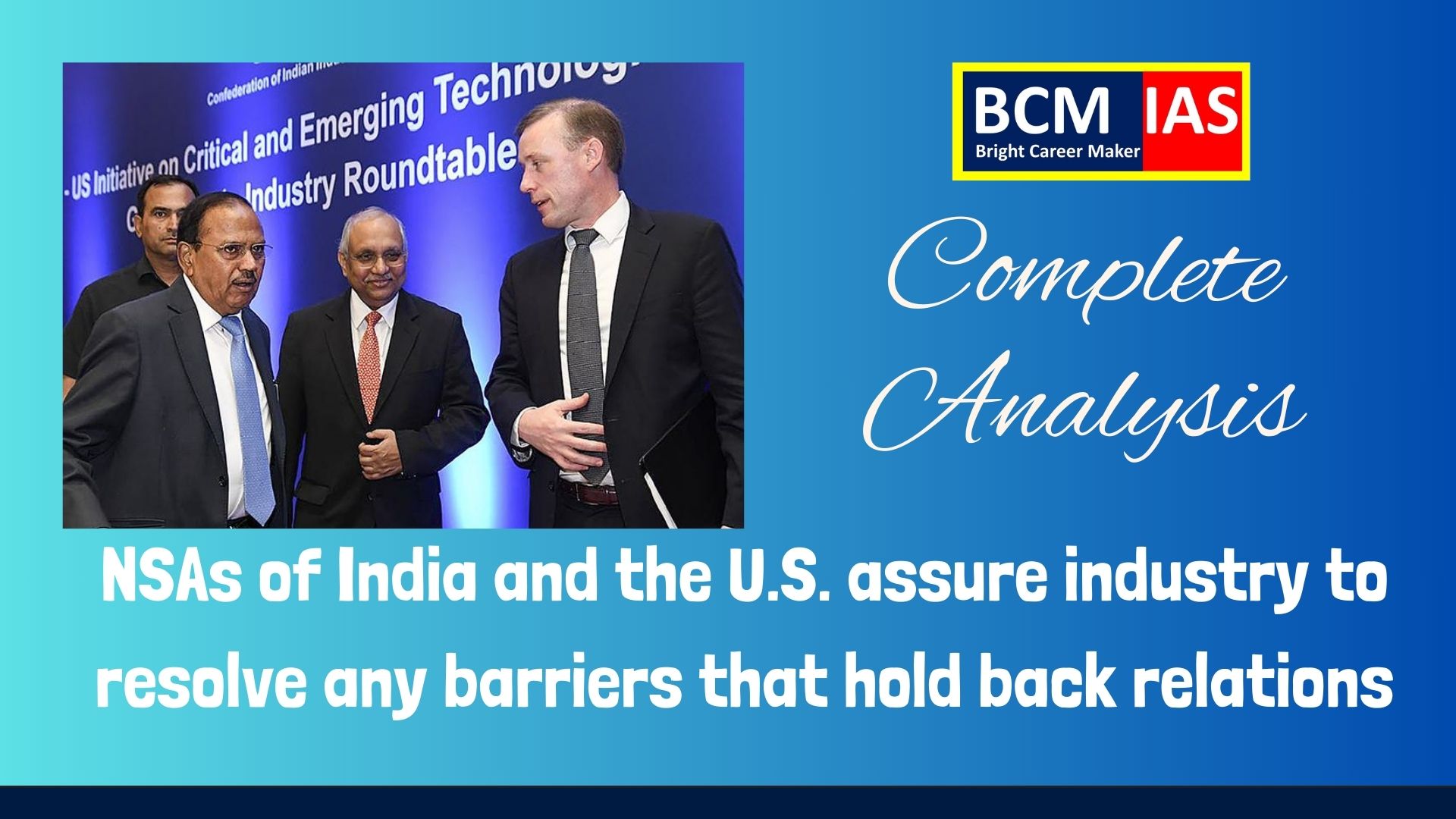
NSAs of India and the U.S.
Assure Industry to Resolve Any Barriers That Hold Back Relations
The
Analysis-
Introduction
·
The
bilateral relations between India and the United States have evolved
significantly over the years, particularly in the areas of defense and
technology.
·
Recently,
National Security Adviser (NSA) Ajit Doval of India and his U.S. counterpart,
Jake Sullivan, reaffirmed their commitment to strengthening these ties.
·
This
commitment was emphasized during the Initiative for Critical and Emerging
Technology (iCET) industry CEO roundtable held in New Delhi.
·
The
roundtable, organized by the Confederation of Indian Industry (CII), served as
a platform for both countries to discuss and address barriers hindering deeper
collaboration, particularly in defense innovation and high-end technologies.
Bilateral Collaboration and Strategic
Interests:
1. Technological Collaboration:
o Defense Innovation: Ajit Doval highlighted the progress made in
the defense innovation roadmap and start-ups, emphasizing the critical role of
technology in safeguarding the value systems of both nations. The focus on
semiconductors was particularly noted as a vital area of collaboration.
o Critical and Emerging
Technologies: The
iCET roundtable underscored the necessity for India and the U.S. to stay at the
forefront of technological advancements. This is seen as crucial for both
nations to protect their strategic interests and maintain global leadership in
emerging technologies.
2. Industry Engagement:
o Communication and Feedback: Both NSAs assured the industry leaders that
their concerns and experiences would be addressed with due diligence. The CII
statement emphasized the importance of industry feedback in identifying and
resolving barriers to closer collaboration.
o Policy Framework
Requirements: The
roundtable provided a forum for both sides to present their requirements and
expectations regarding policy frameworks. This dialogue is aimed at enhancing
cooperation in defense and high-end technologies.
Specific Areas of Focus:
1. Export Controls and Ease of Doing Business:
o U.S. Expectations: The U.S. side pressed for the strengthening of
India’s export controls and improvements in the ease of doing business. These
measures are seen as essential for facilitating smoother bilateral trade and
technology transfer.
o Mega Deals: The U.S. emphasized the need for expediting
two significant deals – the purchase of 31 MQ-9B unmanned aerial vehicles and
the local license manufacture of GE-414 jet engines. These deals, which are in
advanced stages but pending clearance by India’s Cabinet Committee on Security,
are crucial for bolstering defense ties.
2. Licensing and R&D Funding:
o Indian Expectations: India pressed for the liberalization of U.S.
licensing requirements to facilitate access to more high-tech areas.
Additionally, there was a call for increased funding for research and
development, which is essential for driving innovation and technological
advancement in India.
Role of Government Facilitation:
1.
Addressing
Barriers: Government facilitation was
identified as a key factor in addressing barriers to bilateral collaboration.
Both NSAs assured that specific issues raised by the industry would be
addressed through appropriate government interventions.
2.
Enhancing
Cooperation: The
industry leaders shared their vision for future collaboration, highlighting
areas where government facilitation could play a pivotal role in unshackling
further collaboration. This includes streamlining regulatory processes and
providing incentives for joint ventures and partnerships.
Way Forward
Strengthening Bilateral Ties:
1.
Policy
Reforms: Both nations need to
undertake policy reforms that facilitate smoother trade and technology
transfer. For India, this includes strengthening export controls and improving
the ease of doing business. For the U.S., this involves liberalizing licensing
requirements for high-tech exports to India.
2.
Expediting
Deals: The Indian government should
expedite the clearance of the two mega defense deals. This would not only
enhance India’s defense capabilities but also strengthen the strategic
partnership between the two nations.
Enhancing Industry-Government
Collaboration:
1.
Regular
Dialogues: Establishing regular
dialogues between industry leaders and government officials can ensure that
concerns are promptly addressed, and collaborative efforts are continuously
aligned with strategic goals.
2.
Increased
Funding for R&D: Both
governments should prioritize increasing funding for research and development
in critical and emerging technologies. This will drive innovation and ensure
that both nations remain at the forefront of technological advancements.
Promoting Joint Ventures and
Partnerships:
1.
Incentivizing
Collaborations:
Providing incentives for joint ventures and partnerships between Indian and
U.S. companies can foster deeper collaboration. This includes tax benefits,
grants, and other financial incentives.
2.
Technology
Transfer Agreements:
Facilitating technology transfer agreements that benefit both nations can
enhance their technological capabilities and drive mutual growth.
Conclusion
The
recent iCET industry CEO roundtable has underscored the commitment of India and
the U.S. to resolving barriers that hinder deeper bilateral collaboration. By
addressing policy requirements, expediting significant deals, and enhancing
government facilitation, both nations can strengthen their strategic
partnership. Through continuous dialogue, increased funding for R&D, and
promoting joint ventures, India and the U.S. can ensure that they remain at the
forefront of technological advancements and protect their shared value systems.
This collaborative effort is essential for achieving mutual strategic interests
and fostering global technological leadership.
Relevance in UPSC Exam
Prelims
Topic: Current Events of National and
International Importance
1.
India-U.S.
Relations: The news about the bilateral
collaboration between India and the U.S. under the iCET initiative falls under
current events of national and international importance.
2.
Defense
and Technology Agreements: Details
about the defense innovation roadmap, semiconductor industry, and mega deals
like the purchase of MQ-9B UAVs and GE-414 jet engines are relevant for
questions related to defense and technology agreements.
Mains
General Studies Paper II: Governance,
Constitution, Polity, Social Justice and International relations
1.
India
and its Neighborhood- Relations:
o Subtopic: Bilateral, regional and global groupings and
agreements involving India and/or affecting India’s interests.
o Details: The news discusses bilateral relations between
India and the U.S., focusing on technological and defense collaboration, policy
frameworks, and strategic interests.
2. Effect of Policies and Politics of Developed and Developing Countries
on India’s Interests:
o Subtopic: Impact of policies of the U.S. on India,
particularly in technology and defense.
o Details: The U.S. pressing for strengthened export
controls and ease of doing business in India, and the expectations from India
regarding mega defense deals.
General Studies Paper III: Technology,
Economic Development, Bio-Diversity, Environment, Security and Disaster
Management
1.
Science
and Technology: Developments and their Applications and Effects in Everyday
Life:
o Subtopic: Indigenization of technology and developing
new technology.
o Details: The focus on the semiconductor industry and
the defense innovation roadmap.
2.
Security
Challenges and Their Management in Border Areas; Linkages of Organized Crime
with Terrorism:
o Subtopic: Various Security Forces and Agencies and their
Mandate.
o Details: Collaboration in defense technologies and
purchase of unmanned aerial vehicles (UAVs) for enhancing national security.
Interview
Topic: Current Affairs and International
Relations
1.
India-U.S.
Strategic Partnership:
o Details: Understanding the broader strategic interests,
technological collaboration, and defense agreements between India and the U.S.
2.
Policy
Framework and Government Facilitation:
o Details: The role of government in facilitating
industry collaboration and addressing barriers in bilateral relations.
Probable Mains Question
"Discuss the significance of India-U.S. technological
collaboration under the iCET initiative and its impact on bilateral
relations."
Model Answer-
Introduction
India
and the United States have been strategic partners in various domains, with
technology and defense playing pivotal roles in their bilateral relations. The
Initiative for Critical and Emerging Technology (iCET) marks a significant step
towards enhancing this collaboration. During a recent industry CEO roundtable
organized by the Confederation of Indian Industry (CII) in New Delhi, National
Security Advisers (NSAs) Ajit Doval of India and Jake Sullivan of the U.S.
emphasized the importance of staying at the forefront of technology to protect
and defend shared value systems. The event highlighted significant progress in
defense innovation and the semiconductor industry, assuring the resolution of
barriers that impede deeper India-U.S. ties.
Demand of the Question
Significance of India-U.S. Technological
Collaboration:
1.
Strategic
Interests:
o Defense Innovation: Enhanced defense capabilities through the
indigenization of technology and the development of new technologies. The focus
on semiconductors and defense start-ups exemplifies this commitment.
o Technology Leadership: Staying at the forefront of technological
advancements ensures that both nations can protect their strategic interests
and maintain global leadership in critical and emerging technologies.
2.
Economic
Impact:
o Industry Growth: Collaboration in high-end technologies such as
semiconductors boosts industry growth and creates economic opportunities. This
is particularly significant for India's growing tech industry.
o Ease of Doing Business: Strengthening export controls and improving
the ease of doing business are critical to facilitating smoother bilateral
trade and technology transfer.
3.
Diplomatic
Relations:
o Enhanced Partnership: Technological collaboration under initiatives
like iCET strengthens diplomatic relations and builds mutual trust. It paves
the way for further cooperation in other strategic areas.
o Policy Alignment: Aligning policies and frameworks between the
two nations ensures smoother collaboration and addresses specific barriers,
such as licensing requirements and funding for research and development.
Impact on Bilateral Relations:
1.
Defense
and Security:
o Mega Deals: The purchase of 31 MQ-9B unmanned aerial
vehicles and local manufacture of GE-414 jet engines are significant for
enhancing India's defense capabilities and deepening defense ties.
o Strategic Alignment: Collaboration in defense innovation aligns the
strategic interests of both nations, ensuring a unified approach to global
security challenges.
2.
Technological
Advancements:
o Research and Development: Increased funding and support for R&D in
critical technologies enhance technological capabilities and innovation in both
countries.
o Liberalization of Licensing: Easing licensing requirements for high-tech
exports to India facilitates access to advanced technologies, driving
technological growth.
3.
Economic
and Industrial Growth:
o Investment Opportunities: Bilateral collaboration opens up investment
opportunities in high-tech industries, promoting economic growth and industrial
development.
o Job Creation: Technological advancements and industry growth
create employment opportunities, contributing to economic stability and
development.
Way Forward
Strengthening Bilateral Ties:
1.
Policy
Reforms:
o India: Strengthen export controls and improve the
ease of doing business to facilitate smoother trade and technology transfer.
o U.S.: Liberalize licensing requirements for
high-tech exports to India, enabling greater access to advanced technologies.
2.
Expediting
Defense Deals:
o Clearance: Expedite the clearance of significant defense
deals, such as the purchase of MQ-9B UAVs and GE-414 jet engines, to enhance
defense capabilities and deepen strategic ties.
o Implementation: Ensure timely implementation of these deals to
realize their full potential in strengthening defense collaboration.
Enhancing Industry-Government
Collaboration:
1.
Regular
Dialogues:
o Industry Feedback: Establish regular dialogues between industry
leaders and government officials to address concerns and align collaborative
efforts with strategic goals.
o Government Facilitation: Provide government support and facilitation to
address specific barriers and promote smoother industry collaboration.
2.
Increased
Funding for R&D:
o Investment: Prioritize investment in research and
development in critical and emerging technologies to drive innovation and
maintain technological leadership.
o Collaboration: Foster collaborative R&D efforts between
Indian and U.S. institutions to leverage expertise and resources.
Promoting Joint Ventures and
Partnerships:
1.
Incentives:
o Financial Incentives: Provide tax benefits, grants, and other
financial incentives to promote joint ventures and partnerships between Indian
and U.S. companies.
o Policy Support: Develop supportive policies that encourage
collaborative efforts and facilitate smoother partnerships.
2.
Technology
Transfer Agreements:
o Frameworks: Establish clear frameworks for technology
transfer agreements that benefit both nations and enhance their technological
capabilities.
o Implementation: Ensure effective implementation of these
agreements to drive mutual growth and innovation.
Educational and Awareness Programs:
1.
Awareness
Campaigns:
o Public Education: Conduct awareness campaigns to educate the
public and industry stakeholders on the importance of technological
collaboration and its benefits.
o Capacity Building: Provide training and capacity-building
programs to enhance skills and knowledge in critical and emerging technologies.
2.
Monitoring
and Evaluation:
o Regular Assessment: Implement regular monitoring and evaluation of
collaborative projects to assess their effectiveness and make necessary
adjustments.
o Data Collection: Enhance data collection and analysis to inform
policy decisions and track progress towards collaborative goals.
Conclusion
The
technological collaboration between India and the U.S. under the iCET
initiative is a significant step towards strengthening bilateral relations. By
addressing policy requirements, expediting significant defense deals, and
enhancing government facilitation, both nations can deepen their strategic
partnership. Through continuous dialogue, increased funding for R&D, and
promoting joint ventures, India and the U.S. can ensure that they remain at the
forefront of technological advancements and protect their shared value systems.
This collaborative effort is essential for achieving mutual strategic interests
and fostering global technological leadership.
MCQs for Prelims Practice
1.
What
was the primary focus of the iCET industry CEO roundtable held in New Delhi?
o a) Trade agreements
o b) Defense innovation and
start-ups
o c) Agricultural collaboration
o d) Healthcare advancements
Answer: b) Defense innovation and start-ups
Explanation: The roundtable emphasized progress made in defense
innovation and the importance of the semiconductor industry.
2.
Which
organization organized the iCET industry CEO roundtable?
o a) NITI Aayog
o b) Confederation of Indian
Industry (CII)
o c) FICCI
o d) ASSOCHAM
Answer: b) Confederation of Indian Industry (CII)
Explanation: The CII organized the roundtable to facilitate discussions
on bilateral collaboration between India and the U.S.
3.
What
are the two mega deals discussed at the roundtable?
o a) Purchase of F-16 fighter
jets and Apache helicopters
o b) Purchase of 31 MQ-9B UAVs
and GE-414 jet engines manufacture
o c) Purchase of Abrams tanks
and Patriot missiles
o d) Purchase of Rafale jets
and S-400 missile systems
Answer: b) Purchase of 31 MQ-9B UAVs and GE-414 jet
engines manufacture
Explanation: The two mega deals discussed were the purchase of 31 MQ-9B
UAVs and the local license manufacture of GE-414 jet engines.
4.
What
did the U.S. side emphasize as necessary for facilitating smoother bilateral
trade?
o a) Reduction in tariffs
o b) Strengthening India’s
export controls and ease of doing business
o c) Increasing military aid
o d) Providing financial
assistance
Answer: b) Strengthening India’s export controls and
ease of doing business
Explanation: The U.S. side pressed for the strengthening of India’s
export controls and improvements in the ease of doing business.
5.
What
specific area did the Indian side press for during the roundtable?
o a) Reduction in U.S. military
presence in Asia
o b) Liberalization of U.S.
licensing requirements for high-tech areas
o c) Increased imports of
Indian agricultural products
o d) Support for India's bid
for permanent UNSC membership
Answer: b) Liberalization of U.S. licensing
requirements for high-tech areas
Explanation: The Indian side pressed for the liberalization of U.S.
licensing requirements to facilitate access to high-tech areas and increased
funding for R&D.


Comments on “NSAs of India and the U.S. Assure Industry to Resolve Any Barriers That Hold Back Relations”