


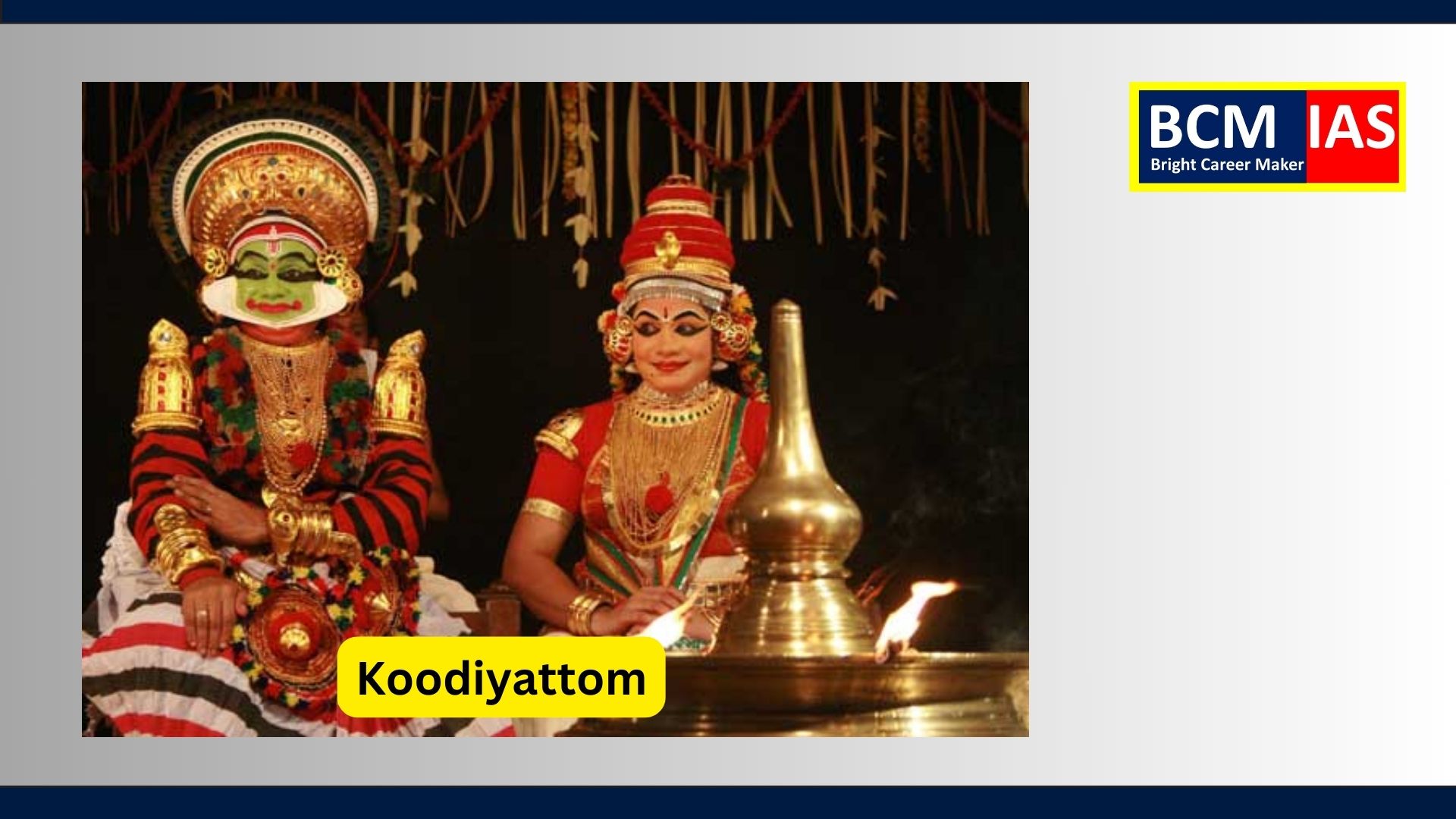
Koodiyattom: A Traditional Indian Art Form
Introduction:
·
Koodiyattom, one of the oldest living theatrical
traditions in the world, is a classical Sanskrit drama tradition from Kerala. I
·
t has been recognized by UNESCO as a Masterpiece of
the Oral and Intangible Heritage of Humanity.
·
This ancient form of drama integrates elements of
drama, dance, and ritual performance, traditionally performed in temples.
Key
Features:
1.
Origin: Traced back over 2,000 years, Koodiyattom is believed to be
closely associated with Kerala’s temple rituals.
2.
Sacred Theatre: Initially performed in temple precincts, the performances
were ritualistic, considered offerings to the gods.
3.
Language: Primarily in Sanskrit, but actors also use Prakrit and
Malayalam during performances. The use of Sanskrit makes Koodiyattom unique
among classical Indian theatre forms.
4.
Performance Style: It involves elaborate facial expressions (abhinaya),
detailed hand gestures (mudras), and stylized dance movements to convey
emotions and narrative.
5.
Music and Instruments: The accompaniment of Mizhavu (a
large copper drum), Edakka, and Kuzhithalam adds rhythm and drama to the
performances.
Various
Styles:
The art form has several schools, each contributing its own
nuances:
- Ammannur
Style
- Kalamandalam
or Painkulam Style
- Mani
Gurukulam Style
Each tradition may have slight differences in the use of sign
language (mudras), facial expressions, and performance techniques, though
costumes remain largely similar.
Role
of Cholliyattom:
A collective of young artists called Cholliyattom was
formed to preserve and promote the art form, particularly during the COVID-19
pandemic. The collective now serves as a platform to bring together young
artists from different Koodiyattom schools to learn various styles and pass on
these traditions to future generations. The group has organized festivals like Natya
Yauvanam-2024, promoting cross-cultural learning within Koodiyattom.
MCQs for Practice
1.
What is the primary objective of the collective
'Cholliyattom' formed by young Koodiyattom artists in Kerala?
a) To promote traditional temple rituals
b) To unify various Koodiyattom styles and pass them on to future generations
c) To modernize Koodiyattom performances for global audiences
d) To create a new contemporary dance form
Answer: b) To unify various Koodiyattom styles and pass them on to future
generations
2.
Which of the following is NOT one of the major
styles or traditions in Koodiyattom?
a) Kalamandalam or Painkulam style
b) Ammannur style
c) Mani Gurukulam style
d) Bharatanatyam style
Answer: d) Bharatanatyam style
3.
What role does the 'Natya Yauvanam' festival play in
promoting Koodiyattom?
a) It showcases modern adaptations of Koodiyattom
b) It introduces Koodiyattom to international audiences
c) It provides a platform for young artists to explore different Koodiyattom
styles
d) It focuses on fusion performances with other Indian classical dance forms
Answer: c) It provides a platform for young artists to explore different
Koodiyattom styles
4.
Which of the following instruments is commonly
associated with Koodiyattom performances?
a) Tabla
b) Mizhavu
c) Sitar
d) Harmonium
Answer: b) Mizhavu
5.
What challenge does the collective Cholliyattom seek
to address among the audience of Koodiyattom performances?
a) Lack of understanding of the performance's vocabulary and intricacies
b) High costs of organizing Koodiyattom festivals
c) Inadequate promotion of Koodiyattom outside Kerala
d) Declining interest in temple-based art forms
Answer: a) Lack of understanding of the performance's vocabulary and intricacies


Comments on “Koodiyattom: A Traditional Indian Art Form”