


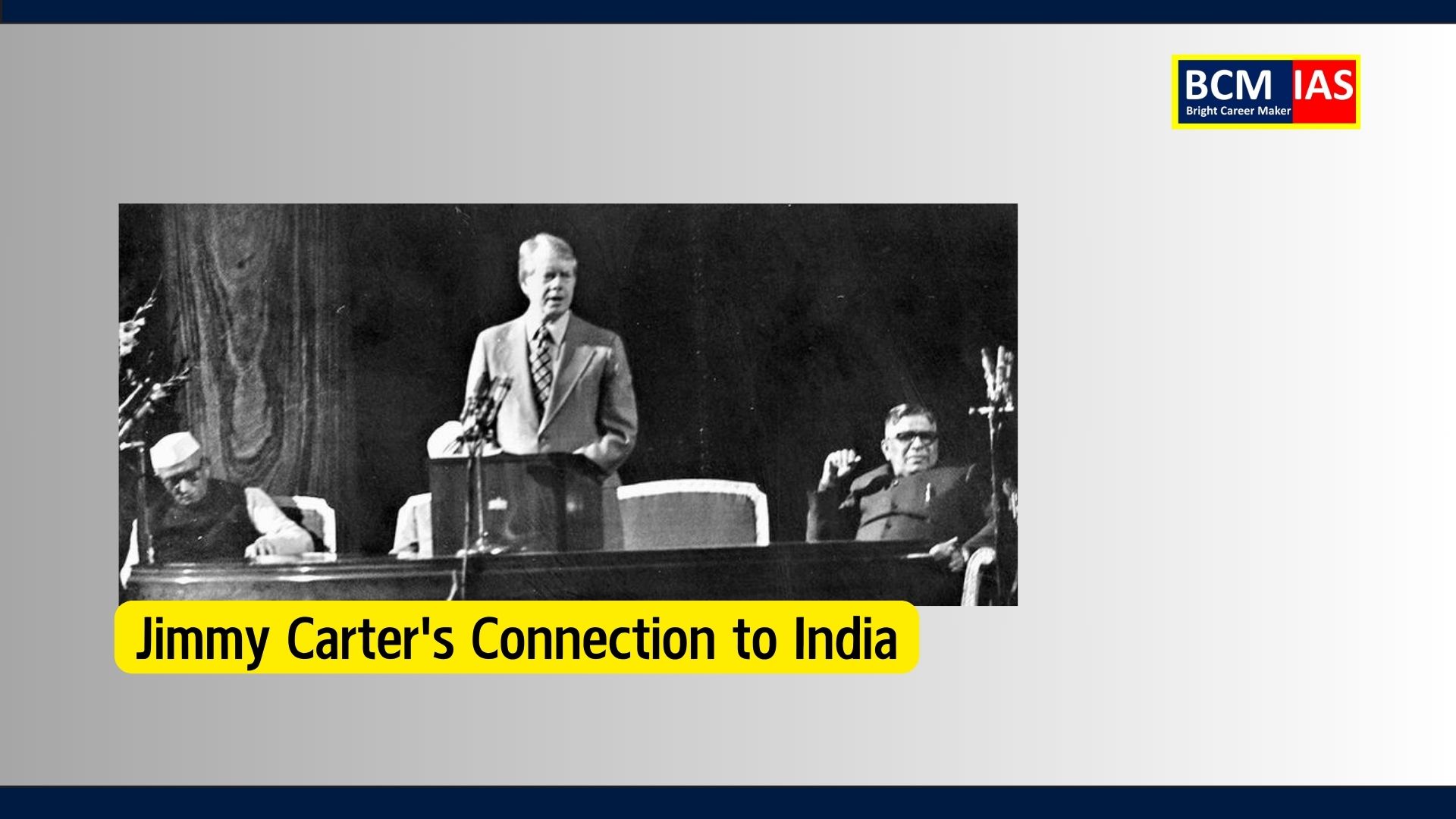
Jimmy
Carter's Connection to India
Historical
Context and Significance
Jimmy Carter’s visit
to India in January 1978 marked a pivotal moment in India-U.S. relations during
the Cold War era. It was notable for its personal and political dimensions, as
well as for the strained negotiations over nuclear non-proliferation. The visit
occurred against the backdrop of India’s political recovery post-Emergency
(1975-77) and the global tension surrounding nuclear arms control.
Key
Aspects of the Visit
1. Personal Connection:
o Carter’s relationship with India was influenced by his
mother, Lillian Carter, who served as a Peace Corps volunteer in Maharashtra
during the 1960s. This connection added a deeply personal touch to his
engagement with India.
o The warm reception from President Neelam Sanjiva Reddy,
who referred to Carter as a “great humanist,” and the large public rally at
Ramlila Maidan underscored the mutual goodwill.
2. Political Undertones:
o Unlike his predecessors, Carter did not combine his visit
to India with a trip to Pakistan, signaling a shift in U.S. engagement with
South Asia.
o His speech in Parliament, drawing parallels between
India’s struggle against the Emergency and the U.S.’s response to the Watergate
scandal, resonated with India’s democratic ethos.
Challenges
During the Visit
1. Nuclear Non-Proliferation and Tarapur Atomic Power Station:
o The U.S. was critical of India’s nuclear test in 1974 and
sought to pressure India into signing the Non-Proliferation Treaty (NPT).
o Carter tried to use India’s dependence on nuclear fuel
for the Tarapur Atomic Power Station as leverage, but Prime Minister Morarji
Desai, despite his Gandhian stance against atomic bombs, refused to compromise
on India’s nuclear sovereignty.
o A "hot mic" incident revealed Carter’s
frustration, as he referred to Desai as “pretty adamant” on nuclear issues,
reflecting the deep divide between the two countries on this matter.
2. India’s Perception:
o Carter’s pre-visit statement suggesting India was moving
away from the Soviet Union and back towards neutrality ruffled feathers in
India, which valued its independent foreign policy stance.
o Indian media commentary post-visit focused on differences
over the nuclear issue, highlighting the tension despite other productive areas
of cooperation.
Achievements
of the Visit
1. Space and Agricultural Cooperation:
o The visit led to progress in space cooperation, with
potential collaboration in satellite technology.
o U.S. agricultural aid to India was another area of
productive engagement.
2. Diplomatic Goodwill:
o Despite nuclear disagreements, both sides managed to
maintain a cordial atmosphere, reflecting the broader goodwill in the
relationship.
o U.S. Ambassador Robert Goheen acknowledged Desai’s
efforts to prevent the nuclear debate from souring the visit’s overall success.
Implications
for India-U.S. Relations
1. Short-Term Impact:
o The visit highlighted the enduring challenges in
reconciling India’s insistence on nuclear sovereignty with U.S.
non-proliferation goals.
o It reinforced India’s resolve to maintain an independent
stance in the global nuclear order.
2. Long-Term Legacy:
o Carter’s focus on democracy, peace, and global
cooperation contributed to the foundation of stronger India-U.S. ties in
subsequent decades.
o The visit set a precedent for high-level engagement
between the two nations, even amidst disagreements.
Conclusion
Jimmy Carter’s 1978
visit to India was a milestone in bilateral ties, blending personal goodwill
with complex political negotiations. While differences over nuclear issues
remained unresolved, the visit underscored the potential for collaboration in
areas like space and agriculture. It also reflected India’s firm commitment to
its sovereign policies, shaping its engagement with global powers. The enduring
personal and political legacy of the visit continues to influence India-U.S.
relations.


Comments on “Jimmy Carter's Connection to India”