

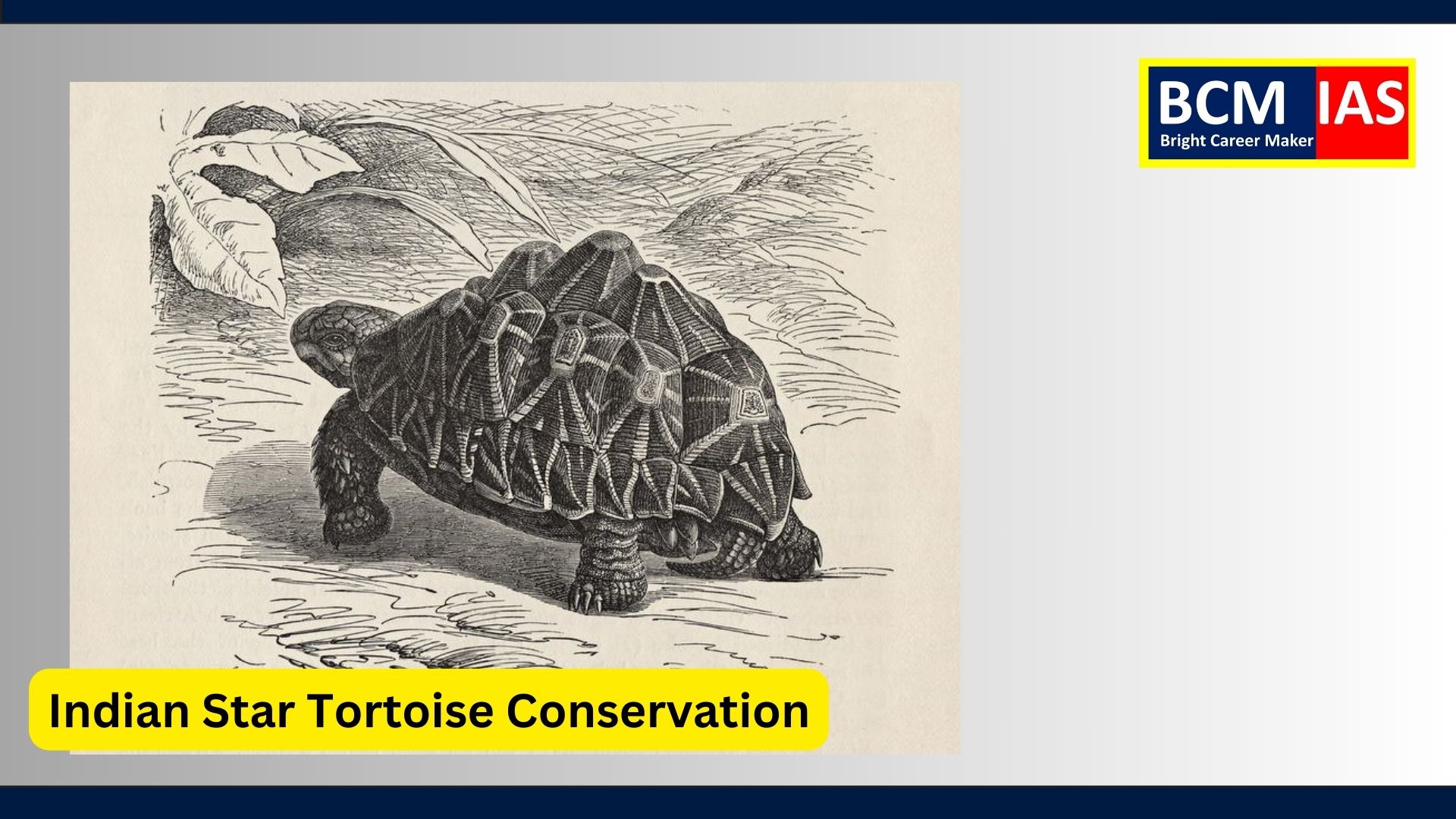
Indian Star Tortoise Conservation
The study on the Indian star
tortoise (Geochelone elegans) brings critical insights into the species'
conservation through evidence-based strategies. As a species endemic to South
Asia, the tortoise faces threats from habitat loss, illegal wildlife
trafficking, and unscientific conservation practices.
Key Findings of the
Study:
1. Genetic
Diversity and Distinct Groups:
o Researchers
identified two genetically distinct groups of Indian star tortoises: the
northwestern group and the southern group, corresponding to their
geographic distribution.
o Genetic
distinctions emerged about 2 million years ago, linked to the climatic
separation of humid and arid regions in India.
2. Illegal
Wildlife Trade:
o Despite
being protected under Appendix I of CITES and Schedule I of the
Wildlife (Protection) Act, 1972, the tortoises are part of one of the
largest global wildlife trafficking networks.
o Hundreds of
tortoises have been seized at international airports and along borders,
indicating their high demand as exotic pets.
3. Conservation
Challenges:
o Unscientific
Releases: Captured tortoises are often released without consideration
of their genetic or geographical origins, risking loss of genetic diversity and
lower breeding success.
o Shell-Pyramiding
in Captive Tortoises: Nutritional deficiencies in captivity lead to shell
deformities, further complicating their mating and survival.
Methodology:
1. Sample
Collection:
o Tissue
samples were collected from 14 locations across India during the tortoise breeding
season with the help of forest staff and local communities.
o Researchers
used scutes (keratin layers) instead of blood samples to avoid harm to
the tortoises.
2. Genetic
Analysis:
o DNA was
extracted and sequenced for mitochondrial genes like cytochrome B and
NADH dehydrogenase 4 to identify genetic differences.
o Microsatellite
markers were screened to determine individual relationships, mating
patterns, and population changes.
Conservation
Implications:
1. Evidence-Based
Conservation:
o The study
confirms the presence of two Evolutionarily Significant Units (ESUs),
validating the need to treat northwestern and southern populations separately
during conservation efforts.
o Mixing
populations during release could reduce genetic diversity and breeding rates,
further endangering the species.
2. Better
Conservation Strategies:
o The
findings emphasize the need for location-specific strategies to release rescued
tortoises in areas corresponding to their genetic origins.
o Greater
care in captive breeding programs is needed to address shell-pyramiding and
ensure their health and survival.
3. Public
Awareness and Law Enforcement:
o Awareness
campaigns can reduce the demand for tortoises as pets and highlight the
illegality of owning protected species.
o Strengthening
anti-trafficking measures and collaboration among international agencies is
crucial.
Broader Context:
1. Ecological
Role:
o Indian star
tortoises contribute to their ecosystems by aiding seed dispersal and
maintaining grassland health.
o Preserving
their populations is essential for maintaining ecological balance.
2. Global
Wildlife Trade:
o The illegal
trade of tortoises highlights the need for coordinated global efforts to combat
wildlife trafficking and enforce CITES regulations.
3. Future
Research:
o Further
studies on their habitat preferences, behavior, and breeding patterns can
enhance conservation outcomes.
Conclusion:
The study on the Indian star
tortoise underscores the importance of genetic evidence in conservation
planning. By identifying distinct genetic groups and addressing
conservation challenges like unscientific releases and illegal trafficking, the
research provides actionable insights for protecting this vulnerable species.
Collaborative efforts between researchers, policymakers, and the public are
essential to ensure the survival of the Indian star tortoise and its habitat.
MCQs
for Practice
1. The Indian star tortoise is
listed under which of the following categories?
1. Appendix I
of CITES
2. Schedule I
of the Wildlife (Protection) Act, 1972
3. Vulnerable
category of the IUCN Red List
Select the correct answer using the
codes below:
A. 1 and 2 only
B. 2 and 3 only
C. 1 and 3 only
D. 1, 2, and 3
Answer: A. 1 and 2
only
2. The natural habitats of the
Indian star tortoise are predominantly found in:
A. Arid regions of northwest India
and parts of Sri Lanka
B. Himalayan foothills and Gangetic plains
C. Coastal mangroves of eastern India
D. Tropical rainforests of the Western Ghats
Answer: A. Arid
regions of northwest India and parts of Sri Lanka
3. Which of the following is the
primary threat to the Indian star tortoise?
A. Habitat destruction due to
agriculture
B. Illegal wildlife trafficking for the pet trade
C. Overexploitation for traditional medicine
D. Climate change-induced habitat loss
Answer: B. Illegal
wildlife trafficking for the pet trade
4. What does the presence of two
genetically distinct groups of Indian star tortoises indicate?
A. A need for mixing populations to
enhance genetic diversity
B. The evolutionary adaptation of tortoises to different habitats
C. A new subspecies of Indian star tortoise has been discovered
D. Genetic homogeneity across populations
Answer: B. The
evolutionary adaptation of tortoises to different habitats
5. In the study, researchers used
scutes from the Indian star tortoise for genetic analysis because:
A. Scutes are easier to collect and
cause less harm compared to blood samples
B. Scutes provide better DNA quality than other tissue samples
C. Scutes are readily available and cheaper to analyze
D. Scutes can be stored for longer periods without degradation
Answer: A. Scutes
are easier to collect and cause less harm compared to blood samples


Comments on “Indian Star Tortoise Conservation”