


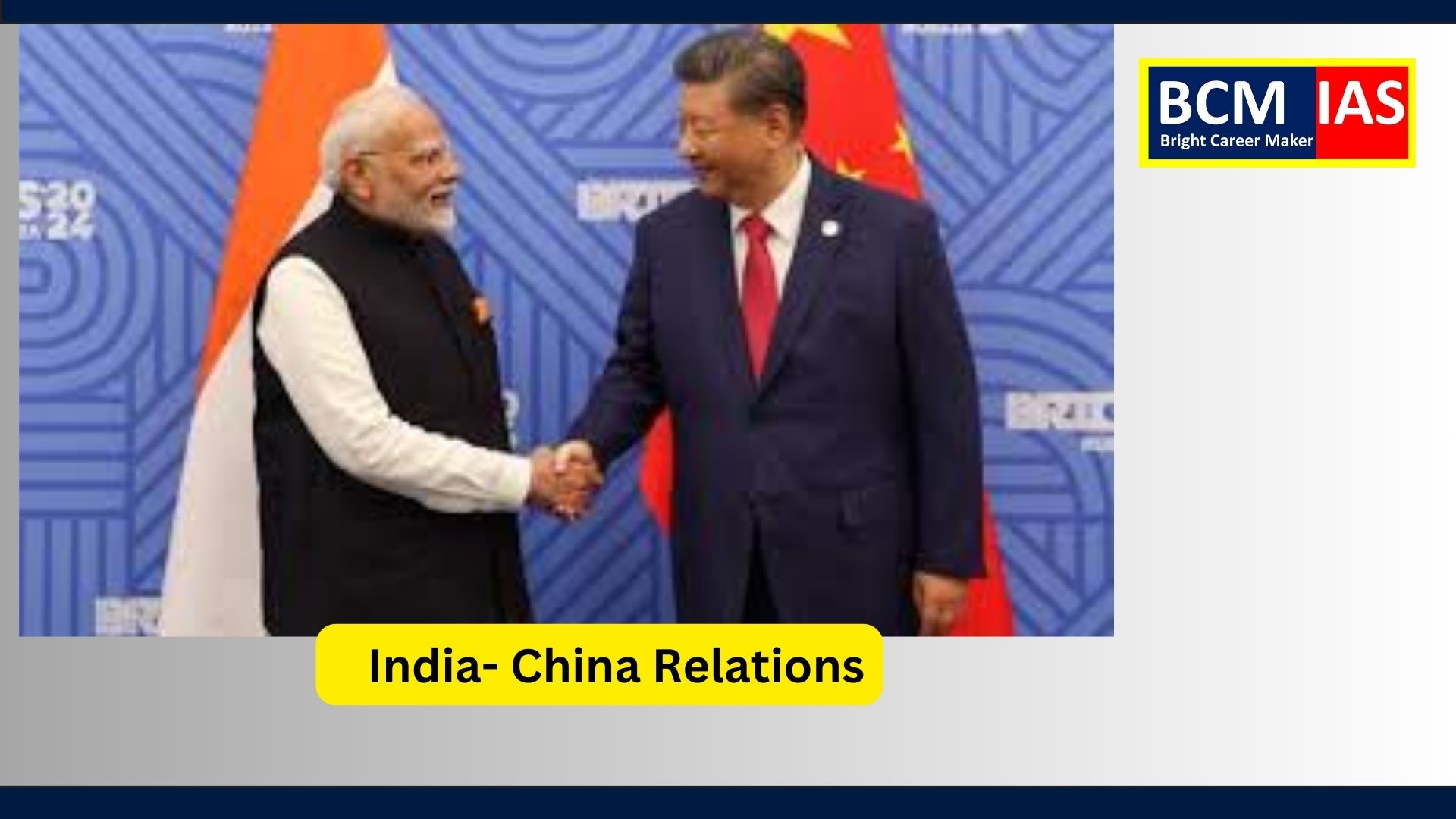
India- China Relations
The recent diplomatic tensions between India and Canada have
brought significant attention to the complexities and challenges in their
bilateral relations. Below is an analysis:
Background
India and Canada share a longstanding relationship based on
democratic values, multiculturalism, and economic cooperation. However, recent
allegations by Canada, accusing India of involvement in the assassination of
Hardeep Singh Nijjar, a Khalistani leader, have strained diplomatic ties. India
has strongly denied these accusations, leading to a diplomatic standoff with
both nations expelling diplomats and suspending consular services.
Key
Developments and Issues
1. Assassination
Allegations and Diplomatic Fallout:
o Canadian Prime
Minister's allegations have caused a serious diplomatic rift.
o India’s denial
and strong stance, along with retaliatory measures such as expelling diplomats,
show the depth of the current crisis.
o Canada has
sought support from the Five Eyes intelligence alliance, complicating the issue
on a global scale.
2. Role
of the Five Eyes Alliance:
o The alliance,
which includes the US, UK, Australia, Canada, and New Zealand, helps Canada
gain international support in intelligence-sharing and diplomatic backing.
o The involvement
of this alliance indicates the global security and diplomatic implications of
this issue.
3. Major
Areas of Cooperation:
o Economic
Cooperation: Trade
between the two countries was growing, with discussions on a Comprehensive
Economic Partnership Agreement (CEPA) to further boost economic ties. However,
the current crisis has put these negotiations on hold.
o Diaspora
Connections: The
large Indian diaspora in Canada, including NRIs, has traditionally been a
bridge for strong cultural and economic relations. Tensions over the Khalistan
issue challenge this bond.
o Strategic and
Multilateral Engagements: Both nations have cooperated in international forums such as the
Commonwealth, G20, and UN, addressing global issues. Their collaboration
extended to education, technology, and space, which may now face uncertainties
due to the political climate.
4. Challenges
in India-Canada Relations:
o Khalistan
Issue: India views
Canada’s perceived tolerance for Khalistani elements as a security threat. This
issue has been a consistent point of contention, reflecting a clash of
perceptions on national security and freedom of expression.
o Economic
Barriers: The
ongoing political tensions have affected trade agreements and slowed down
investment flows, impacting economic cooperation.
o Visa and
Immigration Delays:
With reduced diplomatic staff, visa processing delays have affected
people-to-people connections, especially for students.
o Geopolitical
Implications: The
crisis affects India’s image in multilateral settings like the G20, while
Canada’s association with the Five Eyes complicates the situation for India’s
strategic partners, especially those within the Indo-Pacific region.
Framework
for Resolution
1. Addressing
the Khalistan Issue:
o Both nations
need to engage in open dialogue, emphasizing mutual respect for each other’s
sovereignty.
o Strong legal
frameworks should be used to address concerns without escalating political
rhetoric.
2. Economic
Cooperation and CEPA Revival:
o Restarting
negotiations on the CEPA could create economic opportunities, focusing on areas
like technology, energy, and infrastructure.
o Building
resilient trade and investment frameworks may help soften diplomatic strains.
3. Balancing
Geopolitical Interests:
o Both countries
need to manage their relationships with major global powers like the US, China,
and Russia carefully.
o Strategic
partnerships must be handled without conflicts, leveraging economic and
security interests for mutual benefit.
4. Utilizing
Multilateral Platforms:
o Engaging through
multilateral forums can help address broader global challenges, allowing both
nations to find common ground.
o Collaborative
efforts in platforms like G7 and Five Eyes may lead to diplomatic
breakthroughs.
Conclusion
The current diplomatic crisis between India and Canada
underscores the complexities of modern international relations, where domestic
issues can quickly escalate into global geopolitical matters. Addressing
sensitive topics like the Khalistan movement with mutual respect, strengthening
economic ties, and leveraging international platforms are essential for
restoring the historically friendly relations between these two democracies.
MCQs for Practice
1.
Which recent incident has led to a diplomatic fallout
between India and Canada?
o A. Trade
agreement dispute
o B. Allegations
of Indian involvement in the assassination of a Khalistani leader
o C. Border
conflict
o D. Visa policy
changes
Answer: B. Allegations of Indian involvement in the assassination of a
Khalistani leader
2.
What is the Five Eyes Alliance?
o A. A military
pact in the Indo-Pacific region
o B. An
intelligence-sharing alliance
o C. A trade
agreement between Canada, the US, and India
o D. A forum for
diplomatic discussions
Answer: B. An intelligence-sharing alliance
3.
Which of the following countries is NOT a part of the
Five Eyes Alliance?
o A. Australia
o B. New Zealand
o C. India
o D. United States
Answer: C. India
4.
What is the Comprehensive Economic Partnership
Agreement (CEPA) between India and Canada primarily focused on?
o A. Military
cooperation
o B. Trade in
goods, services, and investment
o C. Cultural
exchange programs
o D. Maritime
security
Answer: B. Trade in goods, services, and investment
5.
Which sector is significantly affected due to the
reduced diplomatic staff between India and Canada?
o A. Healthcare
o B. Agriculture
o C. Education and
student visas
o D. Defense
Answer: C. Education and student visas
6.
When did India and Canada establish diplomatic
relations?
o A. 1945
o B. 1947
o C. 1950
o D. 1965
Answer: B. 1947
7.
Which multilateral platform have India and Canada NOT
collaborated on?
o A. G20
o B. Commonwealth
o C. ASEAN
o D. United
Nations
Answer: C. ASEAN
8.
What major issue does India see as a threat to its territorial
integrity concerning Canada?
o A. Trade
disputes
o B. Military
alliances
o C. Support for
Khalistani separatism
o D. Visa
restrictions
Answer: C. Support for Khalistani separatism
9.
Which agreement allows India to import uranium from
Canada?
o A. Comprehensive
Economic Partnership Agreement (CEPA)
o B. Nuclear
Cooperation Agreement (NCA)
o C. Indo-Canadian
Free Trade Agreement (FTA)
o D. Strategic
Partnership Agreement (SPA)
Answer: B. Nuclear Cooperation Agreement (NCA)
10.
What strategic region is India crucial for in Canada's
Indo-Pacific strategy?
o A. Europe
o B. Middle East
o C. Indo-Pacific
o D. South America
Answer: C. Indo-Pacific
Probable Mains Question from the above analysis-
1.
"The recent diplomatic fallout between
India and Canada highlights the fragility of international relations in a
globalized world." Discuss the key issues affecting India-Canada relations
and suggest measures to improve bilateral ties.
2.
Analyze the role of the Indian diaspora in Canada in
shaping bilateral relations between the two nations. How has the Khalistan
issue affected this dynamic?


Comments on “India- China Relations”