


Daily
Current Affairs Analysis
20 June
2024
-------------------------------------------------------------------------------------------------------------
India’s Efforts to Develop Gene Therapy for Sickle
Cell Disease
Meaning of Headline-
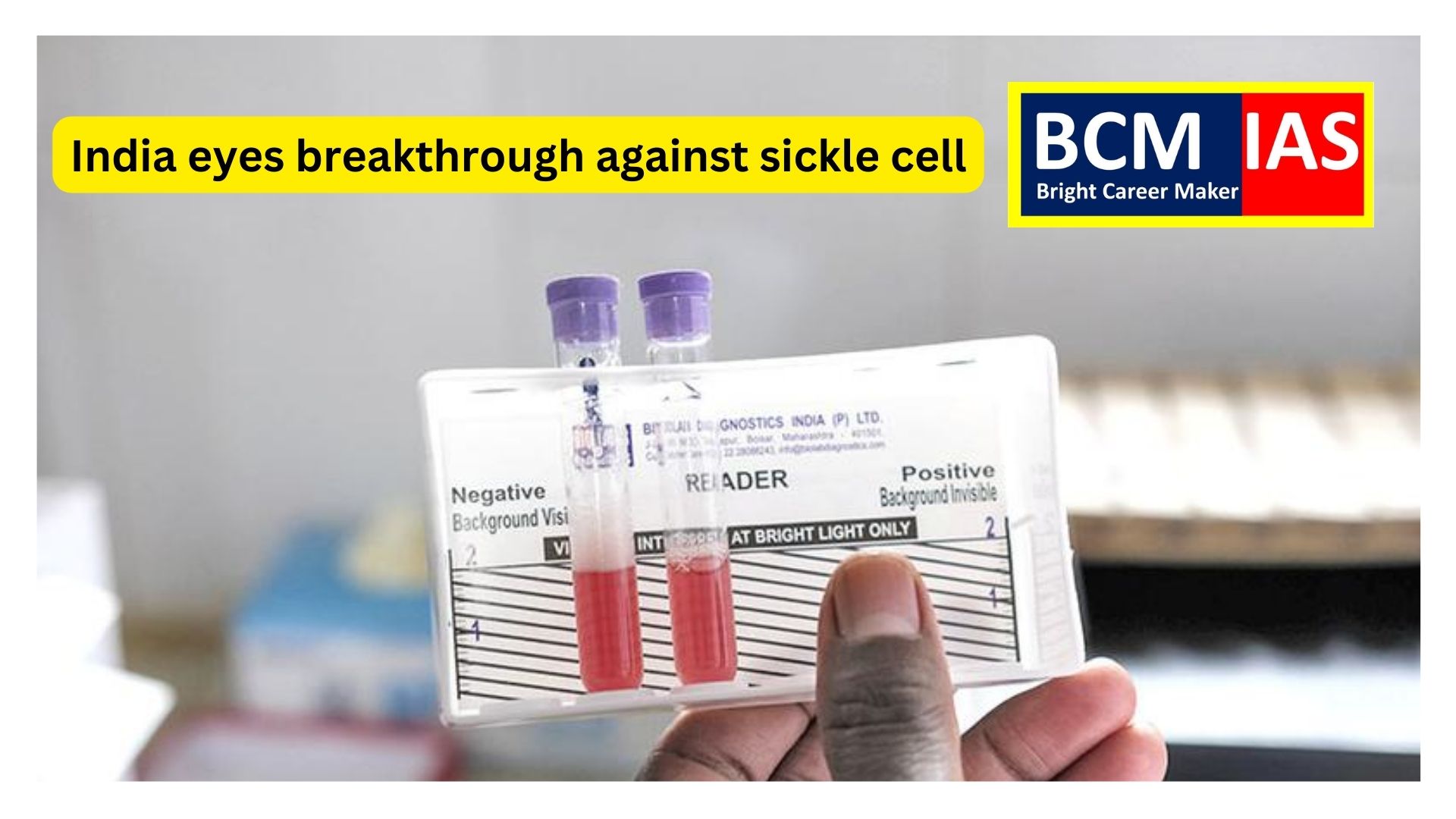
"India eyes breakthrough against
sickle cell"
This headline indicates that India is
making significant progress in developing a breakthrough treatment for sickle
cell disease, a genetic blood disorder. The focus is on utilizing advanced gene
therapy techniques, particularly CRISPR-Cas9, to address the high prevalence of
this disease among the Scheduled Tribes. The government aims to implement this
therapy and train healthcare workers for widespread screening and treatment.
Related Topic (as per UPSC
Syllabus)
|
Prelims |
Mains |
Interview |
|
1. General Science: Developments in the field of science and
technology, their applications, and effects in everyday life.
2.
Current Events of National and
International Importance: Issues related to health and government initiatives. |
1. General Studies Paper
II:
2. General Studies Paper
III:
|
1. Current Affairs: Questions on recent scientific
advancements and their implications.
2.
Healthcare Policies: Discussions on strategies to combat
genetic disorders and improve public health infrastructure. |
News
Analysis
Introduction
India is on the verge of a significant
breakthrough in developing gene therapy for sickle cell disease (SCD), a
genetic blood disorder with a high prevalence rate among the Scheduled Tribes.
The government's efforts, in collaboration with top medical research
institutions, are focused on leveraging CRISPR-Cas9, a cutting-edge
gene-editing tool, to combat this disease. This analysis explores the key
elements of the news, the strategic implications for public health, and the
broader context of India's healthcare initiatives.
Key Elements of the News
Gene Therapy Development
- CRISPR-Cas9
Technology:
Researchers at the All India Institute of Medical Sciences (AIIMS) are
working on developing gene therapy for SCD using CRISPR-Cas9. This
gene-editing tool allows precise modification of DNA to correct genetic
disorders.
- Expected
Progress: The
government anticipates significant advancements by January 2025, with
current laboratory tests showing promising results.
- International
Context: This
effort follows the U.S. FDA's approval of CRISPR-Cas9 technology for
treating SCD in December 2023, positioning India to be among the first
countries to adopt this method.
Government and Institutional Support
- Ministry
of Tribal Affairs: The ministry is actively involved in this initiative, highlighting
the high prevalence of SCD among the Scheduled Tribes and the need for
targeted healthcare interventions.
- Collaboration
with Ground-Level Healthcare Workers: Union Tribal Affairs Minister Jual Oram
emphasized the importance of involving ASHAs and anganwadi workers in the
screening and treatment processes to ensure effective implementation at
the grassroots level.
Screening and Eradication Mission
- Screening
Campaign: The
mission aims to conduct over seven crore screenings among vulnerable
tribal populations across 17 States and Union Territories. As of now,
three crore screenings have been completed.
- Cost-Effectiveness: One of the major
challenges is to make the gene therapy cost-effective, ensuring
accessibility for the broader population.
Strategic Implications for Public Health
Addressing Health Disparities
SCD has a disproportionately high
prevalence among Scheduled Tribes, a marginalized community in India.
Developing an effective gene therapy and widespread screening can significantly
reduce health disparities and improve the quality of life for these populations.
Technological Advancement in Healthcare
Adopting CRISPR-Cas9 technology represents
a significant leap in India’s healthcare capabilities. It not only addresses
SCD but also paves the way for tackling other genetic disorders. This aligns
with global trends towards precision medicine and personalized healthcare.
Public Health Infrastructure
The initiative highlights the need for
robust public health infrastructure, capable of large-scale screenings and
providing advanced treatments. Training ground-level healthcare workers ensures
that the benefits of scientific advancements reach remote and underserved
areas.
Broader Context of India’s Healthcare
Initiatives
Government Policy and Vision
- Mission
to Eradicate SCD by 2047: This long-term vision reflects the government’s commitment to
addressing genetic disorders and improving public health outcomes.
- Comprehensive
Healthcare Approach: The initiative integrates scientific research, public health
policy, and community-level implementation, showcasing a holistic approach
to healthcare challenges.
Global Health Leadership
India’s efforts to develop and implement
gene therapy for SCD position the country as a leader in global health
innovations. Successfully achieving this milestone can serve as a model for
other developing nations facing similar health challenges.
Conclusion
India’s initiative to develop gene therapy
for sickle cell disease using CRISPR-Cas9 technology is a landmark effort in
the country's healthcare landscape. It addresses a critical health issue
prevalent among Scheduled Tribes, underscores the importance of technological
advancements, and emphasizes the need for robust public health infrastructure.
The collaborative approach involving government institutions, medical research
bodies, and grassroots healthcare workers is vital for the successful implementation
and sustainability of this initiative. As India moves forward, ensuring
cost-effectiveness and accessibility of this advanced therapy will be crucial
to achieving the mission of eradicating sickle cell disease by 2047.
Mains Probable Question
Discuss the
significance of India's efforts in developing gene therapy for sickle cell
disease and its impact on public health, particularly among Scheduled Tribes.
Model Answer
Introduction
Sickle cell
disease (SCD) is a genetic blood disorder characterized by the presence of
abnormal hemoglobin, leading to distorted (sickle-shaped) red blood cells.
These cells can obstruct blood flow, causing severe pain, organ damage, and
increased risk of infection. SCD has a high prevalence among the Scheduled
Tribes in India, making it a significant public health concern. India’s recent
efforts to develop gene therapy for SCD using CRISPR-Cas9 technology represent
a major advancement in the country's healthcare strategy. This initiative aims
to eradicate the disease by 2047 and improve the quality of life for affected
populations. This essay explores the significance of these efforts and their impact
on public health, particularly among the Scheduled Tribes.
Demand of the
Question
Significance
of India's Efforts in Developing Gene Therapy for SCD
1.
Technological Innovation: India’s foray into gene therapy using
CRISPR-Cas9 technology marks a significant technological milestone. CRISPR-Cas9
allows precise editing of the genetic code, offering the potential to correct
the mutation responsible for SCD. This innovation positions India at the
forefront of genetic research and therapy, enabling the country to address not
only SCD but also other genetic disorders.
2. Addressing
Health Disparities: SCD disproportionately affects the Scheduled Tribes,
a marginalized and often underserved community. By developing effective gene
therapy, India addresses a critical health disparity, ensuring that these
populations receive advanced medical treatment. This effort reflects the
government's commitment to inclusive healthcare and social justice.
3. Global
Leadership in Healthcare: By pioneering the use of CRISPR-Cas9 for SCD,
India can establish itself as a leader in global health innovations. This
achievement has the potential to inspire and guide other developing countries
in adopting similar approaches to tackle genetic disorders. India’s success can
contribute to global knowledge and practices in precision medicine and gene
therapy.
4. Long-term
Vision and Commitment: The mission to eradicate SCD by 2047
demonstrates a long-term vision and commitment to public health. This goal
aligns with India’s broader healthcare objectives, including improving maternal
and child health, reducing mortality rates, and enhancing the overall
well-being of its citizens.
5. Economic
Impact: Effective gene therapy for SCD can reduce the economic burden of the
disease on affected families and the healthcare system. By minimizing
hospitalizations, reducing complications, and improving productivity, the
therapy can contribute to economic stability and growth.
Impact on
Public Health
1. Improved
Health Outcomes: Gene therapy offers a potential cure for SCD,
significantly improving health outcomes for patients. Successful treatment can
prevent the severe complications associated with the disease, such as pain
crises, organ damage, and increased mortality. Patients can lead healthier and
more productive lives.
2. Enhanced
Screening and Diagnosis: The initiative includes a large-scale screening
campaign, aiming to conduct over seven crore screenings among vulnerable tribal
populations. Early diagnosis and intervention are crucial for managing SCD
effectively. The screening efforts ensure that individuals at risk are
identified and receive appropriate care promptly.
3. Capacity
Building: Training ground-level healthcare workers, such as ASHAs and anganwadi
workers, to screen and manage SCD is a critical component of the initiative.
These workers play a vital role in reaching remote and underserved areas,
ensuring that the benefits of advanced medical research reach the grassroots
level. Capacity building enhances the healthcare system’s ability to address
genetic disorders comprehensively.
4. Community
Engagement: Involving local communities in the eradication
mission fosters trust and cooperation. Community engagement ensures that the
affected populations are aware of the disease, understand the importance of
screening and treatment, and actively participate in healthcare initiatives.
This engagement is essential for the success and sustainability of public
health programs.
5. Policy and
Infrastructure Development: The initiative necessitates robust policy
frameworks and healthcare infrastructure. Amending the Mines and Minerals
(Development and Regulation) Act to facilitate the acquisition of critical
mineral assets abroad and expanding domestic exploration reflect the
government’s proactive approach. Similarly, developing healthcare
infrastructure to support gene therapy and screening programs is crucial for
achieving the mission’s goals.
Way Forward
1. Ensuring
Accessibility and Affordability: One of the main challenges is to
make gene therapy cost-effective and accessible to all patients, particularly
those from economically disadvantaged backgrounds. The government and
healthcare institutions must work together to subsidize the cost of therapy,
explore public-private partnerships, and leverage international funding and
support to ensure affordability.
2.
Strengthening Research and Development: Continuous investment in research
and development is essential to advance gene therapy techniques and explore new
treatments. Collaborating with global research institutions, fostering
innovation, and promoting scientific research will drive progress in genetic
medicine and ensure that India remains at the cutting edge of healthcare
technology.
3. Expanding
Screening Programs: Expanding the screening programs to cover all at-risk
populations is crucial for early diagnosis and intervention. Implementing
mobile health units, leveraging digital health technologies, and utilizing
community health workers can enhance the reach and effectiveness of screening
initiatives.
4. Promoting
Awareness and Education: Raising awareness about SCD, its symptoms, and
available treatments is vital for encouraging individuals to seek screening and
medical care. Public health campaigns, educational programs, and community
outreach initiatives can play a significant role in promoting awareness and
reducing stigma associated with the disease.
5. Monitoring
and Evaluation: Establishing robust monitoring and evaluation
mechanisms is essential to assess the progress and impact of the gene therapy
initiative. Regular assessments, feedback loops, and data-driven
decision-making will ensure that the program remains effective, responsive, and
aligned with its goals.
6. Building
International Collaborations: Fostering international
collaborations with leading research institutions, healthcare organizations,
and global health bodies can enhance the knowledge base, share best practices,
and access advanced technologies. Collaborative efforts will strengthen India’s
capacity to address SCD and other genetic disorders effectively.
Conclusion
India’s
efforts to develop gene therapy for sickle cell disease using CRISPR-Cas9
technology represent a landmark achievement in the country’s healthcare
landscape. This initiative addresses a critical health issue prevalent among
the Scheduled Tribes, underscores the importance of technological advancements,
and emphasizes the need for robust public health infrastructure. By adopting a
comprehensive approach that includes scientific research, public health policy,
and community engagement, India is poised to make significant strides in
eradicating SCD by 2047. Ensuring accessibility, strengthening research,
expanding screening programs, promoting awareness, and building international
collaborations are essential steps in achieving this ambitious goal. The
successful implementation of this initiative will not only improve health
outcomes for millions of patients but also position India as a global leader in
genetic medicine and public health innovation.
MCQs for Prelims Practice
Question 1:
What
technology is India using to develop gene therapy for sickle cell disease?
a) Gene
Splicing
b)
CRISPR-Cas9
c) RNA Interference
d) Stem Cell
Therapy
Answer: b)
CRISPR-Cas9
Explanation: India is
using CRISPR-Cas9, a gene-editing tool, to develop gene therapy for sickle cell
disease. This technology allows precise editing of the genetic code to correct
the mutation responsible for the disorder.
Question 2:
Which
population is most affected by sickle cell disease in India?
a) Urban
populations
b) Rural
populations
c) Scheduled
Tribes
d) Elderly
population
Answer: c)
Scheduled Tribes
Explanation: Sickle cell
disease has a high prevalence rate among the Scheduled Tribes in India, making
it a significant public health concern for this population.
Question 3:
Which Indian
ministry is actively involved in the gene therapy initiative for sickle cell
disease?
a) Ministry
of Health and Family Welfare
b) Ministry
of Tribal Affairs
c) Ministry
of Science and Technology
d) Ministry
of Social Justice and Empowerment
Answer: b)
Ministry of Tribal Affairs
Explanation: The Ministry
of Tribal Affairs is actively involved in the initiative to develop gene
therapy for sickle cell disease, given the high prevalence of the disease among
the Scheduled Tribes.
Question 4:
What is one
of the major challenges in developing gene therapy for sickle cell disease in
India?
a) Lack of
research facilities
b) Making the
therapy cost-effective
c) Inadequate
healthcare workers
d)
Insufficient government support
Answer: b)
Making the therapy cost-effective
Explanation: One of the
major challenges in developing gene therapy for sickle cell disease in India is
to make the therapy cost-effective so that it is accessible to all patients,
especially those from economically disadvantaged backgrounds.
Question 5:
By when does
India aim to eradicate sickle cell disease as part of its mission?
a) 2025
b) 2030
c) 2040
d) 2047
Answer: d)
2047
Explanation: India aims
to eradicate sickle cell disease by 2047 as part of its mission, aligning with
the broader goal of improving public health outcomes and addressing genetic
disorders comprehensively.


Comments on “India’s Efforts to Develop Gene Therapy for Sickle Cell Disease”