


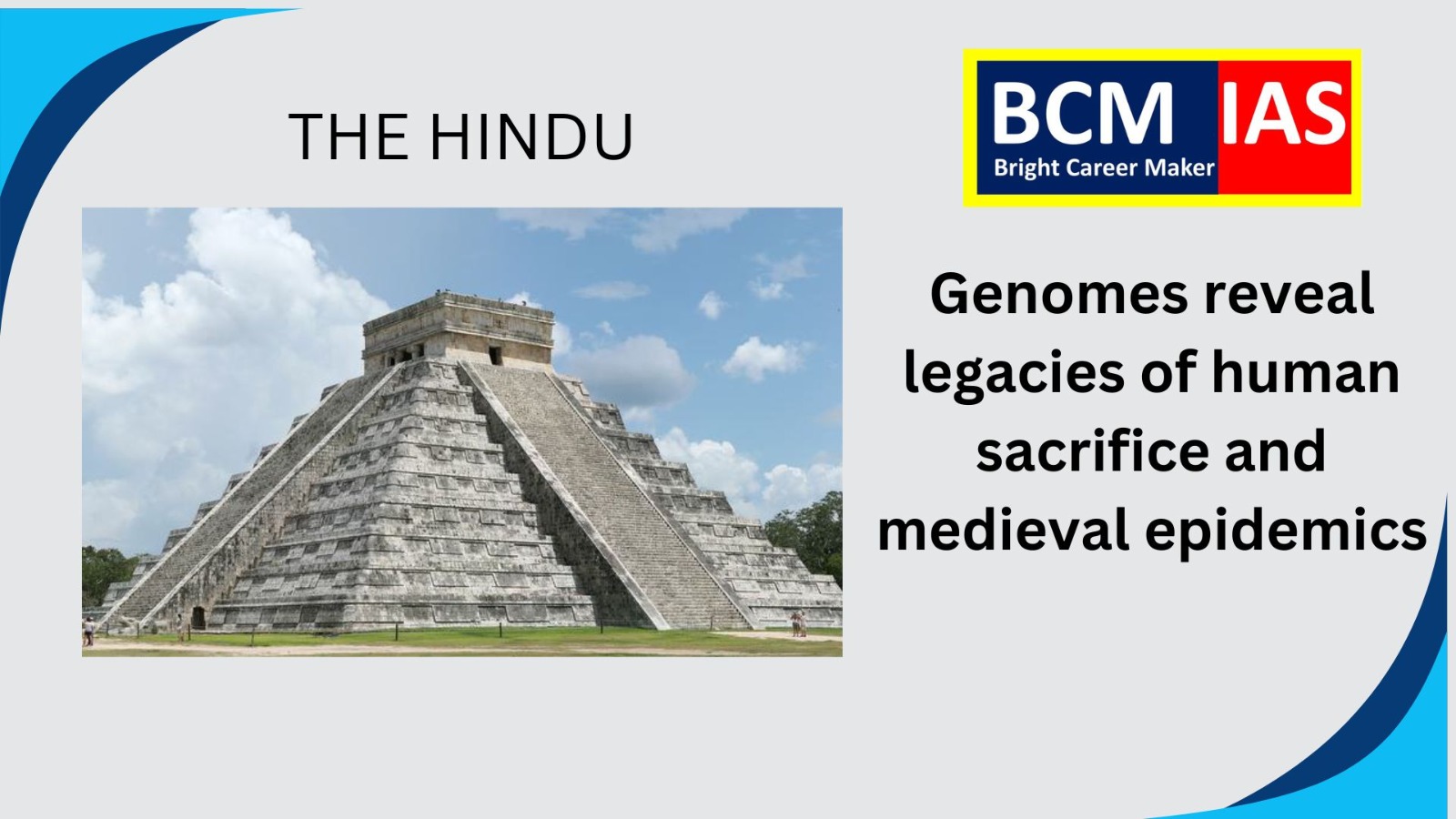
Genomes Reveal Legacies of Human
Sacrifice and Medieval Epidemics
Analysis-
Recent advancements in
archaeogenetics and evolutionary medicine have revolutionized our understanding
of ancient human populations and their practices. By analyzing genetic material
from ancient human remains, scientists have uncovered insights into the origins
of pandemics, the evolution of diseases, and historical occurrences of genetic
conditions. This article explores the findings from studies of ancient Mayan genomes
and the impact of colonial epidemics on genetic selection in Mexico,
highlighting the significant discoveries made through the study of ancient
genomes.
Significance of Ancient Burial
Practices:
1.
Historical Context and Evolution:
o Ancient
Burials: Human
burial practices date back to over 100,000 years, with evidence found in caves
in Israel and Kenya. These practices evolved with advancing civilizations,
leading to elaborate mausoleums like the pyramids of Egypt and the Taj Mahal in
India.
o Cultural and
Spiritual Beliefs:
Burial practices reflect diverse cultural, spiritual, and social beliefs, often
marking the distinction between modern and ancient humans.
2.
Scientific Investigation and Discoveries:
o Dietary
Habits and Environmental Adaptations: The study of skeletal remains provides insights into the
dietary habits and environmental adaptations of ancient populations.
o Genetic
History and Microevolution: Analysis of ancient genomes reveals microevolutionary characteristics,
biological kinship, and the genetic history of populations.
o Technological
Advances: Rapid
advancements in genome sequencing and medical genetics have enabled detailed
studies in archaeogenetics and evolutionary medicine, leading to significant
discoveries about ancient diseases and genetic conditions.
Case Study: Ancient Mayan Genomes
1.
Chichén Itzá and Human Sacrifices:
o Archaeological
Site: Chichén Itzá,
an ancient Mayan city in modern-day Mexico, is known for its grand architecture
and ceremonial temples, infamous for human sacrifices made as ritual offerings.
o Sacred
Cenote: The Sacred
Cenote at Chichén Itzá contains the skeletal remains of over 200 ritually
sacrificed individuals, many of them children or adolescents.
2.
Genetic Analysis and Findings:
o Research
Study: A team of
archaeologists and scientists sequenced genetic material from the human remains
found in the Sacred Cenote and compared them with modern-day individuals of
Mayan origin.
o Genetic
Relationships: The
study revealed that all sub-adults in the cenote were genetically male and
closely related, contradicting 20th-century colonial accounts of the sacrifices
involving young women.
o Significance
of Twins: The
presence of monozygotic twins, who held spiritual significance in Mayan
culture, highlighted the ritualistic selection of individuals for sacrifices.
o Diet and
Household: Isotopic
studies indicated that the individuals had similar diets, suggesting they
belonged to the same household and were selected for specific ritual purposes.
o Genetic
Continuity:
Comparisons with modern-day Maya people showed direct genetic descent from the
populations involved in the ritual sacrifices, providing insights into
long-term genetic continuity and microevolutionary studies.
Legacy of Colonial Epidemics
1.
Impact of Colonial Invasions:
o Population
Decline: The Mexican
population drastically declined from 10-20 million to 2 million by the end of
the 16th century due to wars, famines, and epidemics brought by colonial
invaders.
o Genetic
Bottleneck: The
rapid population decline caused a genetic bottleneck, reducing genetic
diversity and increasing vulnerability to diseases.
2.
Genetic Selection and Immunity:
o Pathogen
Resistance: By
comparing ancient and modern genomes from Mexico, researchers identified
positive selection in genes related to immunity, particularly those associated
with resistance to enteric fever caused by Salmonella enterica Paratyphi C.
o 16th Century
Epidemic: The
pathogen serotype was previously identified with the 16th century cocoliztli
epidemic in Mexico, illustrating the impact of historical pandemics on genetic
selection.
o Insights from
Ancient Genomes: The
study of ancient genomes helps resolve mysteries, dispel old hypotheses, and
gain new insights into the past, informing our understanding of population
health and genetic adaptations over time.
Way Forward
Further Research and Applications:
1.
Expanded Genetic Studies:
o Broader
Scope: Expanding
genetic studies to include a wider range of ancient populations can provide
deeper insights into human history and evolution.
o Interdisciplinary
Collaboration:
Collaboration between archaeologists, geneticists, and historians is essential
for comprehensive analyses and interpretations of ancient genomes.
2.
Technological Advancements:
o Innovative
Techniques:
Continued development of advanced genome sequencing techniques will enhance the
precision and scope of genetic studies.
o Data
Integration:
Integrating genetic data with archaeological and historical evidence will
provide a more holistic understanding of ancient populations and their
practices.
3.
Public Engagement and Education:
o Awareness
Programs: Promoting
public awareness about the significance of genetic research in understanding
human history can foster greater appreciation and support for scientific
endeavors.
o Educational
Initiatives:
Incorporating findings from archaeogenetics and evolutionary medicine into
educational curricula can inspire future generations of researchers and
scientists.
Ethical Considerations:
1.
Respect for Ancestral Remains:
o Cultural
Sensitivity:
Conducting genetic studies with respect for the cultural and spiritual beliefs
of descendant communities is paramount.
o Collaborative
Approaches: Engaging
with indigenous and local communities in research projects ensures ethical
practices and mutual respect.
2.
Data Privacy and Protection:
o Confidentiality: Ensuring the confidentiality and
protection of genetic data is crucial to maintain trust and integrity in
scientific research.
o Regulatory
Frameworks:
Developing robust regulatory frameworks for genetic research can safeguard
ethical standards and promote responsible use of genetic information.
Conclusion
The study of ancient genomes through
archaeogenetics and evolutionary medicine has opened new avenues for
understanding human history, cultural practices, and genetic adaptations. The
findings from the ancient Mayan genomes at Chichén Itzá and the impact of
colonial epidemics on genetic selection in Mexico highlight the profound
insights that genetic research can offer. By continuing to advance genetic
technologies, fostering interdisciplinary collaboration, and addressing ethical
considerations, we can further unravel the complexities of our past and use
these insights to inform our future.
Relevance in UPSC Exam - GS
Papers
General
Studies Paper I: Indian Heritage and Culture, History, and Geography of the
World and Society
1.
Indian Heritage and Culture:
o Archaeological
Studies: The study
of ancient human burial sites, such as those at Chichén Itzá, is relevant for
understanding cultural practices and rituals related to death and burial.
o Cultural
Evolution: The
evolution of burial practices from prehistoric times to elaborate mausoleums
like the pyramids of Egypt and the Taj Mahal in India highlights the
development of cultural and spiritual beliefs.
2.
World History:
o Historical
Epidemics: The
analysis of genetic material to understand the origins of pandemics like the
bubonic plague and the impact of colonial epidemics on populations provides
insights into significant historical events and their long-term effects.
General
Studies Paper II: Governance, Constitution, Polity, Social Justice, and
International Relations
1.
International Relations:
o Global
Collaboration in Research: The collaboration of scientists from various countries (Germany, Mexico,
Spain, the U.K., and the U.S.) in studying ancient genomes illustrates the
importance of international cooperation in scientific research.
2.
Governance and Public Policy:
o Health
Policies: Insights
from genetic studies on disease resistance and immunity can inform public
health policies and strategies for managing pandemics and improving population
health.
General
Studies Paper III: Technology, Economic Development, Bio-Diversity,
Environment, Security, and Disaster Management
1.
Science and Technology:
o Advancements
in Genome Sequencing:
The role of advanced genome sequencing technologies in archaeogenetics and
evolutionary medicine underscores the importance of scientific innovation and
research in understanding human history and biology.
o Genetic
Research: The
application of genetic research to study ancient human remains and the
implications for modern-day health and disease management highlight the
intersection of science and technology with societal issues.
2.
Biodiversity and Environment:
o Environmental
Adaptations: The
study of ancient genomes reveals how human populations adapted to their
environments over time, contributing to our understanding of biodiversity and
ecological changes.
3.
Disaster Management:
o Epidemic
Responses: Lessons
learned from historical pandemics and genetic bottlenecks can inform
contemporary strategies for managing health crises and epidemics.
General
Studies Paper IV: Ethics, Integrity, and Aptitude
1.
Ethical Considerations in Research:
o Respect for
Ancestral Remains:
The ethical implications of studying ancient human remains and the need for
cultural sensitivity and respect for descendant communities are important
aspects of research ethics.
o Data Privacy: Ensuring the confidentiality and
protection of genetic data from ancient and modern populations is crucial for
maintaining trust and integrity in scientific research.
Probable Conceptual Question
"Discuss the
significance of genetic research in understanding ancient human populations and
the ethical considerations involved in such studies."
Suggested
Answer
Introduction
The study of ancient human genomes
through archaeogenetics and evolutionary medicine has significantly advanced
our understanding of historical human populations, their cultural practices,
and genetic adaptations. By analyzing genetic material from ancient burial
sites, scientists have uncovered valuable insights into the origins of
pandemics, the evolution of diseases, and historical occurrences of genetic
conditions. However, these studies also raise important ethical considerations
regarding the treatment of ancestral remains and the protection of genetic
data.
Demand
of the Question
Significance of Genetic
Research in Understanding Ancient Human Populations:
1.
Insights into Cultural Practices:
o Burial
Practices: Genetic
research helps elucidate the cultural and spiritual beliefs associated with
burial practices, as seen in the study of the Mayan ritual sacrifices at
Chichén Itzá.
o Evolution of
Rituals: The
evolution of burial practices from simple cave burials to elaborate mausoleums
reflects the development of human societies and their value systems.
2.
Disease and Health:
o Pandemics and
Epidemics: Genetic
studies of ancient human remains provide insights into the origins and spread
of pandemics, such as the bubonic plague and the impact of colonial epidemics
on indigenous populations.
o Genetic
Adaptations:
Understanding the genetic adaptations that allowed ancient populations to
survive diseases offers valuable information for contemporary health and
disease management.
3.
Biological and Genetic History:
o Microevolutionary
Characteristics:
Analysis of ancient genomes reveals microevolutionary changes and the genetic
history of populations, contributing to our knowledge of human evolution.
o Biological
Kinship: Genetic
research helps establish biological relationships within ancient populations,
as demonstrated by the identification of related individuals in the Sacred
Cenote at Chichén Itzá.
Ethical Considerations
in Genetic Research:
1.
Respect for Ancestral Remains:
o Cultural
Sensitivity:
Researchers must approach the study of ancient human remains with respect for
the cultural and spiritual beliefs of descendant communities. Engaging with
these communities ensures ethical practices and mutual respect.
o Consent and
Collaboration:
Collaborative approaches involving descendant communities in research projects
help maintain ethical standards and foster trust.
2.
Data Privacy and Protection:
o Confidentiality: Protecting the confidentiality of
genetic data is essential to maintain trust and integrity in scientific
research. This includes ensuring that data from both ancient and modern
populations are handled with care.
o Regulatory
Frameworks:
Developing robust regulatory frameworks for genetic research can safeguard
ethical standards and promote responsible use of genetic information.
3.
Public Engagement and Education:
o Awareness
Programs: Promoting
public awareness about the significance of genetic research in understanding
human history can foster greater appreciation and support for scientific
endeavors.
o Educational
Initiatives:
Incorporating findings from archaeogenetics and evolutionary medicine into
educational curricula can inspire future generations of researchers and
scientists.
Way
Forward
Enhancing Genetic
Research:
1.
Technological Advancements:
o Innovative
Techniques:
Continued development of advanced genome sequencing techniques will enhance the
precision and scope of genetic studies.
o Data
Integration:
Integrating genetic data with archaeological and historical evidence will
provide a more holistic understanding of ancient populations and their
practices.
2.
Expanded Research Scope:
o Broader
Studies: Expanding
genetic studies to include a wider range of ancient populations can provide
deeper insights into human history and evolution.
o Interdisciplinary
Collaboration:
Collaboration between archaeologists, geneticists, and historians is essential
for comprehensive analyses and interpretations of ancient genomes.
Ethical Research
Practices:
1.
Cultural and Community Engagement:
o Respectful
Research: Conducting
genetic studies with respect for the cultural and spiritual beliefs of
descendant communities is paramount. Researchers must engage with these
communities to ensure ethical practices.
o Collaborative
Approaches:
Involving indigenous and local communities in research projects ensures mutual
respect and fosters collaborative research efforts.
2.
Data Privacy and Protection:
o Confidentiality: Ensuring the confidentiality and
protection of genetic data from ancient and modern populations is crucial to
maintain trust and integrity in scientific research.
o Regulatory
Frameworks:
Developing robust regulatory frameworks for genetic research can safeguard
ethical standards and promote responsible use of genetic information.
Conclusion
The study of ancient genomes through
archaeogenetics and evolutionary medicine has opened new avenues for
understanding human history, cultural practices, and genetic adaptations. The
findings from the ancient Mayan genomes at Chichén Itzá and the impact of
colonial epidemics on genetic selection in Mexico highlight the profound
insights that genetic research can offer. By continuing to advance genetic
technologies, fostering interdisciplinary collaboration, and addressing ethical
considerations, we can further unravel the complexities of our past and use
these insights to inform our future. This comprehensive approach will enable us
to navigate the challenges of genetic research and leverage its potential for
scientific and societal advancements.


Comments on “Genomes Reveal Legacies of Human Sacrifice and Medieval Epidemics”