


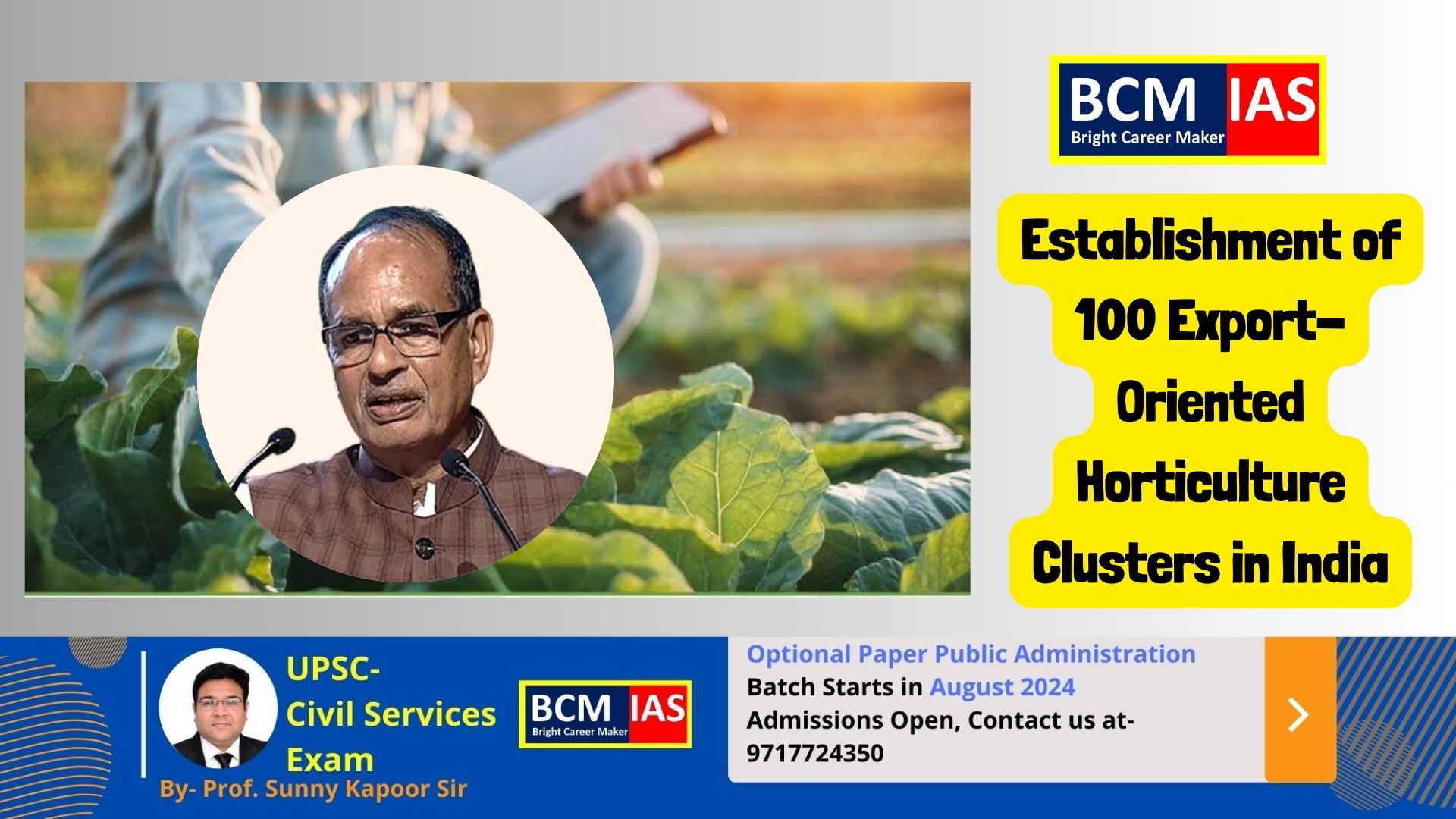
Establishment of 100
Export-Oriented Horticulture Clusters in India
News Analysis
·
The Union Agriculture Minister has announced a
significant investment of ₹18,000 crore aimed at establishing 100
export-oriented horticulture clusters across India over the next five years.
·
This initiative is part of the government’s broader
strategy to boost the horticulture sector, enhance agricultural productivity,
and improve the welfare of farmers.
·
The creation of these clusters is expected to
strengthen India’s position as a leading producer of horticultural crops while
fostering economic growth and community development in rural areas.
Key Points:
1.
Horticulture Clusters:
o A horticulture
cluster is a geographical concentration of targeted horticultural crops. These
clusters are designed to promote specialization in production, improve
post-harvest management, and provide opportunities for growth in the
horticulture sector.
o India, being the
second-largest producer of horticultural crops globally, will benefit from this
focused approach to cluster development. The country is known for producing a
variety of fruits, including mango, banana, papaya, pomegranate, and more.
2.
Benefits of Horticulture Clusters:
o Increased
Efficiency: By
concentrating on specific crops within a cluster, farmers can achieve higher
productivity through specialization and division of labor. This leads to lower
production costs and improved competitiveness.
o Economic
Growth: The
development of these clusters will create jobs, increase incomes, and drive
local economic development. The clusters will also support small and medium
enterprises (SMEs) involved in the horticulture value chain.
o Knowledge
Sharing: Clusters
encourage collaboration among farmers and other stakeholders, facilitating the
exchange of best practices and innovations, which can lead to improved crop
quality and yields.
o Improved
Quality:
Specialization within clusters allows for a focus on quality standards,
ensuring that the horticultural products meet the requirements of export
markets.
o Community
Development: The
establishment of clusters can lead to the social and economic upliftment of
local communities, providing them with better livelihoods and access to
infrastructure.
3.
Challenges of Horticulture Clusters:
o Resource
Management: Access
to essential resources like water and nutrients can be limited, affecting the
sustainability and productivity of the clusters.
o Infrastructure: Inadequate infrastructure for
storage, transportation, and marketing can reduce the efficiency and
profitability of horticulture clusters.
o Market
Access: Reaching
broader markets, especially international ones, can be challenging due to
logistics and supply chain issues.
o Pest and
Disease Management:
Clusters are vulnerable to crop losses due to pests and diseases, which require
effective management strategies.
o Climate
Change: Changing
weather patterns pose risks to crop yields and quality, making
climate-resilient practices essential for the success of these clusters.
o Technical
Expertise: A lack of
skilled labor and technical knowledge can hinder the adoption of modern
practices and technologies.
o Financial
Constraints: Limited
access to funding and credit can restrict investments in necessary equipment
and technology.
4.
Government Initiatives for Horticulture:
o Mission for
Integrated Development of Horticulture (MIDH): Launched in 2014, this centrally
sponsored scheme focuses on the holistic development of the horticulture
sector. It includes five sub-schemes aimed at enhancing productivity through
better planting materials, irrigation systems, and infrastructure development.
o Horticulture
Cluster Development Programme (CDP): Also a centrally sponsored scheme, the CDP specifically aims
to develop horticulture clusters to increase their competitiveness in both
domestic and international markets. The program provides financial and
technical support to farmers and stakeholders within these clusters.
Conclusion:
The establishment of 100 export-oriented horticulture
clusters is a strategic move to strengthen India's horticulture sector, which
plays a crucial role in the country's agricultural economy. By focusing on
specialization, improving infrastructure, and fostering collaboration, these
clusters are expected to enhance productivity, improve the quality of
horticultural products, and increase export earnings. However, the success of
this initiative will depend on effectively addressing the challenges related to
resource management, infrastructure, market access, and climate change.
Additionally, continuous support from the government through initiatives like
MIDH and CDP will be essential to sustain the growth and development of these
clusters. This move is likely to have a significant positive impact on farmers'
welfare, economic growth, and the overall development of rural areas in India.
MCQs
1. What is the primary goal of establishing 100
export-oriented horticulture clusters in India?
a) To reduce the import of fruits and
vegetables
b) To promote specialization and
improve post-harvest management in horticulture
c) To replace traditional crops with
horticulture crops
d) To create urban farming
opportunities
Answer: b) To promote specialization and improve post-harvest management in
horticulture
2. Which of the following is NOT a benefit of horticulture
clusters?
a) Increased efficiency through
specialization
b) Improved access to international
markets
c) Guaranteed protection against
climate change
d) Economic growth through job
creation
Answer: c) Guaranteed protection against climate change
3. What is the major challenge faced by horticulture clusters
in India?
a) Overproduction of horticultural
crops
b) Lack of demand for horticultural
products
c) Inadequate infrastructure for
storage, transportation, and marketing
d) Excessive financial support from
the government
Answer: c) Inadequate infrastructure for storage, transportation, and marketing
4. Which of the following is a key component of the Mission
for Integrated Development of Horticulture (MIDH)?
a) Subsidizing chemical fertilizers
for horticulture crops
b) Promoting superior planting
materials and modern irrigation systems
c) Importing exotic fruits for
domestic consumption
d) Encouraging monoculture practices
in horticulture
Answer: b) Promoting superior planting materials and modern irrigation systems
5. What is the focus of the Horticulture Cluster Development
Programme (CDP)?
a) To create a single market for all
agricultural products
b) To develop horticulture clusters
and increase their competitiveness
c) To reduce the production of
horticultural crops
d) To promote the use of traditional
farming methods in horticulture
Answer: b) To develop horticulture clusters and increase their competitiveness


Comments on “Establishment of 100 Export-Oriented Horticulture Clusters in India”