


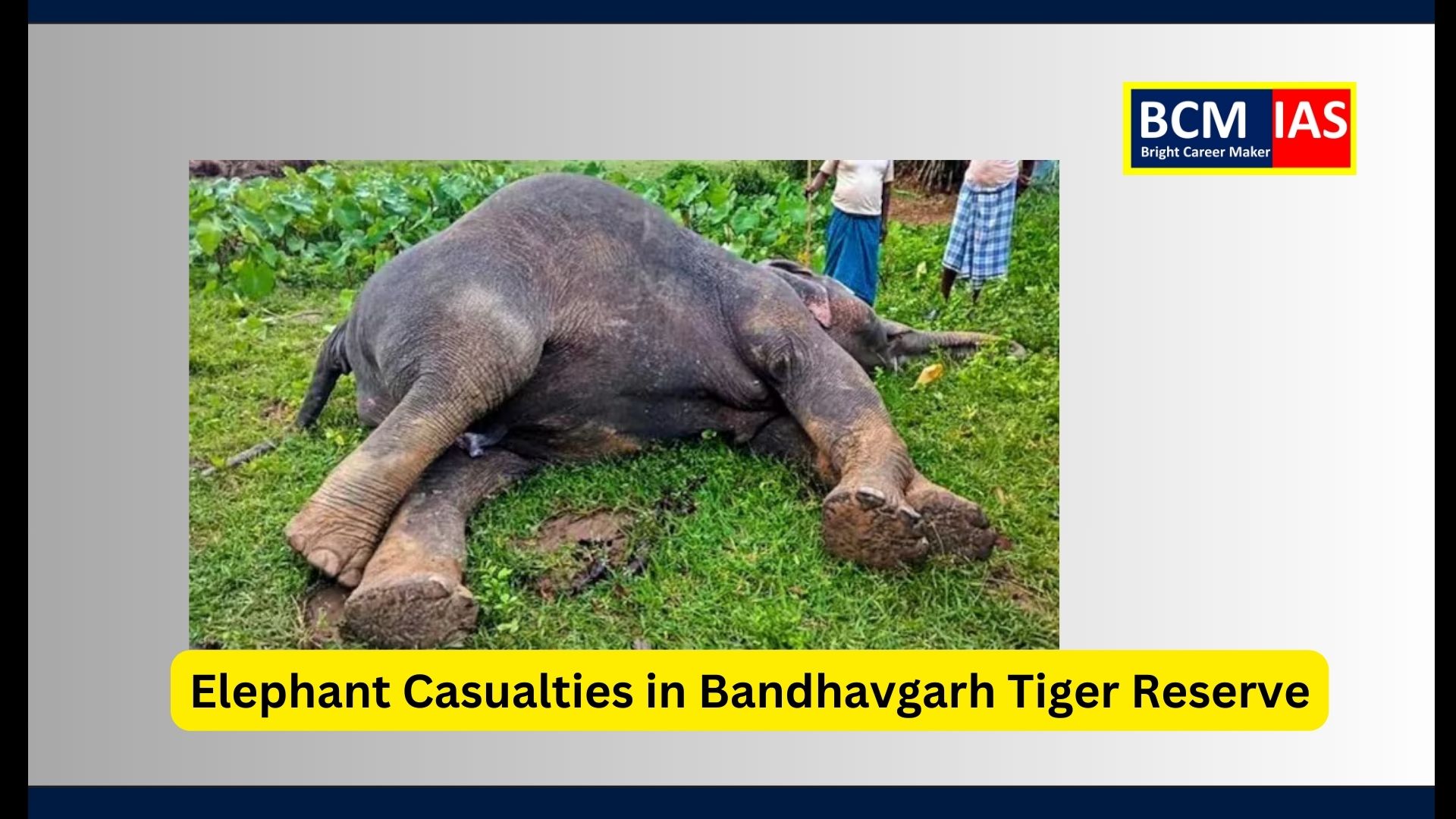
Elephant Casualties in
Bandhavgarh Tiger Reserve
The recent news about elephant
casualties in Madhya Pradesh’s Bandhavgarh Tiger Reserve (BTR) raises crucial
issues about wildlife conservation and forest health in India.
Key Points
1. Elephant
Deaths and Health Concerns:
o Four
elephants were found dead, and five others in poor health. This situation
points to possible environmental or management issues within BTR. The cause
could range from poisoning, disease, or stress due to habitat-related
challenges.
o These
casualties highlight the challenges of coexisting conservation of multiple
species within reserves primarily designed for tigers.
2. Conservation
Context:
o India holds
the largest population of wild Asian elephants, with 29,964 individuals as per
the 2017 census under Project Elephant. Karnataka leads in elephant numbers,
followed by Assam and Kerala. However, Madhya Pradesh is not traditionally
known for large elephant populations, making the recent deaths in BTR unusual.
o While BTR
is known for Royal Bengal Tigers, the incident underscores the importance of
managing the ecosystem holistically to support various species’ health and
habitat needs.
3. Bandhavgarh
Tiger Reserve:
o Located in
Umaria district in Madhya Pradesh and spread over the Vindhya hills, BTR is
rich in biodiversity and has historical sites, such as the Bandhavgarh Fort and
ancient carvings.
o Established
as a national park in 1968 and declared a tiger reserve in 1993, BTR’s primary
focus has been tiger conservation. Other animals, like deer species, langurs,
and macaques, serve as prey for top predators like tigers and leopards.
4. Implications
for Conservation Policy:
o These
elephant deaths call for a reassessment of multi-species management within
reserves. Ensuring that adequate resources, veterinary services, and ecological
monitoring are in place is essential.
o Bandhavgarh,
a site primarily managed for tiger conservation, may need updated strategies to
accommodate and protect transient elephant populations and maintain ecological
balance.
5. Actionable
Takeaways for Conservation:
o This
incident emphasizes the importance of Project Elephant and similar initiatives
to monitor the health and movement of elephant herds in non-traditional areas.
o Integrated
management plans that support all major species in reserves could help prevent
such unfortunate casualties in the future.
This news underlines the need for
vigilance in protecting India’s diverse wildlife across different regions and
ecosystems, especially in reserves not originally designed to host large herbivores
like elephants.
MCQs for Practice
1. Which state
in India recently reported elephant casualties in the Bandhavgarh Tiger
Reserve?
o A) Assam
o B)
Karnataka
o C) Madhya
Pradesh
o D) Kerala
o Answer: C) Madhya
Pradesh
2. In which
year was Bandhavgarh Tiger Reserve declared a tiger reserve?
o A) 1968
o B) 1985
o C) 1993
o D) 2000
o Answer: C) 1993
3. What is the
primary animal for which Bandhavgarh Tiger Reserve is known?
o A) Asian
Elephant
o B) Royal
Bengal Tiger
o C) Indian
Rhinoceros
o D) Snow
Leopard
o Answer: B) Royal Bengal
Tiger
4. According
to the 2017 Project Elephant census, which state has the highest population of
wild Asian elephants?
o A) Assam
o B) Madhya
Pradesh
o C) Kerala
o D)
Karnataka
o Answer: D)
Karnataka
5. What type
of ecosystem features, apart from wildlife, are present in Bandhavgarh Tiger
Reserve?
o A) Lakes
and Waterfalls
o B) Forts,
caves, and rock paintings
o C) Sand
Dunes
o D) None of
the above
o Answer: B) Forts,
caves, and rock paintings


Comments on “Elephant Casualties in Bandhavgarh Tiger Reserve”