


Daily Current Affairs Analysis
12 november 2024
-------------------------------------------------------------------------------------------------------------
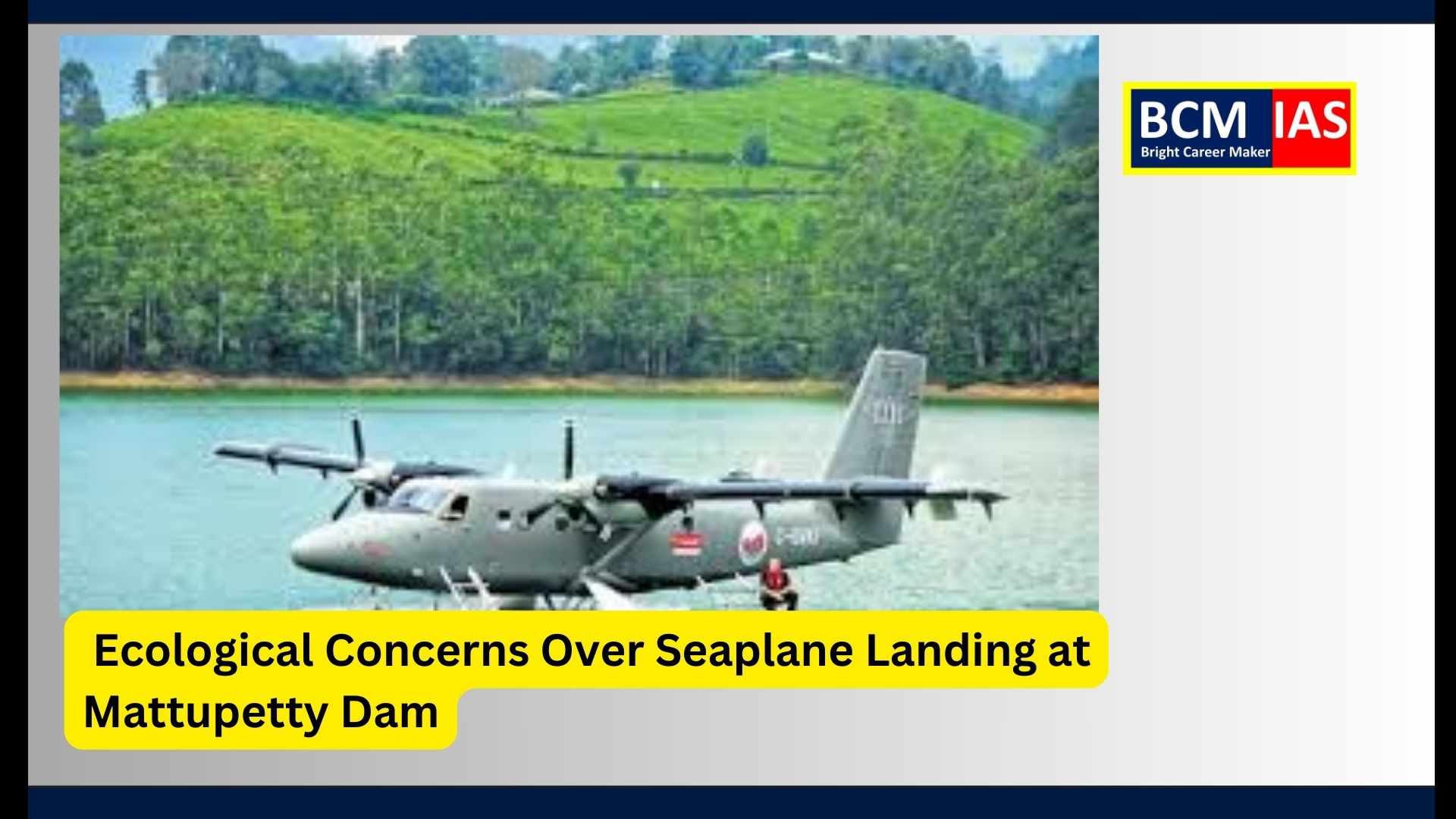
Ecological Concerns Over Seaplane Landing at
Mattupetty Dam
News Explanation
Analysis: Ecological Concerns Over Seaplane Landing at
Mattupetty Dam
The trial run of Kerala’s first seaplane service at Mattupetty dam,
Idukki, has sparked debates over the potential ecological impact. While the
initiative aims to boost tourism in the region, especially around Munnar, it
raises serious concerns about its effect on the sensitive ecosystems
surrounding the reservoir.
The Issue: Balancing Tourism and Ecology
1. Tourism Development:
·
The seaplane service is expected to address
long-standing connectivity challenges in Munnar, a major tourist destination.
·
It offers faster travel options, appealing to premium
tourists, and could boost the local economy.
2. Ecological Concerns:
·
Eco-sensitive Zones: Mattupetty dam lies near key protected areas such as
the Anamudi Shola National Park, Pampadum Shola National Park, and Kurinjimala
Sanctuary. These are home to endangered species, including wild elephants,
which use the reservoir area as a corridor.
·
Wildlife Disturbance: The seaplane’s operations have already caused
noticeable disturbances to wildlife. Reports indicate wild elephants near the
reservoir reacted to the landing, which could escalate human-wildlife
conflicts.
·
Habitat Disruption: The reservoir serves as a key habitat and migration
path for animals. Increased human activity, noise, and water turbulence from
seaplane operations could alter these natural behaviors.
Key Stakeholder Responses
1. Forest
Department:
·
The department emphasizes the need for a mitigation
plan, approved by the National Board for Wildlife, to minimize disturbances.
·
Proposals include designating no-fly or no-landing
zones within the reservoir to protect sensitive wildlife areas.
2. Environmental
Activists:
·
Environmentalist M.N. Jayachandran has petitioned to
halt the project, citing irreversible ecological damage.
3. Tourism
Officials:
·
The District Tourism Promotion Council sees the
project as a “game changer” for the region’s tourism, arguing that connectivity
issues have long hindered Munnar's potential.
Ecological Significance of Mattupetty
The Mattupetty reservoir and its surrounding areas are:
- Part of
a Critical Wildlife Corridor: Wild elephants and other species move through the reservoir
catchment area between national parks.
- Protected
Ecosystem: The
area includes grasslands and forests within eco-sensitive zones, which are
vital for biodiversity conservation.
Challenges
1. Human-Wildlife
Conflict:
·
Increased human presence and noise from seaplane
activities could disrupt wildlife behavior and heighten interactions with local
communities.
2. Ecosystem
Disruption:
·
Tourism activities often bring secondary challenges
such as pollution and habitat degradation.
3. Legal and
Regulatory Compliance:
·
The project must align with conservation laws
protecting Schedule I species like wild elephants and comply with eco-sensitive
zone regulations.
Conclusion and Way Forward
While the seaplane service offers significant tourism potential, its
ecological risks cannot be overlooked. A balanced approach is
essential, prioritizing:
- Comprehensive
Mitigation Plans:
Designating wildlife-sensitive zones and regulating landing areas.
- Stakeholder
Engagement:
Ensuring collaboration between the Forest Department, tourism
stakeholders, and environmentalists.
- Sustainable
Tourism Practices: Promoting eco-tourism models that minimize environmental impact.
By adopting these measures, Kerala can aim to integrate tourism growth
with ecological preservation, ensuring long-term benefits for both the economy
and the environment.
Mains Probable Question
The trial seaplane
landing at Mattupetty dam in Kerala has raised ecological concerns despite its
tourism potential. Analyze the conflict between tourism development and
environmental conservation in eco-sensitive zones. Suggest measures to achieve
a balance.
Model
Answer
Introduction
The trial run of Kerala’s first
seaplane service at Mattupetty dam in Idukki aims to boost tourism by providing
better connectivity to Munnar. However, the reservoir, surrounded by
eco-sensitive zones and critical wildlife habitats, has raised ecological
concerns. This highlights the persistent conflict between tourism development
and environmental conservation.
Tourism Development vs.
Environmental Conservation
1. Tourism Potential:
·
Enhanced connectivity for
premium tourists, addressing the lack of rail and air links.
·
Economic benefits for the
local community through increased tourism revenue.
·
Promotes Kerala’s image as a
sustainable and innovative tourist destination.
2. Ecological Concerns:
·
Disturbance to Wildlife: The
Mattupetty reservoir is part of a critical corridor for wild elephants, whose
behavior may be disrupted by noise and human activity.
·
Habitat Degradation: Increased
tourism activities could lead to pollution and the deterioration of grasslands
and wetlands.
·
Escalation of Human-Wildlife
Conflicts: Wildlife displacement can force animals closer to human settlements,
increasing the likelihood of conflicts.
Challenges in Eco-Sensitive
Zones
1. Regulatory Framework:
·
Compliance with eco-sensitive
zone regulations and wildlife protection laws, especially for Schedule I
species like wild elephants.
2. Community Involvement:
·
Balancing local aspirations
for economic growth with conservation efforts.
3. Sustainability:
·
Unregulated tourism could lead
to long-term ecological damage, undermining the natural appeal of the region.
Measures to Achieve Balance
1. Mitigation Plans:
·
Develop comprehensive plans
approved by the National Board for Wildlife to minimize
disturbances.
·
Identify no-fly and no-landing
zones to protect critical wildlife habitats.
2. Eco-Tourism Model:
·
Promote sustainable tourism
practices that align with environmental conservation.
·
Limit the number of seaplane
operations and regulate tourist activities in sensitive areas.
3. Stakeholder Collaboration:
·
Ensure dialogue between
tourism officials, environmentalists, and the Forest Department to integrate
conservation with development.
4. Monitoring and Regulation:
·
Establish a monitoring
mechanism to assess the ecological impact of seaplane operations.
·
Impose penalties for
non-compliance with conservation regulations.
5. Awareness Programs:
·
Educate tourists and local
communities about the ecological significance of the Mattupetty region and the
need for conservation.
Conclusion
The seaplane service at Mattupetty
dam presents both opportunities and challenges. While tourism development is
essential for economic growth, it must not come at the cost of ecological
degradation. A balanced approach, prioritizing conservation and sustainable
tourism practices, is crucial to ensure that development and nature coexist
harmoniously in eco-sensitive zones.
MCQs for Prelims Practice
Q1. The seaplane service at Mattupetty dam aims to address which
major issue in Munnar’s tourism sector?
- (a)
Lack of water sports activities.
- (b)
Inadequate rail and air connectivity.
- (c)
High levels of pollution in the region.
- (d)
Decline in tourist arrivals.
Answer: (b) Inadequate rail and air connectivity.
Q2. Which of the following wildlife habitats is located near
Mattupetty dam?
1. Anamudi Shola National
Park.
2. Pampadum Shola National
Park.
3. Kurinjimala Sanctuary.
4. Periyar Wildlife
Sanctuary.
Choose the correct option:
- (a) 1
and 2 only.
- (b) 1,
2, and 3 only.
- (c) 2,
3, and 4 only.
- (d) All
of the above.
Answer: (b) 1, 2, and 3 only.
Q3. What is the primary ecological concern associated with the
seaplane service at Mattupetty dam?
- (a)
Increased water pollution in the reservoir.
- (b)
Disruption to wildlife, particularly wild elephants.
- (c)
Reduced fish populations in the dam.
- (d)
Deforestation in the surrounding areas.
Answer: (b) Disruption to wildlife, particularly wild elephants.
Q4. Which regulatory body’s approval is essential for implementing
a mitigation plan for the seaplane service at Mattupetty?
- (a)
Ministry of Environment, Forest, and Climate Change (MoEFCC).
- (b)
National Board for Wildlife (NBWL).
- (c)
Central Pollution Control Board (CPCB).
- (d)
Kerala State Biodiversity Board (KSBB).
Answer: (b) National Board for Wildlife (NBWL).
Q5. Which of the following measures can help balance tourism and
ecological conservation at Mattupetty?
1. Designating no-landing
zones in sensitive areas.
2. Promoting sustainable
eco-tourism practices.
3. Conducting awareness
programs for tourists.
4. Increasing the
frequency of seaplane landings to attract more tourists.
Choose the correct option:
- (a) 1
and 2 only.
- (b) 1,
2, and 3 only.
- (c) 2,
3, and 4 only.
- (d) All
of the above.
Answer: (b) 1, 2, and 3 only.


Comments on “Ecological Concerns Over Seaplane Landing at Mattupetty Dam”