


Daily Current Affairs Analysis
29 May 2024
-------------------------------------------------------------------------------------------------------------
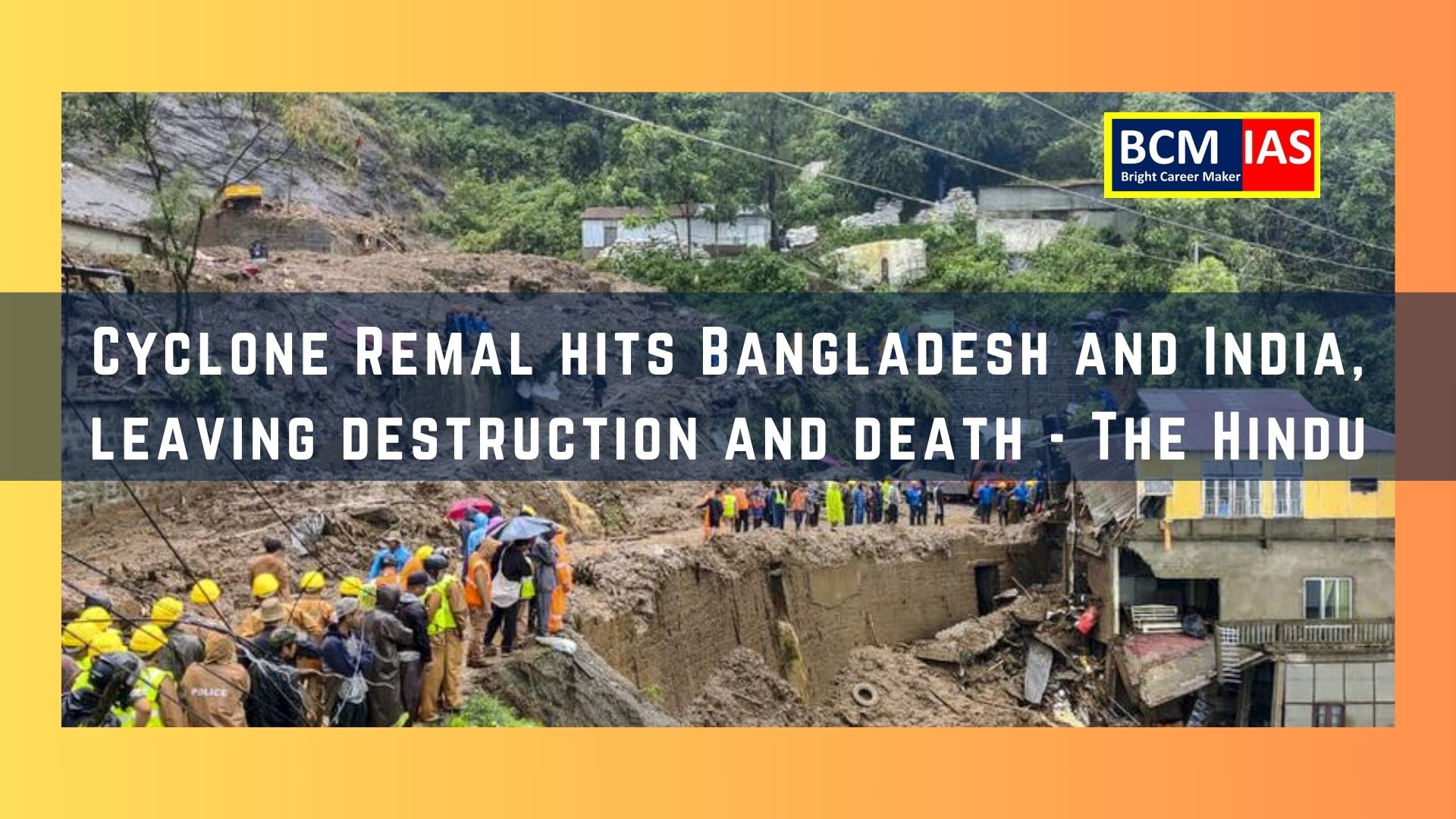
Cyclone Remal hits Bangladesh and India, leaving
destruction and death"
Meaning of Headline-
This headline indicates that Cyclone Remal, a powerful and
destructive tropical storm, made landfall in Bangladesh and India, causing
significant damage and fatalities. The cyclone led to the destruction of homes,
infrastructure, and resulted in loss of lives, highlighting the severe impact
of natural disasters exacerbated by climate change.
Related Topic (as per UPSC
Syllabus)
UPSC Prelims
- Geography
o
Physical Geography: Climatology, including tropical
cyclones.
o
Environmental Geography: Impact of natural disasters.
- Current Events
o
Recent significant events related to natural
disasters.
UPSC Mains
- General Studies Paper I
o
Geography
§
Important Geophysical phenomena such as earthquakes,
tsunamis, Volcanic activity, cyclones, etc.
o
Society
§
Effects of globalization on Indian society, Social
empowerment, communalism, regionalism & secularism.
- General Studies Paper III
o
Disaster Management
§
Disaster and disaster management.
§
Linkages between development and spread of extremism.
§
Role of external state and non-state actors in
creating challenges to internal security.
o
Environment
§
Conservation, environmental pollution, and
degradation, environmental impact assessment.
UPSC Interview
- Personality Test
o
Discussion on recent natural disasters and their management.
o
Role of climate change in increasing the frequency and
intensity of natural disasters.
o
Government policies and measures for disaster
preparedness and management.
News
Analysis
Introduction
Cyclone Remal recently hit the coastal
regions of Bangladesh and India, causing widespread destruction and loss of
life. This analysis delves into the details of the cyclone's impact, the
contributing factors including climate change, and the broader implications for
disaster management and preparedness in the affected regions.
Impact
of Cyclone Remal
Extent of Damage
- Fatalities: The cyclone
resulted in at least 38 deaths, with 17 reported in Bangladesh and 21 in
India. The deaths were caused by drowning, electrocution, debris, and
collapsing structures.
- Infrastructure Damage: Thousands of homes
were destroyed, seawalls smashed, and cities flooded. Significant damage
was reported in Mizoram, where a quarry collapse due to torrential rains
killed 12 workers.
- Power Outages: Thousands of
electricity poles were downed, leaving over 20 million people without
power in Bangladesh alone.
- Agricultural Impact: The storm surges
breached embankments, flooding farmlands, damaging fish farms, and
contaminating drinking water supplies.
Long Duration and Intensity
- Cyclone
Remal was noted for its unusually long duration, battering the region for
more than 36 hours, longer than any cyclone in recent history for these
regions. This extended impact caused prolonged suffering and greater
overall damage.
Role
of Climate Change
Quick Formation and High Intensity
- Experts
attributed the quick formation and severe impact of Cyclone Remal to
climate change. The cyclone developed from low pressure to a severe
cyclone in just three days, which is significantly faster than usual.
- The
higher sea surface temperatures, a consequence of global warming, provided
more energy for the cyclone, increasing its intensity and longevity.
Increased Frequency and Severity of Storms
- There
has been a notable increase in the frequency and severity of tropical
cyclones hitting the densely populated coasts of Bangladesh and India.
This trend is linked to climate change, which has led to more extreme
weather events.
Broader
Implications
Humanitarian Crisis
- The
destruction of homes and infrastructure has displaced millions, creating a
significant humanitarian crisis. Immediate relief and long-term
rehabilitation efforts are needed to support the affected populations.
Economic Impact
- The
damage to homes, infrastructure, and agriculture will have long-term
economic repercussions. Rebuilding efforts will require substantial
investment, and the loss of agricultural productivity will impact food
security and livelihoods.
Environmental Degradation
- The
cyclone has caused significant environmental damage, particularly to
coastal ecosystems like mangroves, which play a crucial role in mitigating
the impact of such storms. The degradation of these natural barriers can
increase vulnerability to future storms.
Strategies
for Mitigation and Preparedness
Improving Early Warning Systems
- Enhancing
early warning systems is critical for providing timely information and
enabling effective evacuations. Investments in advanced meteorological
technology can improve the accuracy and lead time of forecasts.
Strengthening Coastal Defenses
- Building
robust coastal defenses, such as seawalls and levees, and restoring
natural barriers like mangrove forests can mitigate the impact of storm
surges and protect coastal communities.
Disaster Preparedness and Response
- Comprehensive
disaster management plans that include clear evacuation protocols,
adequate emergency shelters, and community education programs are
essential for reducing the impact of cyclones.
- Regular
drills and training for local communities can ensure better preparedness
and quicker response during actual events.
Climate Change Mitigation and Adaptation
- Addressing
the root causes of climate change through global efforts to reduce
greenhouse gas emissions is crucial for long-term mitigation of extreme
weather events.
- Adaptation
strategies, such as designing resilient infrastructure and promoting
sustainable land use practices, can help communities better withstand the
effects of climate change.
International Cooperation
- Collaboration
with international organizations and neighboring countries can provide
critical support in disaster response and recovery efforts. Sharing
resources, expertise, and best practices can enhance the overall
effectiveness of disaster management strategies.
Conclusion
Cyclone Remal's impact on Bangladesh and
India underscores the devastating effects of tropical cyclones and the
exacerbating role of climate change. The extensive damage and loss of life
highlight the urgent need for improved disaster preparedness, robust coastal
defenses, and effective climate change mitigation and adaptation strategies. By
strengthening early warning systems, enhancing community resilience, and
fostering international cooperation, the affected regions can better manage the
risks associated with such extreme weather events and ensure the safety and
well-being of their populations.
Probable Mains Question
"Examine the impact of tropical cyclones on coastal
regions and the role of climate change in influencing their frequency and
intensity."
Model
Ans-
1.
Introduction
Tropical cyclones are intense
circular storms that originate over warm tropical oceans and are characterized
by high winds, heavy rainfall, and storm surges. These cyclones have
devastating impacts on coastal regions, causing loss of life, property damage,
and environmental degradation. Cyclone Remal, which recently struck Bangladesh
and India, is a stark reminder of the destructive power of such natural
disasters. This cyclone not only resulted in significant fatalities and
destruction but also highlighted the role of climate change in influencing the
frequency and intensity of tropical cyclones.
2.
Demand of the Question
To comprehensively examine the impact
of tropical cyclones on coastal regions and the role of climate change, we need
to explore:
- The specific impacts of tropical cyclones on
coastal regions.
- The mechanisms through which climate change
affects the frequency and intensity of tropical cyclones.
- Case studies and recent examples, including
Cyclone Remal.
- Strategies for mitigating the impact of tropical
cyclones and enhancing disaster preparedness.
Impact
of Tropical Cyclones on Coastal Regions
Loss of Life and Property
- Tropical cyclones result in significant
fatalities due to drowning, electrocution, and injuries from flying debris
and collapsing structures.
- The destruction of homes, infrastructure, and
livelihoods causes immense economic losses and displaces communities,
leading to long-term socio-economic challenges.
Environmental Damage
- Coastal ecosystems, including mangroves, coral
reefs, and wetlands, are severely affected by storm surges and high winds.
- The salinization of agricultural land and
freshwater resources due to seawater intrusion impacts food security and
access to clean drinking water.
Infrastructure Damage
- Critical infrastructure such as roads, bridges,
power lines, and communication networks is often damaged or destroyed,
disrupting essential services and hindering rescue and relief efforts.
- Ports and harbors, vital for trade and
transportation, can suffer extensive damage, impacting economic activities
and supply chains.
Impact on Agriculture and Fisheries
- Cyclones devastate crops, leading to food
shortages and loss of income for farmers. The fisheries sector is also
affected due to the destruction of fishing boats, gear, and coastal
facilities.
- The loss of livestock and damage to agricultural
land further exacerbate food insecurity and economic hardship.
Role
of Climate Change in Influencing Tropical Cyclones
Increased Sea Surface Temperatures
- Climate change leads to higher sea surface
temperatures, which provide more energy for the formation and
intensification of tropical cyclones.
- Warmer oceans contribute to the increased
intensity and duration of cyclones, resulting in more severe storms with
higher wind speeds and heavier rainfall.
Changes in Atmospheric Circulation
- Climate change affects atmospheric circulation
patterns, which can influence the frequency and paths of tropical
cyclones.
- Altered wind patterns and increased atmospheric
moisture contribute to the formation of more intense and erratic cyclones.
Rising Sea Levels
- Rising sea levels, a consequence of global
warming, exacerbate the impact of storm surges, leading to more extensive
coastal flooding.
- Higher sea levels increase the risk of inundation
and erosion, causing greater damage to coastal communities and
infrastructure.
Increased Frequency of Extreme Weather Events
- Climate change is associated with an increase in
the frequency of extreme weather events, including tropical cyclones.
- The combination of more frequent and intense
cyclones poses a significant challenge for disaster management and
resilience-building efforts.
Case
Study: Cyclone Remal
Impact on Bangladesh and India
- Cyclone Remal made landfall in Bangladesh and
India, causing severe damage and loss of life. At least 38 people were
reported dead, and thousands of homes were destroyed.
- The cyclone resulted in torrential rains, leading
to landslides and flooding, particularly in the state of Mizoram, India,
where 12 quarry workers were killed.
Duration and Intensity
- Cyclone Remal was noted for its quick formation
and long duration, battering the region for over 36 hours.
- This prolonged impact caused significant
destruction and highlighted the challenges of dealing with slow-moving and
intense cyclones.
Role of Climate Change
- Experts attributed the rapid formation and
extended duration of Cyclone Remal to the effects of climate change.
- The cyclone's unusual characteristics underscored
the need for better understanding and preparedness for climate
change-induced extreme weather events.
Strategies
for Mitigating the Impact of Tropical Cyclones
Strengthening Early Warning Systems
- Improved forecasting and early warning systems
are crucial for providing timely information to at-risk communities,
enabling them to take preventive measures.
- Investment in advanced meteorological technology
and better communication networks can enhance the accuracy and reach of
warnings.
Enhancing Coastal Defenses
- Building and maintaining robust coastal defenses,
such as seawalls, levees, and mangrove forests, can mitigate the impact of
storm surges and protect coastal areas.
- Restoring and conserving natural barriers like
mangroves and coral reefs can enhance coastal resilience to cyclones.
Disaster Preparedness and Response
- Developing comprehensive disaster management
plans that include evacuation protocols, emergency shelters, and community
education can reduce the impact of cyclones.
- Regular drills, training, and awareness campaigns
can ensure that communities are better prepared to respond to cyclones.
Climate Change Mitigation and Adaptation
- Addressing the root causes of climate change
through mitigation efforts, such as reducing greenhouse gas emissions, is
essential for limiting the long-term impact on cyclone activity.
- Adaptation strategies, including resilient
infrastructure design, climate-smart agriculture, and sustainable land use
planning, can enhance the ability of communities to withstand cyclones.
International Cooperation and Support
- Collaboration with international organizations
and neighboring countries can provide valuable resources and expertise for
disaster management.
- Global initiatives and funding mechanisms, such
as the Green Climate Fund, can support developing countries in building
resilience to climate change and cyclones.
Conclusion
Tropical cyclones pose significant
threats to coastal regions, causing loss of life, property damage, and
environmental degradation. The impact of Cyclone Remal on Bangladesh and India
underscores the devastating effects of such natural disasters and the role of
climate change in influencing their frequency and intensity. To mitigate the
impact of tropical cyclones, it is crucial to strengthen early warning systems,
enhance coastal defenses, and invest in disaster preparedness and response.
Addressing climate change through mitigation and adaptation strategies is
essential for building long-term resilience and ensuring the safety and
well-being of vulnerable communities.


Comments on “Cyclone Remal hits Bangladesh and India, leaving destruction and death - The Hindu”