


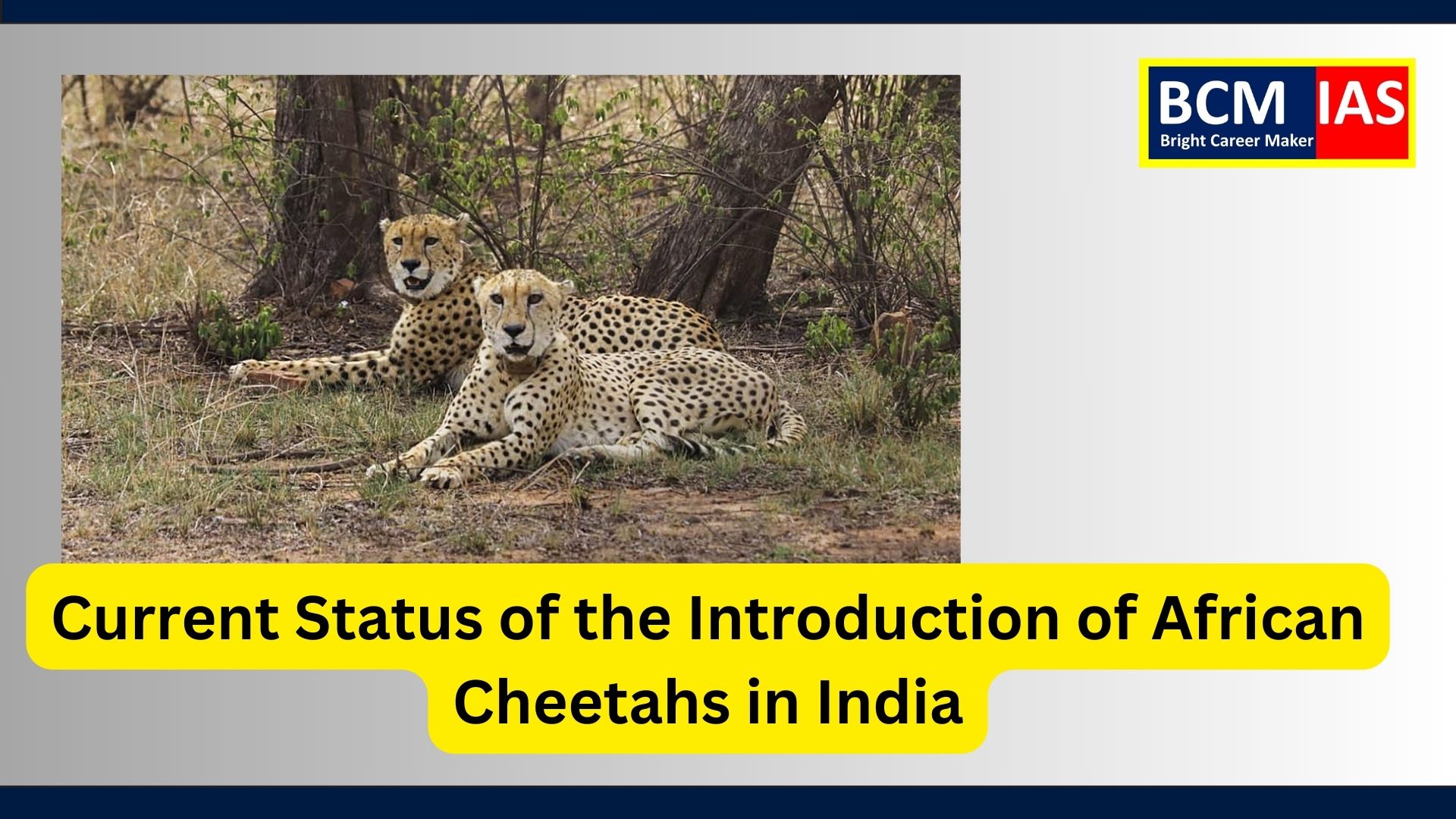
Current Status of the
Introduction of African Cheetahs in India
Background of Project Cheetah:
- Project
Cheetah was
initiated as an ambitious attempt by India to translocate African cheetahs
and reintroduce them into Indian ecosystems, especially to help revive the
savanna habitats and restore ecological balance.
- The
Cheetah Action Plan (CAP) emphasizes both conservation of the species and
restoration of India’s dry-open forest/savanna ecosystems, primarily
through eco-tourism and habitat rehabilitation.
- Cheetahs,
having gone extinct in India over 70 years ago, were chosen as a flagship
species to symbolize the rejuvenation of these ecosystems.
Key Challenges Faced by the Project:
1.
Prolonged Captivity and Cheetah Deaths:
o The African
cheetahs brought from Namibia and South Africa have spent extended periods in
captivity far beyond the prescribed timelines.
o Long-term
confinement has made it difficult for the cheetahs to adapt to the wild, and
several fatalities have raised concerns about the viability of the project.
o As of now, out
of the 20 African cheetahs translocated, several have died due to reasons like
pre-existing health conditions, heat strokes, and physiological challenges.
2.
Mortality and Management Issues:
o Several cheetahs
died even before they were released into the wild. The CAP's plan to have these
cheetahs adapt to India’s ecosystem by gradual release into Kuno National Park
has been hampered by health complications and inadequate adaptation strategies.
o Failures in
choosing the healthiest animals for translocation, combined with their
susceptibility to the Indian climate, led to fatalities. For example, some
cheetahs developed conditions like hypokalaemia and septicaemia.
o A few cubs also
died from extreme heat conditions and other factors, with some cubs born in
captivity facing injuries like broken spines.
3.
Habitat and Ecological Concerns:
o Kuno National
Park in Madhya Pradesh was chosen as the release site for its suitable habitat and adequate
prey base.
o However, despite
the habitat’s suitability, cheetahs remain largely in captivity within
enclosures known as bomas. This has prevented them from becoming free-ranging
animals in the wild, which was a key objective of the project.
o Gandhi Sagar
Wildlife Sanctuary and Nauradehi Wildlife Sanctuary were identified as
additional release sites, but delays in their readiness have shifted the
timeline for further cheetah releases.
4.
Local and Institutional Responsibility:
o The National
Tiger Conservation Authority (NTCA), Ministry of Environment, Forests,
and Climate Change (MoEFCC), and the Madhya Pradesh Forest Department
are the primary institutions responsible for implementing and overseeing
Project Cheetah.
o The Wildlife
Institute of India (WII) provides technical input, while an expert
committee, chaired by Rajesh Gopal, offers guidance on project execution.
Current Status and Future Prospects:
- Despite
initial setbacks and fatalities, the long-term goal of Project Cheetah is
to establish a self-sustaining population of cheetahs in India, with a
focus on building a viable metapopulation that can thrive in Kuno and
other potential habitats.
- The
project is expected to take at least 15-30 years to meet its long-term
success criteria, including the establishment of cheetahs in the wild,
improvements in habitat quality, and benefits to local communities through
eco-tourism.
- However,
significant obstacles remain, such as securing sufficient habitat space
(estimated at 4,000-8,000 sq. km), scientific management, and garnering
community support for sustained conservation efforts.
In summary, Project Cheetah remains a highly ambitious
but challenging conservation initiative. While the introduction of African
cheetahs has brought excitement, the project’s future hinges on overcoming
obstacles like prolonged captivity, cheetah fatalities, and habitat issues. The
eventual success of the project depends on ensuring scientific management,
expanding viable habitats, and creating sustainable eco-tourism benefits for
local communities.
.


Comments on “Current Status of the Introduction of African Cheetahs in India”