


Antimicrobial
Resistance (AMR): A Critical Challenge
Antimicrobial Resistance (AMR) and the Launch of Indigenous
Antibiotic Nafithromycin
The Ministry of Science & Technology has
launched Nafithromycin, India’s first indigenous antibiotic to combat drug-resistant
infections.
1. Context and
Background
- What is AMR?
- Antimicrobial Resistance (AMR) occurs when
microorganisms like bacteria, viruses, and fungi develop resistance to
antimicrobial drugs, rendering them ineffective.
- AMR is a global health threat, often leading to superbugs
that are difficult to treat.
- Global Recognition by WHO:
- The World Health Organization (WHO)
identifies AMR as one of the top 10 threats to global health.
- Launched the Global Antimicrobial Resistance
and Use Surveillance System (GLASS) in 2015 to monitor resistance
patterns globally.
- India’s Challenge with AMR:
- India is among the world's largest antibiotic
consumers, leading to significant risks of resistance.
- The healthcare, agricultural, and environmental
sectors are heavily impacted by rising AMR cases.
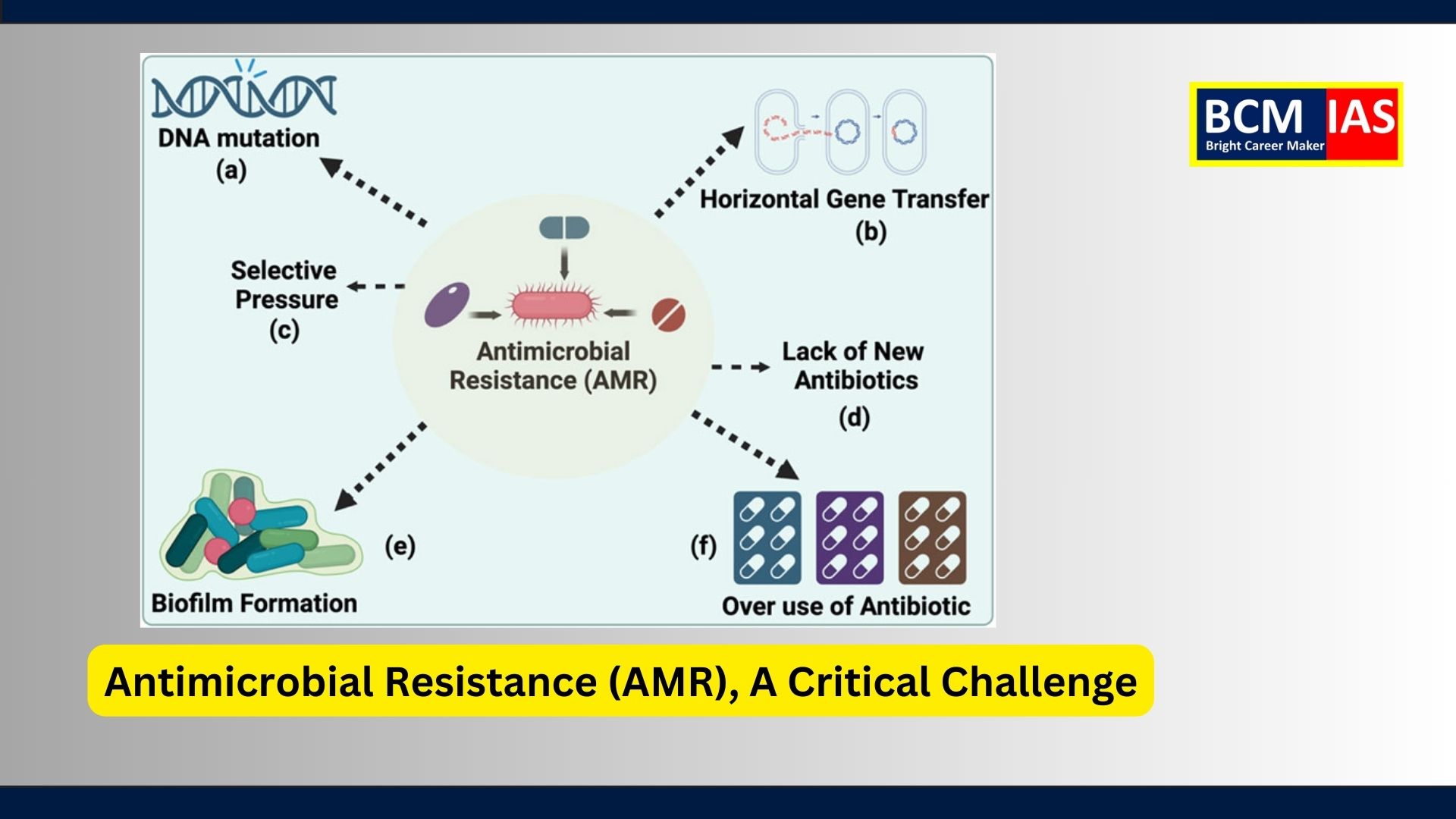
2. Causes of Rising
AMR
1. Overuse of
Antibiotics:
o Widespread
and inappropriate use of antibiotics in humans, livestock, and agriculture
increases resistance.
2. Inadequate
Infection Control:
o Poor
sanitation and hygiene promote the spread of resistant microorganisms.
3. Genetic
Mutations:
o Microbes
naturally evolve or develop mutations that enable them to resist drugs.
4. Lack of
R&D:
o There is
insufficient investment in the development of new antimicrobial drugs.
3. Impacts of AMR
1. Prolonged
Illnesses:
o Resistant
infections take longer to treat, increasing morbidity and mortality.
2. Increased
Healthcare Costs:
o Treatment
becomes expensive due to the need for advanced or combination therapies.
3. Widespread
Infections:
o Resistant
infections can spread rapidly across communities and healthcare settings.
4. Specific
Examples:
o Klebsiella
pneumoniae: Resistance to carbapenem antibiotics.
o Mycobacterium
tuberculosis: Resistant to Rifampicin (RR-TB).
o HIV:
Drug-resistant strains reduce the efficacy of antiretroviral drugs.
4. India’s
Initiatives Against AMR
1. National
Action Plan on AMR (2017):
o Adopts a One
Health approach, integrating human, animal, and environmental health.
2. Antibiotic
Stewardship Program:
o Launched by
the Indian Council of Medical Research (ICMR) to regulate antibiotic
use.
3. Surveillance
Programs:
o Focused on
AMR in microbes causing diseases like tuberculosis, AIDS, and vector-borne
infections.
5. Launch of
Indigenous Antibiotic Nafithromycin
- Significance:
- Launched as India’s first indigenous
antibiotic aimed at combating AMR.
- Developed with the support of the Biotechnology
Industry Research Assistance Council (BIRAC).
- Key Features:
- First antibiotic in its class in over 30
years.
- Designed to treat Community-Acquired
Bacterial Pneumonia (CABP) caused by drug-resistant bacteria like Streptococcus
pneumoniae.
- Market Launch:
- Marketed under the brand name Miqnaf by
Wockhardt.
- Global Context:
- Coincides with World AMR Awareness Week
(18-24 November 2024).
- Theme: "Preventing Antimicrobial
Resistance Together."
6. Relevance of
Nafithromycin for India
1. Addressing
Critical Gaps:
o Targets
drug-resistant bacteria, especially in community-acquired infections.
2. Promoting
Indigenous R&D:
o Demonstrates
India's capability to develop new antibiotics for global challenges.
3. Supporting
Global AMR Goals:
o Aligns with
WHO’s call for new antimicrobial solutions to counter resistance.
7. Way Forward
1. Strengthen
Research and Development:
o Increase
funding and incentives for developing new antibiotics and alternative treatments.
2. Public
Awareness:
o Educate
communities on the proper use of antibiotics to reduce misuse.
3. Policy and
Global Collaboration:
o Collaborate
internationally for surveillance, regulation, and sharing best practices.
4. Integration
of One Health Approach:
o Holistic
AMR management, addressing human, animal, and environmental health together.
Conclusion
The launch of Nafithromycin
marks a significant milestone in India’s fight against AMR, highlighting the
importance of indigenous innovation. However, combating AMR requires a
multi-sectoral, sustained approach integrating research, public awareness, and
global partnerships to mitigate its devastating impacts on health and
development.
MCQs for Practice
1. With reference to Antimicrobial
Resistance (AMR), consider the following statements:
1. AMR occurs
when microorganisms become resistant to antimicrobial drugs such as
antibiotics.
2. The World
Health Organization (WHO) has identified AMR as one of the top 10 threats to
global health.
3. The misuse
of antibiotics in humans, livestock, and agriculture is a major contributor to
AMR.
Which of the statements given above
are correct?
(a) 1 and 2 only
(b) 2 and 3 only
(c) 1 and 3 only
(d) 1, 2, and 3
Answer: (d)
2. What is the significance of
Nafithromycin, recently launched in India?
1. It is
India’s first indigenous antibiotic to combat AMR.
2. It is
designed to treat Community-Acquired Bacterial Pneumonia (CABP).
3. It is the
first antibiotic in its class developed globally in over 30 years.
Select the correct answer using the
code given below:
(a) 1 and 2 only
(b) 2 and 3 only
(c) 1 and 3 only
(d) 1, 2, and 3
Answer: (d)
3. With reference to India’s
initiatives against AMR, consider the following statements:
1. The
National Action Plan on AMR adopts a One Health approach, integrating human,
animal, and environmental health.
2. The
Antibiotic Stewardship Program is led by the Biotechnology Industry Research
Assistance Council (BIRAC).
3. India
monitors AMR in diseases like tuberculosis, AIDS, and vector-borne infections.
Which of the statements given above
is/are correct?
(a) 1 and 2 only
(b) 2 and 3 only
(c) 1 and 3 only
(d) 1, 2, and 3
Answer: (c)
4. Consider the following
statements regarding the causes of AMR:
1. Poor
sanitation and infection control practices.
2. Overuse and
misuse of antibiotics.
3. Increased
genetic mutations in microorganisms.
4. Over-reliance
on vaccines for bacterial infections.
Which of the statements given above
contribute to AMR?
(a) 1, 2, and 3 only
(b) 2 and 4 only
(c) 1 and 4 only
(d) 1, 2, 3, and 4
Answer: (a)
5. Which of the following is the
theme of World Antimicrobial Resistance Awareness Week (18-24 November 2024)?
(a) Combating Drug-Resistant
Infections Together
(b) Preventing Antimicrobial Resistance Together
(c) Building a Global Response to AMR
(d) Mitigating Antimicrobial Resistance Worldwide
Answer: (b)


Comments on “Antimicrobial Resistance (AMR): A Critical Challenge”