


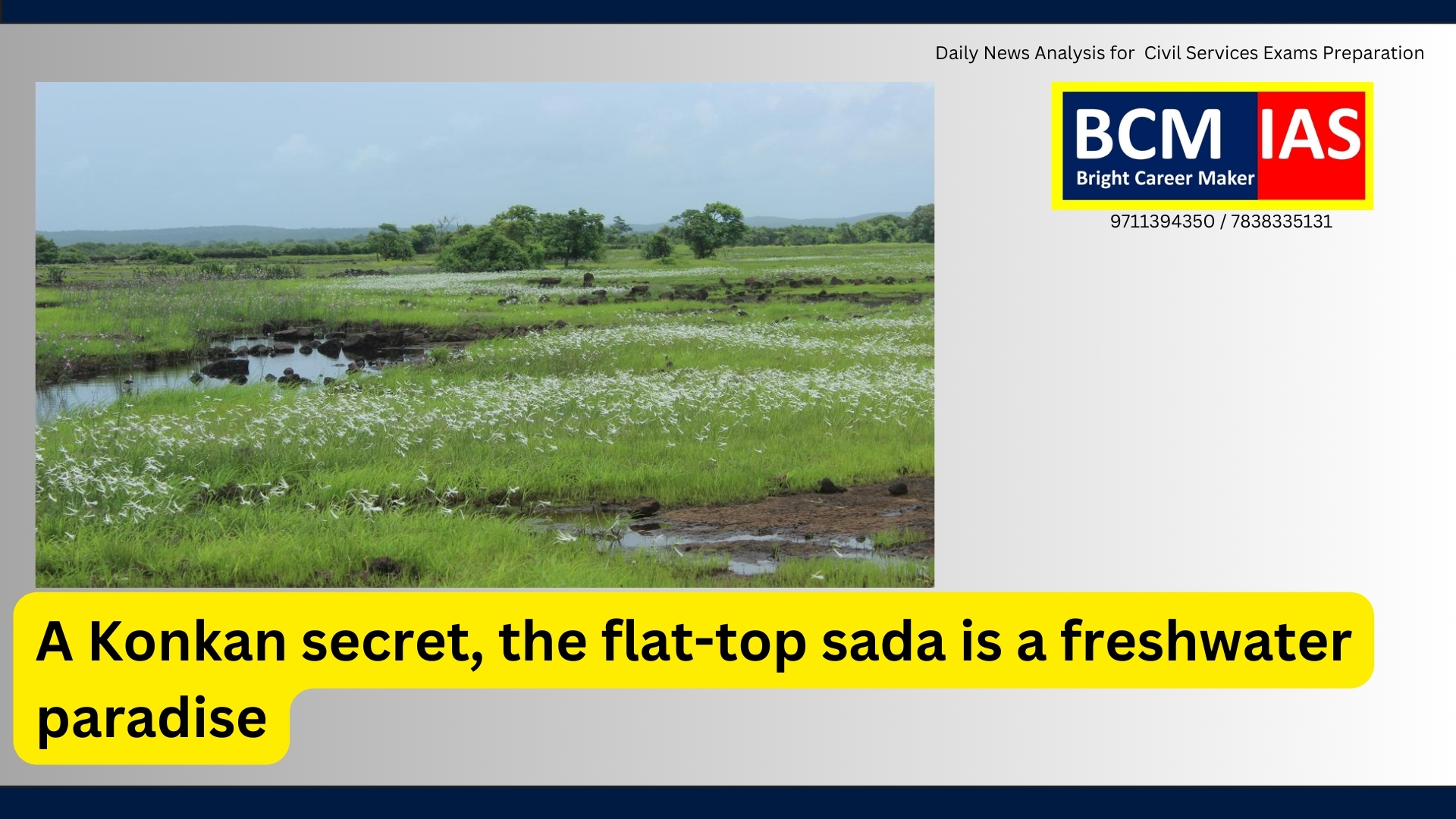
A
Konkan secret, the flat-top sada is a freshwater paradise
1. Geographical Context
- Location:
The Konkan region lies between the Arabian Sea and the Western Ghats. The
sada (flat-topped areas) are unique geographical formations resulting from
centuries of erosion.
- Comparison:
Similar to the plateaux in Satara district (e.g., Kaas Plateau), the sada
has unique ecosystems and biodiversity.
2. Ecological and
Biodiversity Significance
- Flora:
The biodiversity survey recorded 459 plant species, with 105 endemic to
the Konkan region.
- Fauna:
- 31
species of reptiles.
- 13
species of amphibians.
- 169
species of birds.
- 41
species of mammals.
- Freshwater
Habitats: These include step
wells, springs, and perennial streams, which support species like the
vulnerable Indian flapshell turtle and provide water to animals like
leopards and migratory birds.
3. Community Practices
- Sustainable
Agriculture: Locals cultivate rice
and millets (e.g., nanchani) without pesticides or chemical fertilizers.
- Cultural
Practices: Communities conserve
waterbodies as part of rituals and deities' worship, fostering collective
responsibility for hygiene and natural commons.
4. Hydrological
Importance
- Geology:
The sada's weathered lateritic soil layer acts as a rainwater catchment,
replenishing groundwater supplies.
- Water
Resources: Villages depend on these
freshwater sources year-round, despite surrounding saline creeks and rocky
terrain.
5. Threats to Sada
- Land-Use
Change: Conversion of open land
and cropland into orchards, residential areas, or sites for developmental
projects.
- Mining:
Laterite stone extraction poses environmental risks.
- Wasteland
Classification: Being listed as
‘wasteland’ in the Wasteland Atlas undermines the ecological value of the
sada, increasing vulnerability to exploitation.
6. Cultural and
Archaeological Significance
- The
sada is home to geoglyphs, artworks dating back 10,000 years, emphasizing
the region's historical and cultural importance.
Explanation
The sada in the Konkan region
represents a unique ecological and hydrological system, combining biodiversity
with cultural heritage. Despite its classification as a wasteland, the sada
provides critical ecosystem services like freshwater access and supports
diverse flora and fauna. However, its future is threatened by unsustainable
development, mining, and land-use changes. Conservation efforts must integrate
scientific findings, local traditions, and policy changes to preserve this
natural and cultural treasure.
Recommendations
- Reclassification:
Advocate for removing the 'wasteland' label from the sada in official
records.
- Sustainable
Development: Implement policies
balancing ecological preservation with developmental needs.
- Community
Engagement: Support traditional
practices and community-driven conservation models.
- Research
and Awareness: Promote studies on sada
biodiversity and disseminate knowledge to highlight its importance.
Mains Question
Q. The sada of the Konkan region is a
unique ecosystem that provides critical biodiversity and hydrological services.
Discuss the ecological, hydrological, and cultural significance of sada and
examine the threats to its sustainability. Suggest measures for its
conservation. (250 words)
Answer
The sada
of the Konkan region, with its flat-topped lateritic formations, represents a
fragile yet critical ecosystem. It supports unique biodiversity, sustains
freshwater availability, and embodies cultural traditions.
Ecological
Significance:
The sada harbors 459 plant
species, 105 endemic to the region, alongside 31 reptile species, 13
amphibians, 169 birds, and 41 mammals. It also serves as a habitat for
vulnerable species like the Indian flapshell turtle and supports migratory
birds and large mammals.
Hydrological
Significance:
The highly weathered lateritic
soil of sada acts as a natural rainwater catchment, replenishing groundwater.
Freshwater sources such as step wells, springs, and perennial streams ensure
year-round water availability for both communities and wildlife.
Cultural
Significance:
Communities conserve
freshwater sources as part of their rituals dedicated to local deities,
fostering collective ownership of natural resources. The sada also features
ancient geoglyphs, reflecting its historical and cultural heritage.
Threats:
1.
Land-use
Change: Conversion to orchards, residential
areas, and development projects.
2.
Mining:
Laterite stone extraction degrades the ecosystem.
3.
Wasteland
Classification: Being labeled as ‘wasteland’
diminishes its perceived ecological value.
Conservation
Measures:
1.
Reclassification:
Remove the 'wasteland' tag and recognize its ecological importance.
2.
Sustainable
Development: Implement eco-sensitive
zoning regulations.
3.
Community
Involvement: Strengthen traditional
conservation practices.
4.
Awareness
Campaigns: Promote research and public understanding
of sada’s significance.
5.
Policy
Support: Enforce stringent rules against
unsustainable mining and land conversion.
The sada must be protected as
a vital ecological, hydrological, and cultural resource to ensure long-term sustainability and biodiversity conservation.
MCQs
1. Which of the following best describes
the sada in the Konkan region?
A. Elevated mountain ranges with dense forests
B. Flat-topped areas formed due to erosion
C. Coastal mangroves with saline creeks
D. Fertile agricultural plains
Answer: B.
Flat-topped areas formed due to erosion
2. What is the primary reason for
year-round freshwater availability in sada regions?
A. High annual rainfall in the Konkan region
B. Presence of saline creeks and mangroves
C. Lateritic soil acting as a natural rainwater catchment
D. Artificial reservoirs created by local communities
Answer: C.
Lateritic soil acting as a natural rainwater catchment
3. Which of the following practices
contributes to the conservation of sada ecosystems?
A. Widespread use of chemical fertilizers in farming
B. Conversion of sada land to orchards and residential areas
C. Ritual-based community conservation of waterbodies
D. Large-scale laterite mining for construction purposes
Answer: C.
Ritual-based community conservation of waterbodies
4. Why is the sada classified as a
‘wasteland’ in the Wasteland Atlas a concern?
A. It leads to a lack of biodiversity conservation.
B. It increases the area’s vulnerability to exploitation.
C. It results in reduced agricultural productivity.
D. It diminishes the tourism potential of the region.
Answer: B. It
increases the area’s vulnerability to exploitation.
5. Which of the following species is not
typically associated with sada ecosystems?
A. Indian flapshell turtle
B. Leopards
C. Coral reef fish
D. Migratory birds
Answer: C. Coral
reef fish


Comments on “A Konkan secret, the flat-top sada is a freshwater paradise”