


Daily Current Affairs Analysis
14 June 2024
-------------------------------------------------------------------------------------------------------------
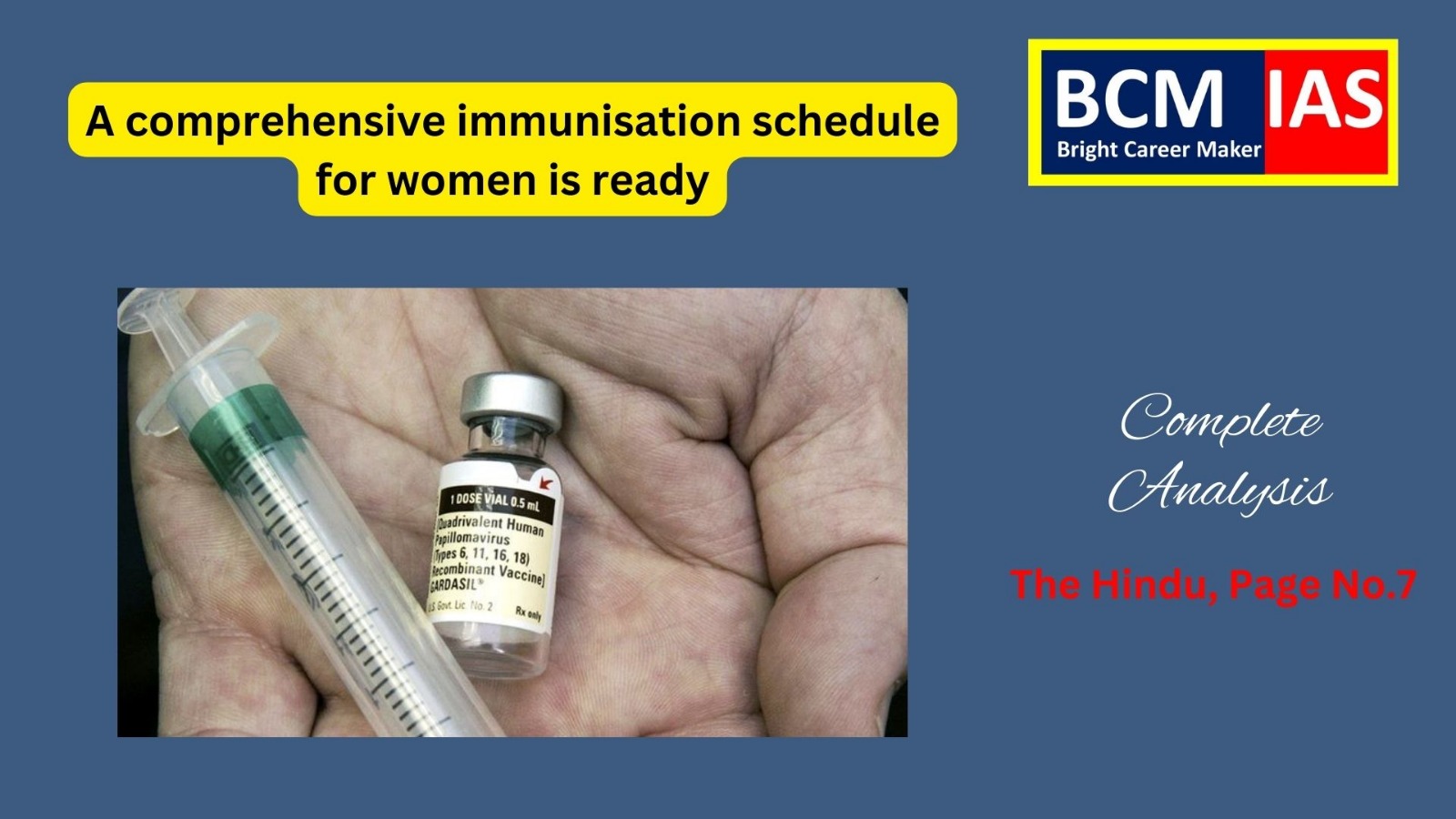
A comprehensive immunisation schedule for women is
ready
Meaning of Headline-
·
This headline indicates that a detailed plan outlining the
necessary vaccinations for women has been developed and is now available.
·
The schedule provides a list of essential vaccines that adult women
should receive, including the recommended frequency for each vaccine.
·
The aim is to enhance women's health by preventing
vaccine-preventable diseases through increased awareness and proactive
healthcare measures.
Related Topic (as per UPSC
Syllabus)
Prelims:
- General Studies
Paper 1:
o
Current Events of National and
International Importance: Awareness of recent health initiatives and
developments, especially those related to public health and preventive
healthcare.
Mains:
- General Studies
Paper 2:
o
Government Policies and Interventions: Understanding policies related to public
health, women's health, and preventive healthcare.
o
Issues Relating to Development and
Management of Social Sector /Services: Health
initiatives aimed at improving women's health and reducing health disparities.
- General Studies
Paper 3:
o
Science and Technology - Developments
and their Applications and Effects in Everyday Life: Importance of vaccines and immunization
schedules in enhancing public health.
o
Awareness in the Fields of IT, Space,
Computers, Robotics, Nanotechnology, Bio-technology and Issues Relating to
Intellectual Property Rights: Technological
advancements in healthcare and their applications.
Interview:
- Current Affairs and Ethical Issues: Discussion on the
importance of preventive healthcare, gender disparities in health, and the
role of government and organizations in addressing these issues.
This news article highlights the importance
of immunization for women, a critical aspect of public health policy and
preventive healthcare, which are significant topics for the UPSC examination.

News
Analysis
Introduction:
The article discusses the introduction of a
comprehensive immunisation schedule for women by the Federation of Obstetric
and Gynaecological Societies of India (FOGSI). The schedule aims to provide
essential vaccines for adult women and details the frequency of each vaccine.
Body:
Key Points:
1. Launch
and Significance:
o
FOGSI recently unveiled the immunisation schedule at
an event in Mumbai, with actor and women's health champion Kajal Aggarwal
endorsing the initiative.
o
The importance of immunisation for women cannot be
overstated, as it protects against vaccine-preventable diseases and improves
overall health and quality of life.
2. Health
Disparities:
o
A joint report by the World Economic Forum and
McKinsey highlights that women spend 25% more time in poor health compared to
men.
o
Vaccination is critical in narrowing this health gap,
potentially allowing 3.9 billion women to live healthier lives.
3. Preventive
Health Care:
o
Jaydeep Tank, President of FOGSI, emphasized that the
updated immunisation schedule is a significant milestone in preventive health
care.
o
This schedule provides a roadmap for women and
doctors, increasing awareness about the importance of vaccination.
4. Challenges
and Recommendations:
o
Hrishikesh Pai, a prominent figure in gynecology and
obstetrics, pointed out that adult vaccine coverage in India is almost
negligible and stressed the need for change.
o
The article mentions that women often downplay their
health concerns and need encouragement to prioritize their health, particularly
regarding preventable diseases like cervical cancer.
5. Vulnerable
Periods and Specific Vaccines:
o
The period after childbirth is highlighted as
particularly vulnerable, with changes in the immune and hormonal systems
increasing infection risks.
o
The article specifies the importance of vaccinations
such as the HPV vaccine, which reduces the risk of cervical cancer.
6. Awareness
and Education:
o
Initiatives like the revised immunisation schedule are
crucial in changing attitudes towards adult vaccination.
o
FOGSI's efforts, including the publication of the
FOGSI Handbook on Prevention and Management of Cervical Cancer, aim to educate
both the public and healthcare providers.
7. Impact on
Women's Health:
o
By providing clear information and recommended
vaccination schedules, the initiative seeks to improve vaccine coverage and
protect more women from preventable diseases.
o
This approach is expected to have a substantial impact
on the overall health and well-being of women in India.
Conclusion:
The comprehensive immunisation schedule for
women introduced by FOGSI is a pivotal step towards improving women's health in
India. By addressing the gaps in vaccine coverage and raising awareness about
the importance of adult vaccination, this initiative has the potential to
significantly reduce the burden of vaccine-preventable diseases and enhance the
quality of life for women across the country. The collaboration between FOGSI
and MSD Pharma, along with the support from prominent health advocates, underscores
the importance of proactive health measures and education in achieving these
goals.
Mains Probable Question
"Discuss the importance of a
comprehensive immunization schedule for women in improving public health and
reducing health disparities in India."
Model Suggested Answer:
1.
Introduction
The
significance of a comprehensive immunization schedule for women cannot be
overstated in a country like India, where healthcare accessibility and
awareness are still developing. Immunization serves as a crucial preventive
measure to safeguard women from various vaccine-preventable diseases, thereby
improving their overall health and well-being. The recent initiative by the
Federation of Obstetric and Gynaecological Societies of India (FOGSI) to unveil
a detailed immunization schedule for women marks a significant step towards
achieving better health outcomes for women across the nation.
2.
Demand of the Question
Importance of Immunization
for Women:
Immunization
is a critical component of preventive healthcare. It helps in protecting
individuals from infectious diseases that can have severe health consequences.
For women, immunization is particularly important due to several factors:
- Health Disparities: Women spend more time in poor health compared to men. This
disparity can be narrowed by ensuring women receive timely vaccinations,
which can prevent many diseases.
- Maternal and Child Health: Vaccinating women, especially those who are pregnant or planning to
conceive, is essential for protecting both the mother and the child. For
instance, vaccines like the influenza vaccine and Tdap (tetanus,
diphtheria, and pertussis) are recommended during pregnancy to protect
newborns.
- Preventing Cancer: Certain vaccines, such as the HPV vaccine, are crucial in
preventing cervical cancer, which is a significant health burden for women
in India.
Public Health Benefits:
The comprehensive immunization
schedule has broader implications for public health:
- Reducing Disease Burden: By preventing vaccine-preventable diseases, the overall disease
burden on the healthcare system is reduced. This leads to fewer
hospitalizations, less morbidity, and lower healthcare costs.
- Improving Quality of Life: Vaccines can significantly improve the quality of life for women by
preventing diseases that can cause long-term health issues. This is
particularly important for diseases like hepatitis B and HPV, which can
have chronic implications.
- Economic Benefits: Healthy women contribute more effectively to the economy. By
reducing the time women spend in poor health, their productivity
increases, benefiting both families and society at large.
Challenges and Solutions:
Implementing a comprehensive
immunization schedule for women faces several challenges:
- Awareness and Education: Many women are unaware of the importance of adult vaccinations.
Public health campaigns and education programs are essential to increase
awareness.
- Access to Healthcare: In rural and remote areas, access to healthcare facilities can be
limited. Mobile health units and telemedicine can bridge this gap.
- Cultural and Social Barriers: In some communities, cultural beliefs and social norms may hinder
women from seeking vaccinations. Community engagement and involvement of
local leaders can help address these barriers.
3.
Way Forward
To effectively implement a
comprehensive immunization schedule for women, a multi-faceted approach is
required:
Policy and Government
Initiatives:
- Strengthening Healthcare
Infrastructure: Ensuring that healthcare
facilities are well-equipped to provide vaccinations to women is crucial.
This includes adequate cold chain systems, trained healthcare personnel,
and sufficient vaccine supplies.
- Public-Private Partnerships: Collaborations between the government and private sector can
enhance the reach and efficiency of immunization programs. For instance,
partnerships with pharmaceutical companies can ensure the availability of
vaccines.
- Monitoring and Evaluation: Regular monitoring and evaluation of immunization programs can help
identify gaps and areas for improvement. This includes tracking
vaccination coverage rates and health outcomes.
Awareness and Education:
- Community Outreach Programs: Engaging communities through outreach programs can increase
awareness about the importance of immunization. These programs can use
various platforms such as schools, workplaces, and community centers.
- Media Campaigns: Utilizing mass media, including television, radio, and social
media, can effectively disseminate information about the benefits of
vaccination and the availability of immunization services.
- Healthcare Provider Training: Training healthcare providers to educate women about the importance
of immunization and address their concerns can enhance vaccine acceptance
and uptake.
Innovative Solutions:
- Mobile Health Units: Deploying mobile health units to provide vaccinations in remote and
underserved areas can improve access. These units can also offer other
healthcare services, making them a valuable resource for communities.
- Digital Health Records: Implementing digital health records can help track individual
vaccination histories, ensuring that women receive the recommended
vaccines on time. This can also facilitate better coordination between
different healthcare providers.
- Research and Development:
Investing in research to develop new vaccines and improve existing ones
can enhance the effectiveness of immunization programs. This includes
research on vaccines for diseases that disproportionately affect women.
Community and Stakeholder
Engagement:
- Involving Local Leaders: Engaging local leaders and influencers can help build trust and
acceptance of immunization programs within communities. Their endorsement
can encourage more women to get vaccinated.
- Empowering Women: Empowering women to take charge of their health through education
and support can lead to better health outcomes. This includes providing
information about the benefits of vaccination and how to access services.
- Collaboration with NGOs: Non-governmental organizations (NGOs) can play a significant role
in reaching marginalized populations and providing immunization services.
Collaborating with NGOs can enhance the reach and impact of immunization
programs.
Conclusion:
A
comprehensive immunization schedule for women is a vital step towards improving
public health and reducing health disparities in India. By protecting women
from vaccine-preventable diseases, we can enhance their quality of life, reduce
healthcare costs, and contribute to the overall well-being of society. However,
the success of such a program depends on effective implementation, which
requires strong policies, increased awareness, innovative solutions, and active
community engagement. By addressing these challenges and leveraging
opportunities, India can achieve significant improvements in women's health and
move closer to its goal of universal healthcare
MCQs for Prelims Practice
1. Which organization
recently unveiled a comprehensive immunization schedule for women in India?
- A. World Health Organization (WHO)
- B. Federation of Obstetric and Gynaecological
Societies of India (FOGSI)
- C. Indian Medical Association (IMA)
- D. National Health Authority (NHA)
Answer: B.
Federation of Obstetric and Gynaecological Societies of India (FOGSI)
2. What is the primary
aim of the comprehensive immunization schedule for women?
- A. To reduce healthcare costs
- B. To provide a list of essential vaccines for
adult women
- C. To increase the number of hospitals
- D. To promote medical tourism
Answer: B. To
provide a list of essential vaccines for adult women
3. According to the
article, how much more time do women spend in poor health compared to men?
- A. 10%
- B. 15%
- C. 25%
- D. 30%
Answer: C. 25%
4. Which vaccine is
mentioned in the article as being crucial in preventing cervical cancer?
- A. Influenza vaccine
- B. Tetanus vaccine
- C. HPV vaccine
- D. Hepatitis B vaccine
Answer: C. HPV
vaccine
5. What significant
outcome does the comprehensive immunization schedule aim to achieve for women
in India?
- A. Increase in medical colleges
- B. Enhanced quality of life
- C. Growth in the pharmaceutical industry
- D. More employment in the healthcare sector
Answer: B. Enhanced quality of life

Other Important Links
| Follow us on-
|
ADMISSIONS OPEN For Details, Contact us- 9711394350 / 9717724350 | |


Comments on “A comprehensive immunisation schedule for women is ready”