

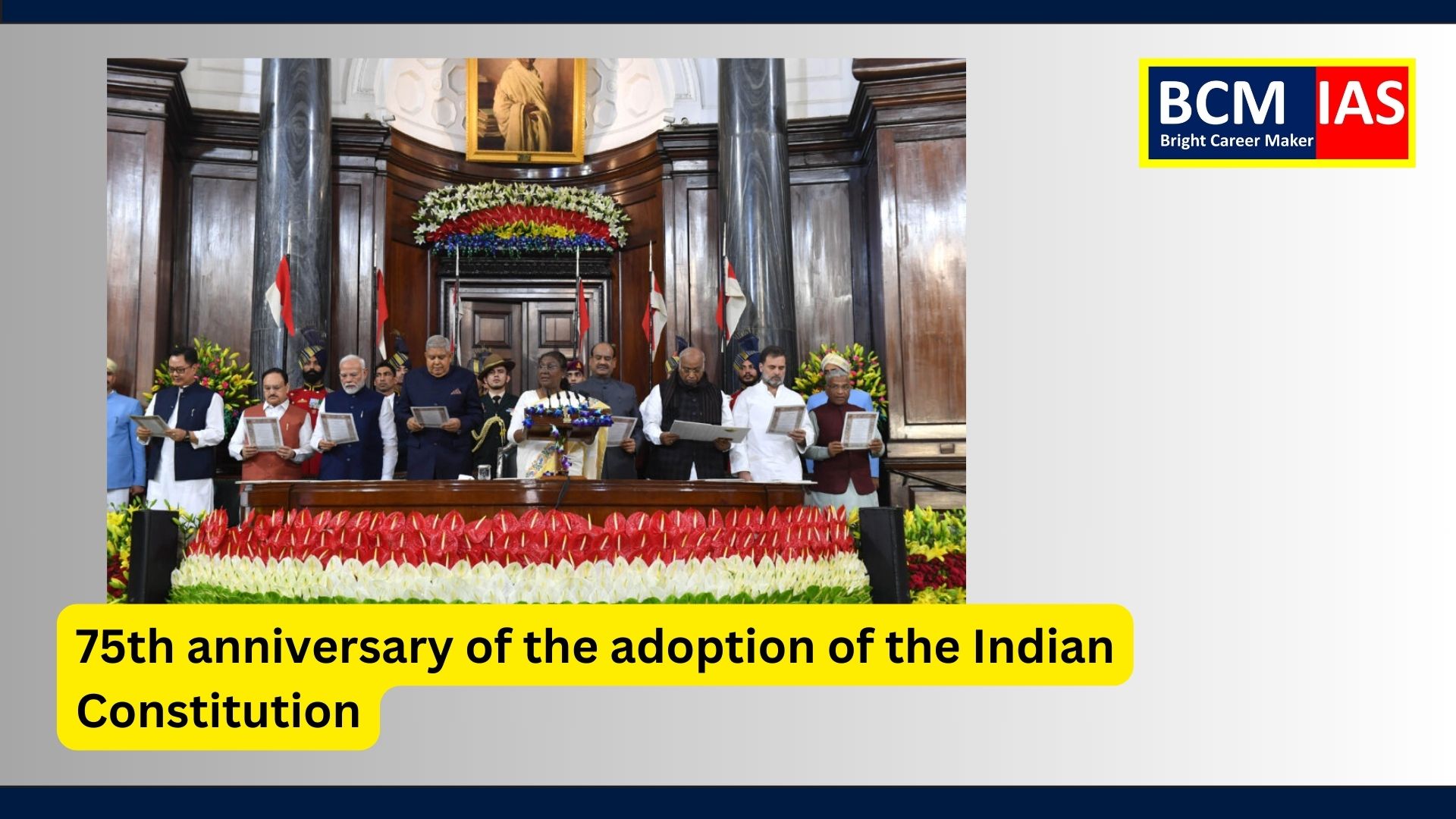
75th anniversary of the adoption of
the Indian Constitution
Analysis of the News:The event
marked the 75th anniversary of the
adoption of the Indian Constitution. It was a moment to reflect
on the principles of the Constitution and its role in shaping India’s
democratic framework.
Key Highlights:
1.
President Droupadi Murmu’s Speech:
o Progressive
Document: Highlighted the Constitution as a "living
document" capable of evolving with changing times.
o Collaborative
Governance: Emphasized the need for the executive, legislature, and judiciary
to work together for public welfare while adhering to the Constitution’s
spirit.
o Unity
& Duties: Stressed fundamental duties like unity, integrity,
harmony, women’s dignity, environmental protection, and scientific temper.
2.
Vice-President Jagdeep Dhankhar’s
Remarks:
o Separation
of Powers: Advocated for maintaining jurisdictional boundaries
between the three organs of government.
o Unity
over Creed: Cautioned against prioritizing creed or party loyalty
over national interests, referencing Dr. B.R. Ambedkar's warnings about
internal betrayal.
o Parliament’s
Role: Called for restoring the sanctity of democratic institutions
through meaningful dialogue and debate.
3.
Lok Sabha Speaker Om Birla’s Appeal:
o Constructive
Debates: Urged MPs to emulate the traditions of respectful and
constructive debates set by the Constituent Assembly.
o Faith
in Democracy: Praised the Constitution as a catalyst for social and
economic progress.
4.
Ceremonial Observances:
o A commemorative coin was
unveiled.
o The Preamble to the Constitution
was read collectively, reaffirming commitment to its principles.
Themes of the Event:
1. Democratic
Ideals: The event underscored the ideals enshrined in the
Constitution—justice, liberty, equality,
and fraternity.
2. Role
of Institutions: It highlighted the importance of synergy between the
three pillars of democracy and the need for institutions to respect their
boundaries.
3. Citizens'
Role: The President emphasized that the people of India are the
ultimate authority, and their aspirations shape governance.
Underlying Concerns:
1. Polarization
in Politics: The Vice-President’s remarks on placing creed above
the country suggest concerns over divisive politics.
2. Respect
for Institutions: Calls for restoring the sanctity of Parliament and
constructive debates reflect dissatisfaction with the current political
discourse.
3. Public
Welfare: Reiterated the importance of governance focused on uplifting
weaker sections of society.
Significance of the Event:
1. Historical
Context: Commemorated the adoption of the Constitution, a milestone
in India’s democratic journey.
2. Contemporary
Relevance: Provided a platform to reflect on current challenges
like institutional respect, unity, and public welfare.
3. Vision
for the Future: Inspired commitment toward achieving a Viksit Bharat (Developed India) by 2047,
the centenary of Independence.
Conclusion:
The event served as a reminder of the values enshrined
in the Constitution and the responsibilities of all stakeholders in
democracy—government, institutions, and citizens. The speeches highlighted the
need for unity, adherence to constitutional principles, and the importance of
collaborative governance in achieving the vision of a prosperous and equitable
India.
MCQs
1. Fundamental Duties
The fundamental duties of Indian
citizens were incorporated into the Constitution by which amendment?
a) 42nd Amendment Act
b) 44th Amendment Act
c) 52nd Amendment Act
d) 86th Amendment Act
Answer: a) 42nd
Amendment Act
2. Separation of Powers
The principle of "Separation
of Powers" is best reflected in which part of the Indian Constitution?
a) Fundamental Rights
b) Directive Principles of State Policy
c) The Preamble
d) The structure of governance
Answer: d) The
structure of governance
3. Preamble
Which of the following terms was
NOT originally included in the Preamble of the Indian Constitution?
a) Sovereign
b) Socialist
c) Secular
d) Fraternity
Answer: b)
Socialist and c) Secular (added via the 42nd Amendment Act)
4. Justice
The concept of "Social,
Economic, and Political Justice" in the Preamble of the Indian
Constitution has been derived from:
a) The American Constitution
b) The Canadian Constitution
c) The Irish Constitution
d) The Soviet Constitution
Answer: d) The
Soviet Constitution
5. Parliamentary Debates
Which of the following was
emphasized in the debates of the Constituent Assembly while adopting the Indian
Constitution?
a) Uniformity of laws across the
nation
b) Preservation of diversity and local traditions
c) Complete eradication of caste-based reservations
d) Encouraging theocratic governance
Answer: b)
Preservation of diversity and local traditions


Comments on “75th anniversary of the adoption of the Indian Constitution”