


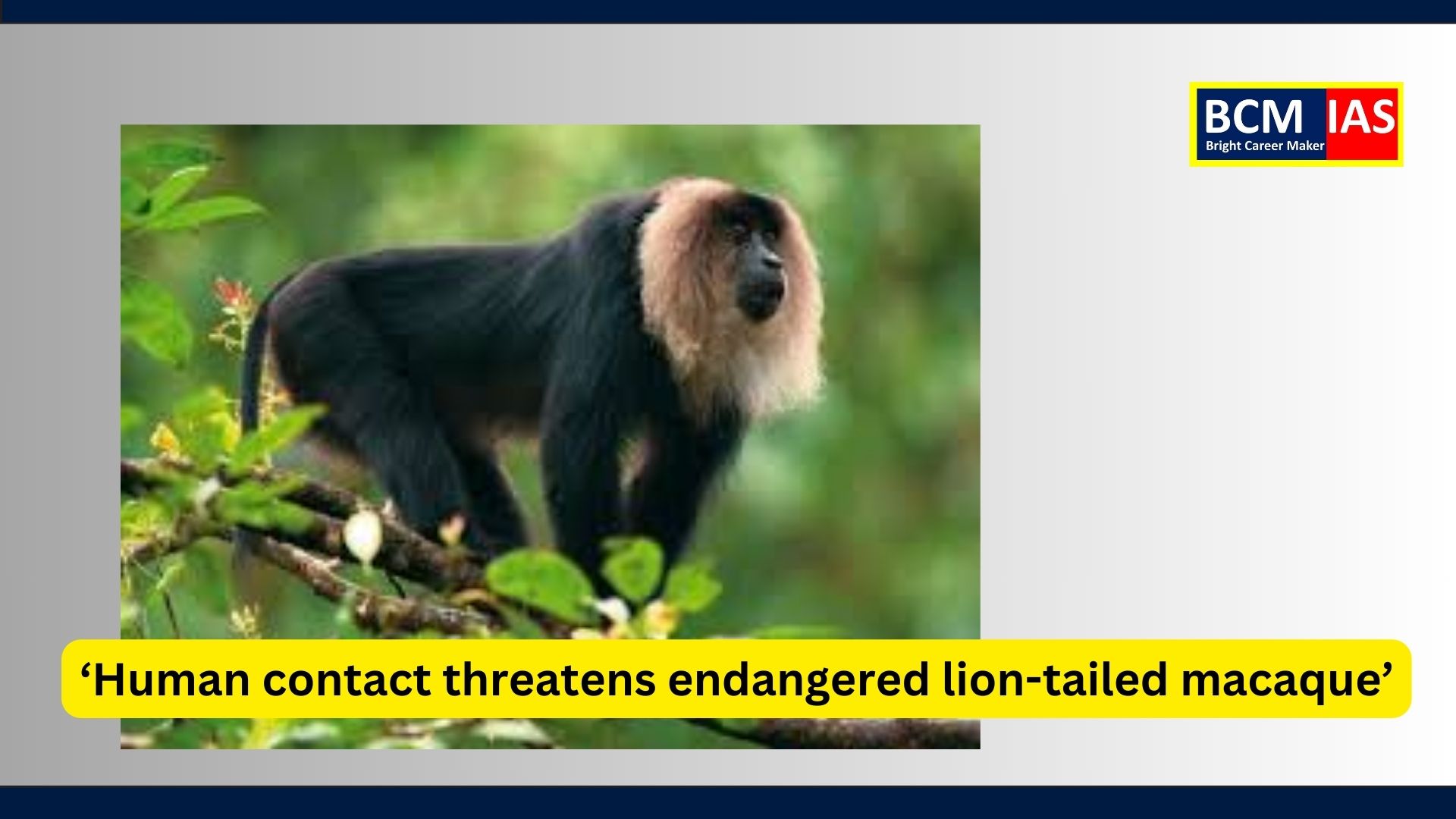
‘Human
contact threatens endangered lion-tailed macaque’
The article addresses the
growing threat to the critically endangered lion-tailed macaque (Macaca
silenus), endemic to the Western Ghats, due to increasing human
interactions. The findings of the study by researchers from the Kerala Forest
Research Institute and the University of Mysore highlight how human
encroachment and altered behavior patterns jeopardize the species’ survival.
1.
Context: The Lion-Tailed Macaque
- Habitat and Status:
- Found only in the Western
Ghats, the lion-tailed macaque is classified as endangered on
the IUCN Red List and protected under Appendix I of CITES.
- Its population is estimated
at approximately 4,200 individuals, making it one of the most
vulnerable primate species.
- Key Threats:
- Habitat Loss and
Fragmentation: Roads, plantations, and
human settlements continue to encroach on natural habitats.
- Human Interaction: Increased provisioning of food and habituation to human activity
are altering their behavior and survival patterns.
2.
Study Highlights:
- Survey Scope:
- Researchers studied eight key
locations in the Western Ghats, including Valparai, Nelliyampathy,
and Sabarimala, known for frequent human-macaque interactions.
- Findings:
- 25% of the macaque population
in these areas interacts with humans.
- Specific hotspots, such as Valparai,
show decades-long records of human-macaque interactions, leading to
dependence on human food and altered foraging habits.
- Rising interactions in
tourist-heavy areas like Sabarimala exacerbate risks.
3.
Impacts of Human Interaction:
- Health Risks:
- Provisioning by humans causes
malnutrition, diet-related illnesses, and dependency on
unnatural food sources.
- Increased exposure to zoonotic
diseases, posing risks to both macaques and humans.
- Behavioral Changes:
- Altered foraging habits due
to dependence on human-provided food.
- Reduced time spent in natural
habitats and disrupted social behaviors.
- Accidents and Aggression:
- Increased vulnerability to road
accidents.
- Aggression toward humans and
other macaques due to competition for human-provided food.
- Population Decline:
- Stress-induced mortality and
injury rates rise with frequent human interactions.
- Habitat fragmentation
prevents natural population growth.
4.
Broader Implications:
- Ecological Role of Macaques:
- As seed dispersers and
contributors to forest ecology, their decline impacts the overall health
of the Western Ghats ecosystem.
- Human-Wildlife Conflict:
- Rising interactions lead to
conflicts, affecting local communities and wildlife management efforts.
- Tourism practices exacerbate
the issue by encouraging feeding and closer encounters.
5.
Recommendations for Mitigation:
- Habitat Conservation:
- Strengthen efforts to protect
and restore habitats by limiting encroachments and ensuring connectivity
between fragmented forests.
- Regulating Tourism:
- Implement strict guidelines
to prevent feeding and close contact with macaques in tourist areas.
- Educate tourists on the
ecological impacts of their actions.
- Awareness and Policy:
- Raise awareness among local
communities about the risks of human interaction with macaques.
- Enforce stricter wildlife
protection policies, particularly in hotspots like Valparai and
Sabarimala.
- Monitoring and Research:
- Continue long-term monitoring
of macaque populations to assess the effects of human interactions.
- Study disease transmission
risks and develop strategies to mitigate zoonotic threats.
6.
Conclusion:
The lion-tailed macaque, a
critical component of the Western Ghats’ biodiversity, faces compounded threats
from habitat loss and human interaction. Addressing these challenges requires a
holistic approach involving habitat conservation, responsible tourism, and
community engagement. Failure to act will not only endanger this iconic species
but also undermine the ecological balance of the region.
MCQs
1. Where is
the lion-tailed macaque found?
a) Eastern Ghats
b) Western Ghats
c) Himalayan Forests
d) Sundarbans
Answer:
b) Western Ghats
2. What
percentage of the lion-tailed macaque population in the Western Ghats is
estimated to engage in interactions with humans?
a) 10%
b) 25%
c) 40%
d) 50%
Answer:
b) 25%
3. What is
a significant health risk posed to lion-tailed macaques due to increased human
interaction?
a) Overpopulation in natural habitats
b) Malnutrition and diet-related illnesses
c) Increase in natural predators
d) Loss of their fur density
Answer:
b) Malnutrition and diet-related illnesses
4. Which
location has a decades-long record of human-macaque interaction, leading to
significant behavioral changes in the species?
a) Agumbe
b) Sabarimala
c) Valparai
d) Sholayar
Answer:
c) Valparai
5. What
classification does the lion-tailed macaque hold under the IUCN Red List?
a) Critically Endangered
b) Endangered
c) Vulnerable
d) Near Threatened
Answer:
b) Endangered


Comments on “‘Human contact threatens endangered lion-tailed macaque’”