


Daily
Current Affairs Analysis
17 october
2024
-------------------------------------------------------------------------------------------------------------
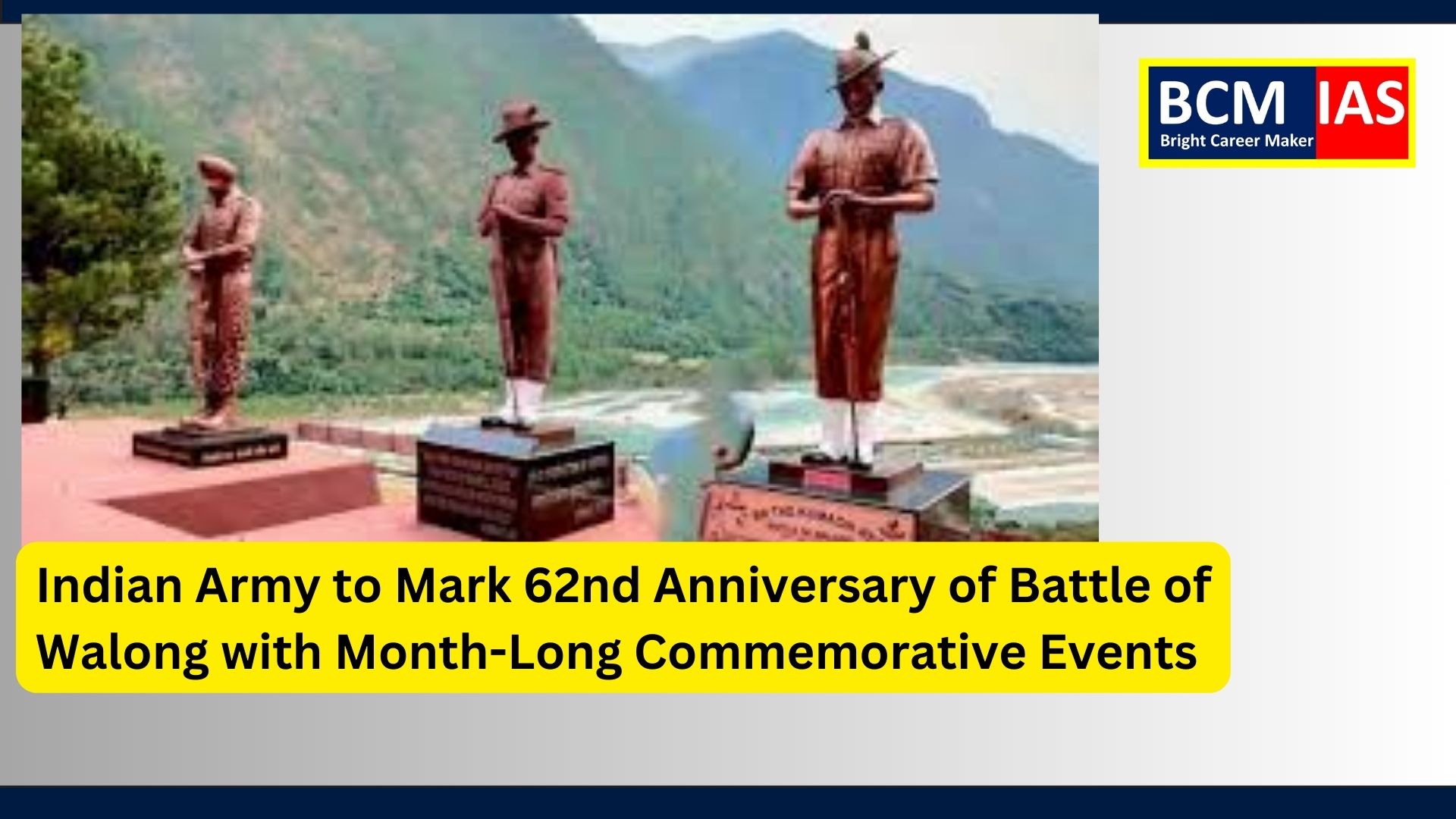
"Indian Army to Mark 62nd Anniversary of Battle
of Walong with Month-Long Commemorative Events"
News Explanation
The article discusses the Indian Army's
plans to commemorate the 62nd anniversary of the Battle of Walong, a
significant engagement during the 1962 Sino-Indian War. The month-long series
of events aims to honor the memory of the soldiers who fought bravely against
overwhelming odds and to engage with local communities.
Key Points:
1. The Battle of Walong
(1962):
o
The Battle of Walong was a crucial engagement during
the 1962 war between India and China, taking place in Arunachal Pradesh.
o
In October 1962, Chinese forces advanced into the
eastern parts of Arunachal Pradesh, and the responsibility of defending Walong
fell on the 11 Infantry Brigade under the Second Infantry Division. This
brigade included units from the Kumaon Regiment, Gorkha Rifles, Sikh Regiment,
and Dogra Regiment.
o
Despite being vastly outnumbered, with the Chinese
bringing over 4,000 soldiers against the Indian Army's smaller force, the
Indian troops held their positions for 27 days, demonstrating exceptional
bravery and tenacity.
2. Significance of the
Battle:
o
The battle is remembered for the fierce resistance put
up by Indian soldiers despite facing severe challenges such as lack of
resources, ammunition, and being outnumbered by the advancing Chinese troops.
o
Time magazine, in January 1963, noted the Indian
soldiers' courage, highlighting that they were lacking everything but
"guts."
3. Commemorative Events:
o
The Army has planned a variety of activities starting
from October 19, continuing until November 14, to mark the anniversary. These
include inaugurating newly renovated sites like the Walong War Memorial,
Shaurya Sthal at Lama Spur, and other infrastructure projects in the border
area.
o
The commemorative events are designed to honor the
sacrifice of the fallen soldiers and to promote a spirit of adventure and
resilience reflective of the Indian Army's efforts in the rugged terrain of
Arunachal Pradesh.
4. Engagement with Local
Communities:
o
The commemoration will include activities such as
white-water rafting, motorcycle rallies, bicycle rallies, battlefield treks,
adventure treks, and a half marathon. These events aim to engage local
communities, paying tribute to the heroic spirit of the Indian Army.
o
The emphasis on diverse activities reflects an effort
to involve the public in remembering the battle and recognizing the historical
importance of the soldiers' sacrifice.
5. Infrastructure
Development:
o
In addition to the commemorative events, the Indian
Army plans to inaugurate key infrastructure projects in the border areas. This
not only marks the anniversary but also highlights ongoing efforts to
strengthen infrastructure in regions close to the border.
Analysis:
The Battle of Walong holds a significant
place in India's military history. The soldiers' resistance, despite being
outnumbered and out-resourced, symbolizes courage, determination, and
patriotism. By commemorating this battle, the Indian Army seeks to honor the
memory of the brave soldiers who stood their ground under extremely difficult
conditions.
The planned events serve multiple purposes:
paying tribute to the fallen heroes, promoting a sense of national pride, and
engaging with local communities to build stronger ties. The inclusion of
adventure activities highlights the challenging terrain in which the battle was
fought, while the focus on infrastructure projects underscores India's
commitment to the development of border regions.
Conclusion:
The 62nd-anniversary commemoration of the
Battle of Walong is a reminder of the resilience and bravery of Indian soldiers
during the 1962 war. Through a range of activities and events, the Indian Army
aims to keep the legacy of the battle alive, educate the public, and promote
unity. The commemorations also reflect a broader strategy to improve
infrastructure and strengthen India's presence in key border areas, ensuring
both historical remembrance and future preparedness.
Mains Probable Question
"Discuss
the significance of the Battle of Walong during the 1962 Sino-Indian War. How
is the Indian Army commemorating the 62nd anniversary of this battle, and what
does it symbolize for India's military and local communities?"
Model Answer
Introduction:
The Battle of
Walong, fought during the 1962 Sino-Indian War, stands as a symbol of courage
and resilience, where Indian soldiers put up a fierce resistance against a
numerically superior Chinese force in Arunachal Pradesh. The Indian Army's
plans to commemorate the 62nd anniversary of this iconic battle serve to honor
the memory of those who fought and to engage local communities in remembering
the nation's military history.
Significance
of the Battle of Walong:
1. Historical Context:
o
The Battle of Walong took
place in October 1962 when Chinese forces advanced into the eastern parts of
Arunachal Pradesh. The responsibility of defending Walong fell on the 11
Infantry Brigade, comprising units from the Kumaon Regiment, Gorkha Rifles,
Sikh Regiment, and Dogra Regiment.
o
Despite being outnumbered and
facing a well-equipped Chinese force of over 4,000 soldiers, Indian troops held
their positions for 27 days, showcasing exceptional bravery. The Chinese were
forced to deploy additional forces due to the stiff resistance.
2. Symbol of Courage and Tenacity:
o
The battle is remembered for
the Indian soldiers' indomitable spirit, fighting with limited ammunition and
resources. Time magazine, in January 1963, recognized the courage of the Indian
troops, emphasizing that while they lacked everything, they did not lack
"guts."
o
This battle demonstrated the
resilience and resolve of the Indian Army even under the most challenging
conditions, making it an important chapter in India's military history.
Commemoration
of the 62nd Anniversary:
1. Month-Long Events:
o
The Indian Army has planned a
series of events starting from October 19 and continuing until November 14 to
commemorate the 62nd anniversary of the Battle of Walong. These events include
the renovation and inauguration of the Walong War Memorial and Shaurya Sthal at
Lama Spur, along with other infrastructure projects in border areas.
o
The commemorative activities
aim to honor the bravery of the soldiers who participated in the battle and to
preserve their legacy for future generations.
2. Engagement with Local Communities:
o
The Army is organizing various
activities such as white-water rafting, motorcycle rallies, bicycle rallies,
battlefield treks, adventure treks, and a half marathon. These events are
designed to engage the local communities and promote a sense of national pride
and unity.
o
By involving the public,
especially those living in border areas, the commemoration seeks to strengthen
the connection between the military and civilians, fostering a shared sense of
history and resilience.
3. Focus on Infrastructure Development:
o
The anniversary is also marked
by the inauguration of key infrastructure projects in the border areas,
signaling ongoing efforts to strengthen India's presence and capabilities in
strategically important regions.
o
This highlights a broader
strategy to ensure both historical remembrance and the development of the
region, enhancing connectivity and preparedness.
Symbolism and
Broader Implications:
1. Honoring Sacrifice and Valor:
o
The commemoration of the
Battle of Walong is a tribute to the courage and sacrifice of Indian soldiers.
It keeps alive the memories of those who defended the nation under dire
circumstances, ensuring their stories continue to inspire future generations.
o
The battle is a reminder of
the strategic importance of India's northeastern frontier and the need to
remain vigilant.
2. National Unity and Resilience:
o
By engaging local communities
through diverse activities, the Indian Army emphasizes unity and collective
resilience. The events are a way of integrating local populations into the
national narrative, fostering a sense of belonging and shared pride.
o
The focus on development
projects underscores the government's commitment to strengthening border
infrastructure, which is vital for security and economic growth.
Conclusion:
The
62nd-anniversary commemoration of the Battle of Walong is a reminder of the
indomitable spirit of Indian soldiers during the 1962 Sino-Indian War. Through
a series of commemorative events, the Indian Army aims to honor the past,
engage the present, and prepare for the future. The activities not only
celebrate the bravery of the soldiers but also highlight the importance of
infrastructure development and community engagement, ensuring that the legacy
of the battle continues to inspire the nation.
MCQs for Prelims Practice
Question 1:
What was the
main objective of the Indian Army's commemorative events for the 62nd
anniversary of the Battle of Walong?
1. To promote tourism in Arunachal Pradesh
2. To honor the bravery of Indian soldiers who fought during the 1962
Sino-Indian War
3. To conduct military drills along the border
4. To announce new defense equipment for the army
Answer: 2. To honor
the bravery of Indian soldiers who fought during the 1962 Sino-Indian War
Explanation: The Indian
Army planned a series of events to commemorate the 62nd anniversary of the
Battle of Walong, focusing on honoring the courage and sacrifice of soldiers
who defended against a larger Chinese force during the 1962 war.
Question 2:
Where did the
Battle of Walong take place during the 1962 Sino-Indian War?
1. Sikkim
2. Ladakh
3. Arunachal Pradesh
4. Uttarakhand
Answer: 3. Arunachal
Pradesh
Explanation: The Battle
of Walong was fought in Arunachal Pradesh, where Indian soldiers defended their
positions against Chinese forces in a strategically important area during the
1962 Sino-Indian War.
Question 3:
Which Indian
Army brigade was primarily responsible for defending Walong during the 1962
conflict?
1. 3rd Infantry Brigade
2. 11th Infantry Brigade
3. 7th Mountain Division
4. 15th Armoured Division
Answer: 2. 11th
Infantry Brigade
Explanation: The defense
of Walong was undertaken by the 11th Infantry Brigade, which consisted of units
from various regiments such as the Kumaon Regiment, Gorkha Rifles, Sikh
Regiment, and Dogra Regiment. They held their ground against a larger Chinese
force for 27 days.
Question 4:
What kind of
activities has the Indian Army planned to commemorate the 62nd anniversary of
the Battle of Walong?
1. Military parades and arms exhibitions
2. Adventure activities like white-water rafting, bicycle rallies, and
battlefield treks
3. Film screenings and cultural festivals
4. Launching new military infrastructure projects
Answer: 2. Adventure
activities like white-water rafting, bicycle rallies, and battlefield treks
Explanation: The Indian
Army has organized a variety of activities, including white-water rafting,
motorcycle rallies, bicycle rallies, battlefield treks, and a half marathon to
engage local communities and honor the battle's legacy.
Question 5:
Why is the
Battle of Walong considered significant in the context of the 1962 Sino-Indian
War?
1. It marked the final battle of the war
2. It was the first time India used heavy artillery in combat
3. Indian soldiers displayed exceptional bravery despite being outnumbered
and lacking resources
4. The battle was fought on the plains rather than the mountains
Answer: 3. Indian
soldiers displayed exceptional bravery despite being outnumbered and lacking
resources
Explanation: The Battle
of Walong is significant because Indian soldiers, though outnumbered and poorly
equipped, held their positions against the Chinese army for 27 days. Their
determination and resilience are remembered as a symbol of courage and national
pride.


Comments on “"Indian Army to Mark 62nd Anniversary of Battle of Walong with Month-Long Commemorative Events"”